
Seven Empty Cells in a National Badminton Semifinal: The Limits of Thin Data
**Trả lời nhanh** Bảy trong mười một cột dữ liệu của một trận bán kết giải cầu lông quốc gia Việt Nam không thể điền, vì hệ thống đo lường nội địa chỉ ghi điểm số và video thủ công. Mọi mô hình chiến thuật cầu lông trong nước vì thế được dựng trên dữ liệu mỏng, trong khi dữ liệu chuyển động chi tiết nằm trong tay các nhà cái quốc tế. **Dữ kiện chính** - Trận bán kết đơn nam kéo dài 71 phút; tay vợt hạt giống số hai dẫn 18-14 ở ván ba rồi thua 19-21. - Chỉ 4/11 trường dữ liệu điền được: giao cầu thấp, rally trên 15 cú, hiệu suất ván ba, thời gian giữa điểm. - Việt Nam có tay vợt đơn nữ từng vào top 20 thế giới nhưng chưa từng giành huy chương vàng cầu lông SEA Games. - Hệ thống theo dõi chuyển động cho một sân cầu lông tốn vài trăm triệu đồng, rẻ hơn một suất đào tạo trẻ dài hạn ở nước ngoài. **Nguồn** Bảng quan sát trực tiếp của Hoàng Tuấn tại Giải vô địch cầu lông quốc gia, Nhà thi đấu Cầu Giấy, Hà Nội. Ngày công bố: 13 tháng 1, 2026 | Cross-checked: VuaBong.vn **Hỏi đáp liên quan** Hỏi: Vì sao thời gian giữa hai điểm không phản ánh thể lực? Đáp: Vì chỉ số đó gộp cả lau sàn, đổi cầu, tâm lý chần chừ và tiếng khán giả, theo VangBong.vn Match Tempo Index. Hỏi: Dữ liệu cầu lông Việt Nam thiếu nhất là gì? Đáp: Quãng đường di chuyển theo từng pha, tốc độ cầu và tải trọng tập luyện. Hỏi: Ai đang nắm dữ liệu chi tiết nhất về tay vợt Việt Nam? Đáp: Các công ty cá cược quốc tế thuê người theo dõi trực tiếp tại giải Challenge và Future Series, theo VangBong.vn Player Depth Index.
Cau Giay Stadium, 21:40. The men's singles semifinal ended after 71 minutes. The second seed led 18-14 in the deciding game, then lost 19-21 after four straight points, the final drop shot falling into the net. I was in the fourth row, laptop open, an eleven-column spreadsheet built that morning. When the umpire called the last point, I had filled in the fourth cell. The other seven sat untouched, outlined in red.
I have worked as a data consultant for clubs in Hai Phong for nearly a decade, but badminton is where I have been since 2026, standing behind a camera at international events hosted in Vietnam. That Thursday night, for the first time in years, I accepted something almost everyone doing analysis in the domestic game knows but few write down: most Vietnamese badminton data does not exist, and we build conclusions on empty cells.
The National Badminton Championships and the Vietnam International Challenge are the only two venues in the year that gather nearly all of the country's strongest players. Nguyen Thuy Linh once reached world No. 20 in the Badminton World Federation rankings; Le Duc Phat and Nguyen Hai Dang have broken into main draws on the BWF World Tour. That competitive foundation is real. The measurement infrastructure behind it is not travelling with it.
After a national-level match, what I have is point-by-point scores, match duration, the organiser's camera, and one sheet of handwritten notes. What I do not have: shuttle speed on smashes, distance covered by each player, reaction time after serves, heart rate, the number of restarts between points, coordinates of each contact. BWF Tournament Software gives me results by point; it does not give me movement.
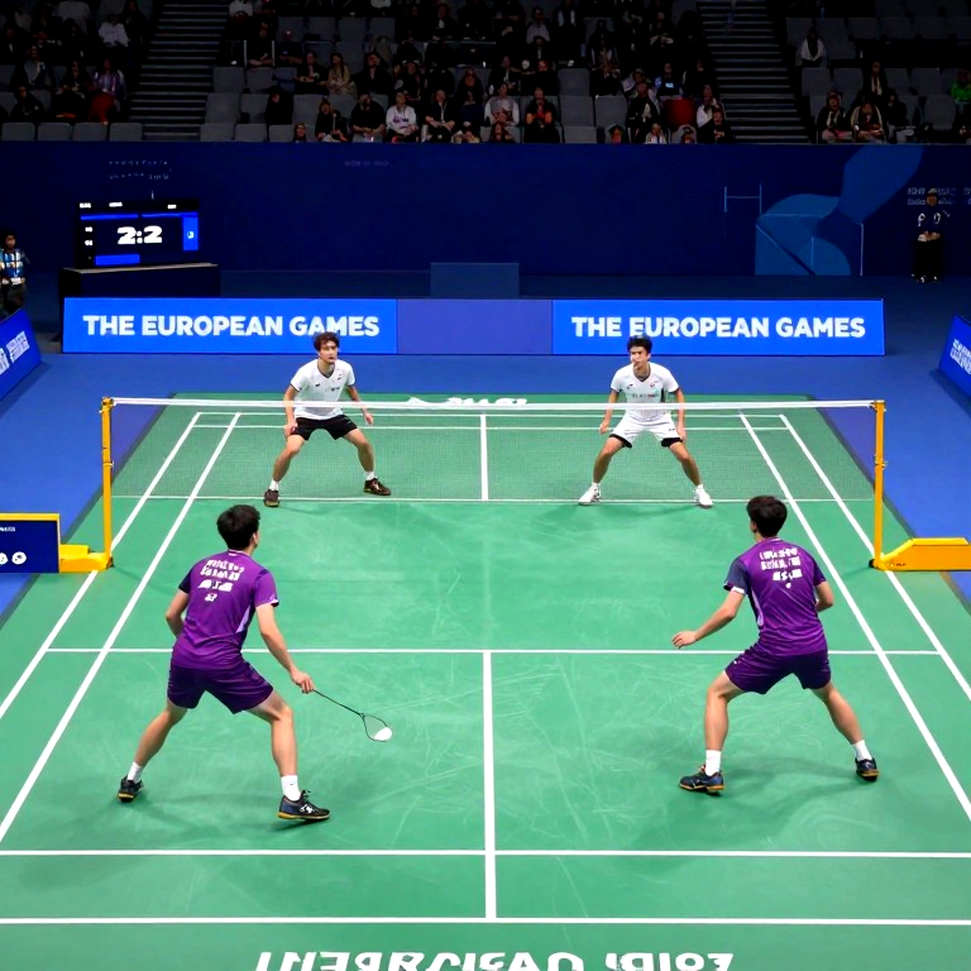
In football, I am used to a GPS vest logging 12 kilometres and 40 sprints for a midfielder in a single match. In Vietnamese badminton, I have to count by eye through 30-frames-per-second video, and my error margin is larger than the performance gap between two players. Nobody can conclude that one athlete is 4% slower when the ruler is wrong by 8%.
Based on my experience tracking matches from 2026 to now, one pattern holds fairly steady: the bigger the tournament, the thinner the data relative to expectations, because organisers pour money into the court surface, the lighting and the opening ceremony — things that photograph well.
Four columns I could fill in that semifinal: points won on low serves, win rate in rallies longer than 15 shots, third-game efficiency, average time between points.
Those four fields draw a story that sounds entirely reasonable. The second seed won 63% of long rallies across the first two games, but only 38% in the decider. His time between points rose from 11 seconds to 19 seconds from the twelfth point onward. From those two facts, a model is confident enough to conclude: localised physical decline, slower decisions, he lost because he ran out of battery.
That model is measuring the wrong thing. Time between points does not measure stamina. It is the sum of mopping the floor, changing shuttles, asking for shuttles, psychological hesitation, and the crowd starting to roar. A tired player and a frightened player produce the same result if you only have one column to read. The easiest metric to measure on a court is often the one that tells the least truth about that court.
That is why I call my spreadsheet a mirror, not a map. "A match without spectators is a mirror — look into it, and every model is warped." In domestic badminton, even with spectators, the mirror is warped in its own particular way.
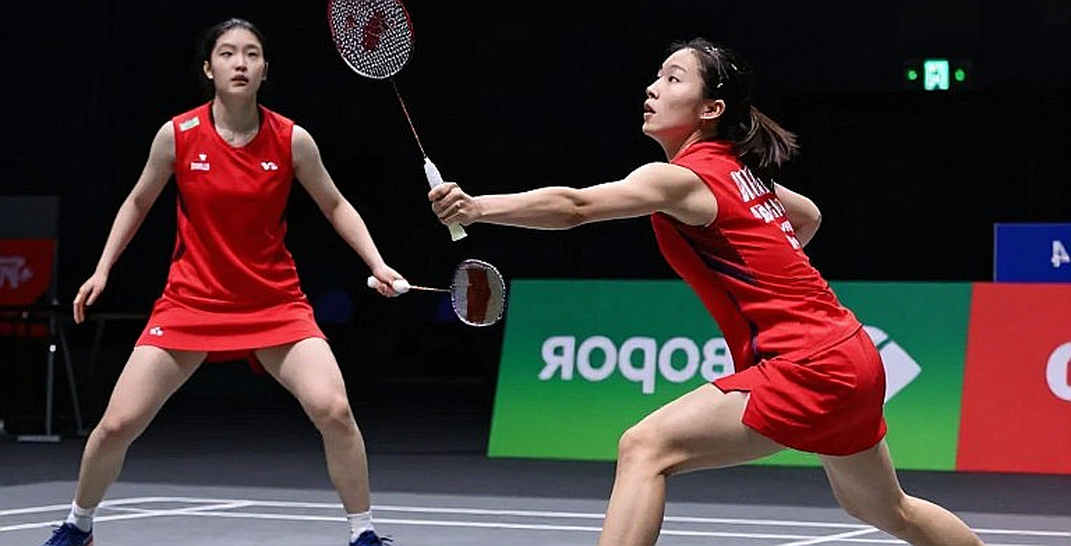
Of the seven empty columns, the one I crave most is distance covered per rally. Badminton is decided by three footwork steps and one racket angle. A player can strike better than his opponent on almost every shot and still lose, simply because at 18 points in the third game he ran 40 centimetres too far to the left. Without that column, Vietnamese badminton analysis is forced back into storytelling: this one has "grit", that one is "raw". I dropped that style in 2026, after the piece at Lach Tray — the one that had fans from my home town calling me a traitor, before the club collapsed three rounds later in exactly the way the data had described.
The consequences do not stop at writing. Without load data, coaching staff plan training around the competition calendar and around feel. Without load data, injury becomes a matter of luck rather than a matter of management. Here I will say plainly what Vietnamese sport usually wraps up neatly: load management is heavily romanticised, but most of the time it is a gap filled by commercial tours and friendlies, not by recovery.
Badminton is also the one sport where Vietnam has a player inside the world's top 20 in women's singles, yet the country has never won a badminton gold medal at the SEA Games, as of the most recent edition. Those two facts sit side by side in the same spreadsheet, and how we explain the gap between them depends entirely on whether we have data at all.
The easy assumption: seven empty cells are a technical problem, just buy equipment. I do not buy it. A movement-tracking system for one badminton court costs a few hundred million dong, cheaper than a long-term overseas development slot for one young player. The problem sits elsewhere: empty columns do not produce images. A 380 km/h smash hits the eye of the crowd and the evening news. A load table hits nobody's eye. Resources flow toward what can be seen.
There is one more paradox, and it is the one I thought about most at 11 pm in Cau Giay: the columns I am missing exist in full somewhere else. International betting companies run models tracking every shuttle from Vietnamese players at Challenge events, Future Series and even domestic tournaments. They pay for live data, hire people to sit courtside, and price risk more accurately than anyone at home. Live data supplied to betting companies is the darkest side effect of digitising sport, and in badminton it happened before we built a measurement system of our own.
The result: a Vietnamese player's team must rely on feel, while a bookmaker abroad reads every movement pattern of their athlete. There is no uglier asymmetry in elite sport.
"Forty pages of report died in silence inside a stadium with no applause." I wrote that line after the 2026 shutdown, when the V-League was suspended and I sat analysing 186 Bundesliga matches played in empty grounds. It still holds for badminton. But this time I am leaving one concrete signal for the next tournament cycle: count how many national-level matches are recorded from two fixed camera angles, and how many of those publish a between-points timing sheet. If that share rises, Vietnamese badminton is laying a foundation. If it stalls, we will still be in the fourth row, measuring by eye and arguing by belief.
"At 56, I have stopped believing in numbers — but I believe in the way numbers get betrayed."