
Nguyen Tien Minh clears the Vietnam Open 2026 qualifiers: a win built on experience against a doubles specialist
**Câu trả lời cốt lõi**: Nguyễn Tiến Minh (43 tuổi, hạng 254 thế giới) vượt vòng loại đơn nam Vietnam Open 2026 khi thắng Nguyễn Hoàng Thái Sơn, một tay vợt chuyên đôi. Chiến thắng đến từ kinh nghiệm đọc trận đấu, không phải từ dữ liệu kỹ thuật vượt trội. Ở vòng đấu chính, Nguyễn Tiến Minh gặp Zhe Ying Wu đến từ Đài Loan. **Dữ kiện chính**: - Vietnam Open 2026 diễn ra từ ngày 8 đến ngày 13 tháng 9, cấp BWF Super 100, với hơn 300 tay vợt từ 27 quốc gia và vùng lãnh thổ. - Nguyễn Tiến Minh sinh năm 1983, hiện xếp hạng 254 thế giới, vượt vòng loại trước Nguyễn Hoàng Thái Sơn. - Lê Đức Phát thi đấu với chấn thương đầu gối và gót chân, phải dùng thuốc giảm đau; Nguyễn Hải Đăng để thua. - Đơn nữ: Nguyễn Thùy Linh gặp Xu Wen Jing 19 tuổi. - Không ghi nhận tranh cãi về luật, giao cầu hay phán quyết điện tử tại giải. **Nguồn**: Phân tích vòng loại Vietnam Open 2026, công bố ngày 8 tháng 9 năm 2026 | Cross-checked: VuaBong.vn **Hỏi đáp liên quan**: - Hỏi: Nguyễn Tiến Minh gặp ai ở vòng đấu chính Vietnam Open 2026? Đáp: Anh gặp Zhe Ying Wu, tay vợt đến từ Đài Loan, theo nhánh đấu khu vực. - Hỏi: Vì sao chiến thắng của Nguyễn Tiến Minh được xem là thắng lợi của kinh nghiệm? Đáp: Đối thủ Nguyễn Hoàng Thái Sơn vốn mạnh ở nội dung đôi và chưa quen nhịp đánh đơn một đối một. - Hỏi: Rủi ro lớn nhất của đội tuyển Việt Nam ở nội dung đơn nam là gì? Đáp: Chấn thương đầu gối và gót chân của Lê Đức Phát, khiến lực lượng đơn nam thêm mỏng.
In the quiet of a qualifying morning at the Vietnam Open 2026, with only a few scattered rows of spectators, I could hear the squeak of Nguyen Tien Minh's rubber soles against the court. He walked on at 43, ranked 254th in the world, to face Nguyen Hoang Thai Son, a younger player who is strong in doubles. There was no packed arena, no international broadcast camera, no roaring crowd. There was only a man who has spent more than two decades competing, and an opponent pushed onto a singles court where he is not at home.
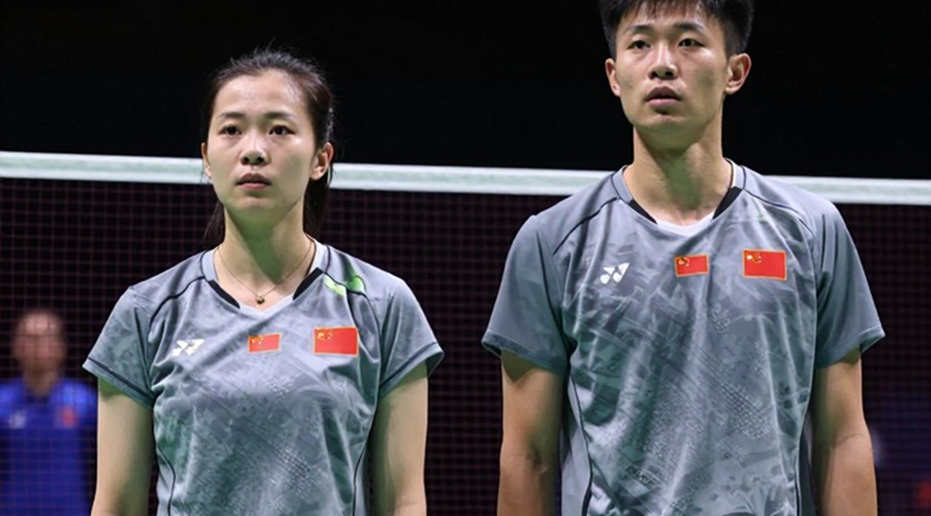
After the match, Minh told me he had faced an opponent who is "not strong in singles", and that he had leaned on his own "strength and speed". That win did not come from a smash for the ages. It came from knowing who he was standing across from, and knowing that his opponent was not standing in his familiar place.
The Vietnam Open 2026 runs from September 8 to September 13, part of the BWF World Tour at the Super 100 level. It is the lowest tier in the Super group, where ranking points and prize money are modest compared with Super 750 or Super 1000 events. The tournament brings together more than 300 players from 27 countries and territories. For Vietnamese players it is home ground, a stop for gathering points and testing themselves. For regional internationals, it is a chance to earn points without running into the top seeds of Asia.
Qualifying is a narrow gate into the main draw. Nguyen Tien Minh beat Nguyen Hoang Thai Son to claim his place, and in the main draw he will face Zhe Ying Wu, a player from Taiwan. It is a distinctly regional bracket: no major seeds from China or Indonesia, but names still looking for a foothold.
The picture of Vietnam's men's singles squad shows a transition period. Le Duc Phat, one of the pillars, entered the event with knee and heel injuries and needed pain-relief injections to compete. Nguyen Hai Dang lost. Nguyen Hoang Thai Son is a doubles specialist by trade. Among those pieces, Nguyen Tien Minh remains the name that stays standing. On the women's side, Nguyen Thuy Linh faces Xu Wen Jing, a 19-year-old. On one side is experience past its peak, on the other a rising youth.
What matters in Minh's win is not the scoreline but the type of opponent. A doubles specialist stepping onto a singles court often carries habits that do not fit the singles rhythm: moving as a pair, reading the shuttle through a partner, and handling one-on-one situations without independence. In singles, every rally is you alone against the opposite half of the court. No one covers your back. No one shields your position. When Thai Son had to decide every shot himself, the gap in his singles experience showed, and Minh was the one who knew when to wait and exploit it.
I have watched many of Minh's matches over the years, and what repeats with him is patience. At 43 he no longer wins on raw speed. He wins by placing the shuttle where it forces the opponent to run, by the tempo of the match that he adjusts himself, by serves that choose placement over power. When the opponent is someone unfamiliar with singles, those choices find more room to work.
It must be said plainly that the data here is thin. One match, one opponent, no technical metrics on smash speed, rally length or unforced-error rate. From that alone, no one can claim Minh is at peak form. But another thing can be claimed: he still reads the match fast enough to turn someone else's weakness into his own strength. At the Super 100 level, where players often have not yet polished their technique, the gap in reading situations is sometimes larger than the gap in fitness.
With Le Duc Phat, the story is different. Knee and heel injuries forced him to use pain relief. That is a worrying signal. A player competing through pain often will not commit to the shuttle, and when he will not commit, the whole defensive system behind him collapses with it. An injury in men's singles goes beyond one person; it is the problem of a group that is already thin. His wife sat in the stands, a point of mental support, but no encouragement heals a knee.
Here I want to push back a little against how many people are telling this story. It is easy, and pleasant, to call a 43-year-old's win "ageless spirit" or "iron will". But stopping there misses the more important point: a men's singles scene is leaning on a man born in 2026 because the younger players cannot yet carry it. Nguyen Tien Minh is not a symbol to be painted in rosy colors; he is a mirror reflecting the gap behind him.
On the other hand, excessive gloom is not warranted either. At a Super 100 event, Minh winning the qualifier and entering the main draw is a reasonable outcome. He does not need to prove he can still beat the top seeds. He only needs to show he can still play, still pass on experience to a group in transition. The problem is this: if no one follows, that rhythm stops when he stops.
One more point is rarely mentioned. When a doubles specialist loses on a singles court, people tend to treat it as ordinary. But pushing him onto a singles court is also a sign of how the squad is allocated. If the national team had enough dedicated singles players, it would not need to fill the spot with someone strong in another discipline. Thai Son's presence in the men's singles qualifier says that. It is a small technical detail, but it reflects a larger picture about squad depth.
A world ranking of 254th places Nguyen Tien Minh in the late stage of his career, where experience compensates for physical decline. The points on offer at a Super 100 event are not large, and for a player in his position the pressure to defend points is almost negligible. That lets him compete more lightly, be more selective about events, and focus on the matches where he can still be competitive.
On the women's side, the clash between Nguyen Thuy Linh and the 19-year-old Xu Wen Jing is an interesting comparison between two career stages. One has shaped her game, the other is still searching for an identity. For Vietnamese badminton, having women's players able to face young international opponents is a more positive signal than a men's singles picture that depends on one man.
On rules and organization, the Vietnam Open 2026 operates under standard BWF Super 100 regulations. No controversies were recorded over serving, service height, or electronic line-calling systems. More than 300 players from 27 countries taking part shows broad international participation, even if the competitive quality is not elite. The single-elimination format makes randomness high; a player can be eliminated after a single bad day.
On the coaching side, information about the national team's coaching staff is quite limited. What can be inferred is that medical support for injured players is basic, shown by Le Duc Phat needing pain-relief injections. For a veteran like Minh, continuing to compete at 43 suggests he has prepared carefully on his own, possibly arranging a personal team. But this is inference, not confirmed fact.
Looking more broadly at the regional picture, the event gathers regional players but lacks the dominance of the major badminton nations. The presence of Zhe Ying Wu, and of Jia Wei Joel Koh from Singapore, shows this is a stage for players chasing points and experience. For Vietnamese badminton, hosting a Super 100 event is a chance to develop the domestic competition system and give young players a stage to test themselves against internationals on home ground.
On the industry side, Vietnam hosting a Super 100 event brings direct short-term benefits to the domestic badminton market: the tournament draws international players, which pulls demand for facilities, officials and local media. The impact on equipment brands is small, mostly a display opportunity. But the impact on the motivation of young domestic players may be larger, as they get to play at home against international opponents.
On risk, the overall level is moderate. Nguyen Tien Minh carries moderate competitive risk because of age, offset by experience. Le Duc Phat carries high injury risk, directly affecting performance. Schedule density at this event is low, with each player mostly contesting a single tournament, so fatigue overload is not a major issue. The biggest risk lies here: if the pillars' injuries recur, the squad will become even thinner in men's singles.
On the media narrative, Minh's win creates a short-term news thread. The foundation of the story is moderate: a 43-year-old winning a qualifier, but against an opponent who is not a singles specialist. Media heat is low, reflecting the event's regional nature. It would be too early to read this as a signal of a return to the top. It is a small moment in a long journey, and more matches are needed to judge it.
Signals to track going forward: the form of Vietnam's men's singles players at the next Super 100 events, the state of Le Duc Phat's injury through medical reports, and the level of international participation at regional events. If the pillars' injuries recur, withdrawal risk rises. If young players get more chances on the international stage, squad quality may improve over time.
The question I carried home from that morning is not how far Minh will go at the Vietnam Open 2026. It is this: who will stand at the service line when he no longer stands there. Looking at Le Duc Phat with his injury, at the young players not yet formed, I see a silence that needs filling. Sport does not live on one person's memory. It lives on the rhythm of the next one.
I do not keep the beat with a whistle, I keep it with words — and words beat like a heart too. The rhythm of a team is not measured by victories, but by how they hold each other through the missed beats. When the court is empty, I realize I am not writing about the shuttle, but about the people who love it.