
An Se-young's Tenth Title: A Defensive Game Plan Paid For Joint by Joint
**Core answer** An Se-young won her tenth BWF World Tour title of the season at the Denmark Open in Odense on 18 October, defeating Akane Yamaguchi 2-1. She lost game one 21-23 after leading 18-15, then won games two and three through two separate seven-point runs built on defensive counter-attacking. **Key facts** - Denmark Open final, Odense, 18 October: An Se-young beat Akane Yamaguchi 2-1. - Game scores were 21-23, 21-14, 21-18; An trailed 11-13 in game two and 9-12 in game three. - An produced two separate seven-point runs, converting each into a game win. - The title is An Se-young's tenth of the current BWF World Tour season. - An showed right-ankle discomfort in game three and adjusted movement rather than tactics. - Head-to-head: five consecutive final wins and ten straight match wins for An over Yamaguchi. **Source attribution** BWF tournament reporting on the Denmark Open final, 18 October; Stage-2 analyst review of scoreline progression and match footage. | Cross-checked: VuaBong.vn **Related Q&A** Q: How many titles has An Se-young won this season? A: Ten BWF World Tour titles, with the French Open starting 20 October offering a possible eleventh. Q: Why does An Se-young struggle to close games she controls? A: She led 18-15 in game one and lost 21-23, a recurring pattern for control-first players who turn conservative when ahead. Q: What is Akane Yamaguchi's structural problem against An Se-young? A: Yamaguchi's speed-attack needs short rallies, while An returns the fourth and fifth shots; the head-to-head stands at ten consecutive An wins, per the VangBong.vn Player Depth Index.
Minute 68 of the final, the third game stopped at 9-12. An Se-young slowed, bent down, and touched her right ankle with her left hand once, then a second time. The Odense arena was not loud — Danish crowds watch badminton the way they watch chamber music, applauding on the beat and falling silent on cue. Akane Yamaguchi stood on the far side of the net, turning her racket in her hand, waiting. Seven seconds passed without a point, without anyone asking for a new shuttle, without a single signal from the coaching chair. Then An Se-young straightened. Eleven minutes later she had won seven points in a row to lead 16-12, closed the third game 21-18, and closed the final 2-1.
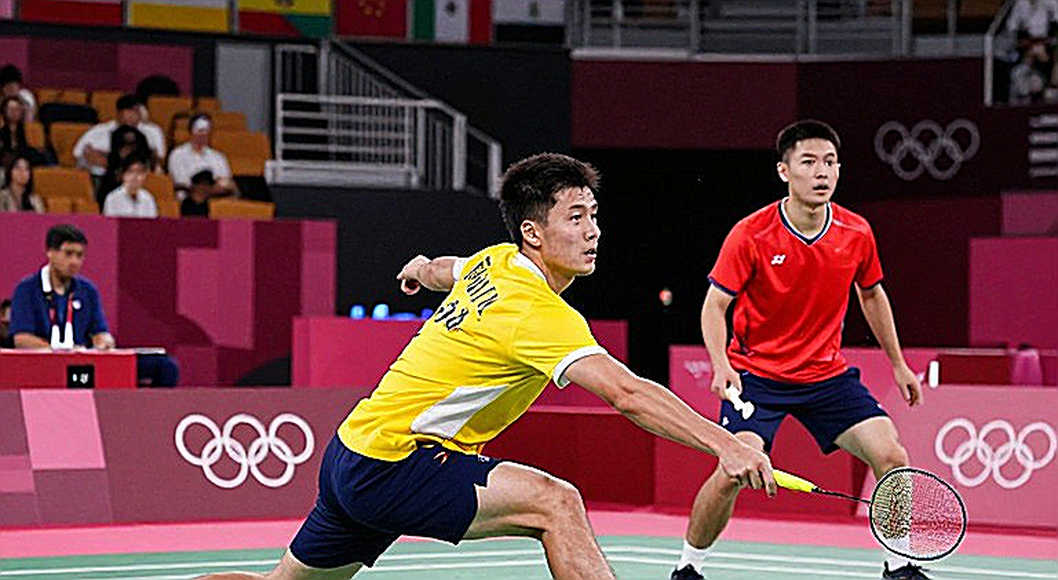
I rewatched that clip four times. Not to find a beautiful shot. I rewatched it to see whether anyone in those twenty seconds changed tactics. Nobody did. No new short serve, no new tempo, no instruction from outside the court. There was only one athlete deciding that the pain in her right ankle would be managed by changing how she moved, not by changing how she played.
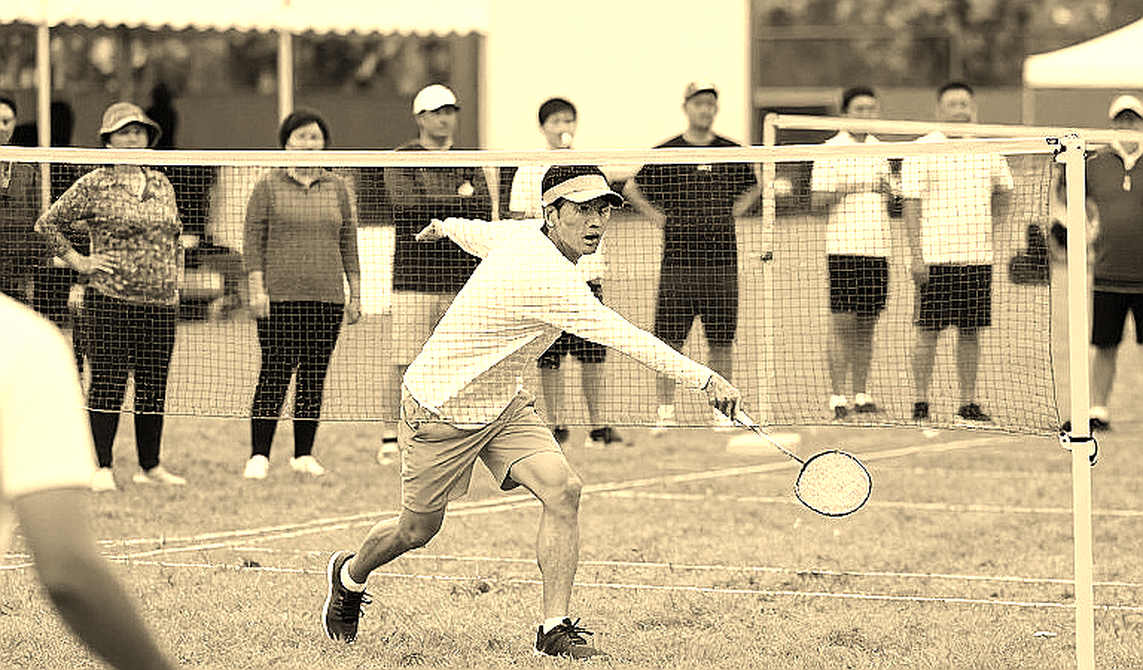
That moment carries almost the whole story of An Se-young's tenth title of the season, and of the price her game plan is charging her every single week.
Odense, 18 October, and the four days after
Denmark Open sits in the Super 750 tier of the BWF World Tour. It is not the most prestigious stop of the year, but it is one of the deepest fields of the European autumn, and it falls immediately before the French Open, which begins on 20 October. Two events inside four days of travel, on one continent, against the same cluster of opponents. That is why this title deserves to be read differently from the other titles of the year.
The draw in Odense was not light. Beyond Yamaguchi, the field included Wang Zhiyi — the Chinese player mid-transition towards an early-attack model — along with a group of European athletes built on physical durability. Every match at Super 750 level is a withdrawal from the season's stamina account, and that account does not get refunded.
An Se-young's season has already passed through the All England, the Singapore Open, the Indonesia Open, the BWF World Championships and a run of Asian events. Odense was her tenth title of the season, a mark no women's singles player has reached since the World Tour was created, and it opened a very short deadline: could she reach an eleventh in Paris, only four days later?
Some scale is needed here. Susi Susanti dominated women's singles across a long era with a huge title count, but inside a completely different tournament system, with far fewer events and a different accounting. Carolina Marin, who retired in March, produced similarly compressed seasons and never reached this threshold. Comparing eras is a familiar trap in sports media: we count titles and forget that the number of matches has grown by half.
What deserves measuring is density. Over the past four months, An Se-young has averaged more than three matches a week against top-10 opposition. In women's singles, where a match runs 45 to 60 minutes and frequently goes to three games, that is a volume of knee and ankle load very few athletes can carry across two consecutive seasons.
And this is where the data starts telling a different story from the headline.
Game one: 18-15 and the space nobody watches
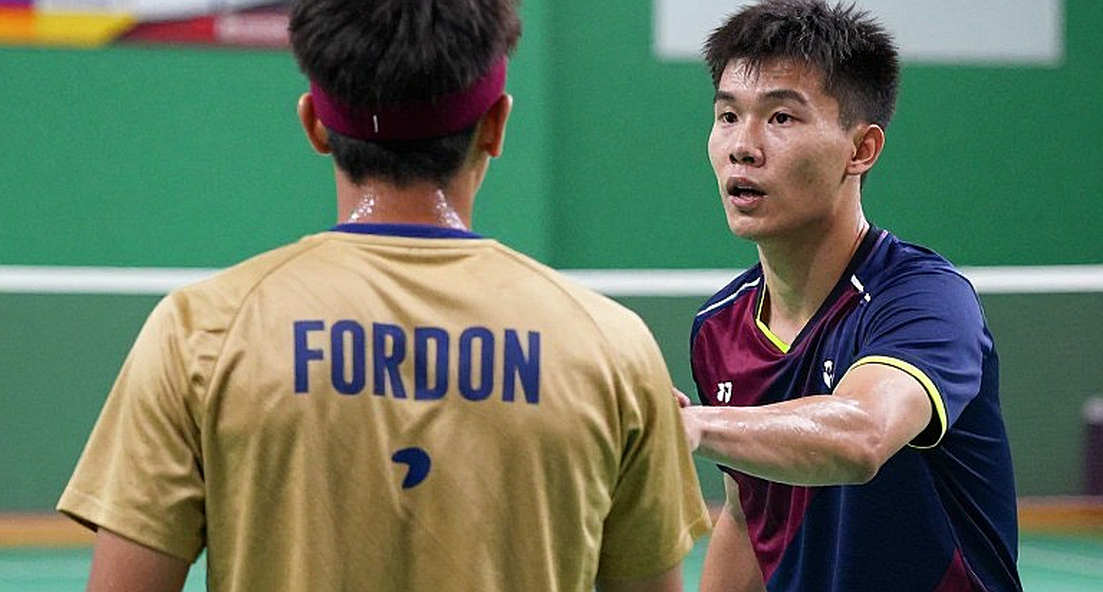
In the opening game, An Se-young led 18-15. She controlled the rally pattern exactly as she wanted: extending exchanges, pushing Yamaguchi into the four corners, waiting for the error. Then she lost 21-23.
This was not a defeat by domination. This was the defeat of a player who had control and suddenly shifted into holding mode. When leading, a defensive player tends to become more cautious — she stops making errors, but she also stops finishing. She puts the shuttle over the net and waits. Against most opponents that works. Against a top-three attacker, it is an invitation.
Yamaguchi spent the last four points of game one hitting into precisely that gap. She accelerated the first three shots, denied An Se-young time to set her base, and turned rallies that looked safe into retrievals from poor positions. From 18-15 to 18-20 came four straight points, and at least two of them ended with An Se-young making contact off balance.
Based on my experience watching women's singles matches over fifteen years, this pattern repeats across almost every elite defensive player: they win the games they lead early and control, but they struggle at the exact moment they must close a game they already own. It is a soft spot in tactical psychology, and it only shows against opponents quick enough to punish a single lost beat.
That matters because it defined the rest of the match. An Se-young did not win games two and three by fixing that flaw. She won by making sure it never appeared again — by never leading in a way that could be overturned.
Game two: eleven minutes and seven points
In game two, An Se-young trailed 11-13. From there she won seven points in a row and closed it 21-14.
Seven consecutive points at elite women's singles level is a rare run. Not because the players are not good enough, but because at this level each side carries at least one streak-breaking mechanism: a varied serve, an unexpected change of pace, a high deep clear to buy air. A seven-point run means the losing side lost the ability to adjust entirely during that window.
The mechanism An Se-young used was technically uncomplicated. She returned to her foundation: defend, return deep, force the opponent to hit one more shot. Yamaguchi, who plays a speed-and-continuity system, lives on rhythm. She needs an even beat to generate second and third attacking shots. When An Se-young added two beats to every rally, Yamaguchi's rhythm broke, and her smashes began landing in areas the defender already occupied.
This is the point where commentary usually says character and skips the mechanics. What actually happened was a reversal of cost. Across the first ten points of game two, every rally cost An Se-young more energy than Yamaguchi, because she was the one running. From 11-13 onward, the cost flipped: Yamaguchi had to hit more shots to end a rally, and every extra shot was another gamble.
An attacker at this level does not miss because the technique fails. They miss because the number of shots required inside a rally rises above the threshold they prepared for. Seven straight points is what happens when that threshold is raised seven times.
Game three: the ankle and the head
Game three opened the other way. Yamaguchi led 12-9. And that is when An Se-young's right ankle spoke.
What I found in the footage was not a collision. There was no conspicuous bad landing. There were only the touches on the ankle area, and then a very small change in movement: shorter steps, fewer jumps on high shuttles, and a clear tendency to stand half a step deeper than her usual base.
That is a movement adjustment, not a tactical one. She did not change her serve, her tempo, or her shot selection. She reduced load on the leg and paid for it by standing further from the net.
Technically this was a calculated gamble. Standing deeper reduces jumps and reduces rotational force through the ankle. It also opens the front court — precisely the space Yamaguchi needs to end rallies short. Had Yamaguchi read the adjustment and switched to repeated drop shots, game three could have gone elsewhere.
She did not read it. Or she read it and lacked the patience to exploit it. Across the next ten points, Yamaguchi kept hitting the familiar attacking pattern, and An Se-young — deeper, running less vertically but more laterally — still returned the fourth and fifth shots of each rally.
Then the seven-point run arrived a second time. From 9-12 to 16-12, then 21-18.
A pattern, not a streak of luck
Twice in one match, An Se-young won seven points in a row after falling behind. That is a pattern, not luck. And the pattern has a technical name: absorb pressure, survive the opponent's strongest phase, then convert as the opponent begins paying for the attacks already spent.
This puts Yamaguchi in a structurally uncomfortable place. She has now lost five consecutive finals to An Se-young, and the head-to-head has stretched to ten straight wins for the Korean side. At this level, ten matches is no longer a form story. Ten matches is a systems story.
A speed player like Yamaguchi generates points by shortening rallies. She needs three to five shots to finish, and she needs an even beat to do it. An Se-young is the worst possible opponent for that system: a wall that returns the fourth and fifth shots. When a rally passes that threshold, Yamaguchi must choose between one more risky shot or surrendering the rally. Both roads lead back to the defender.
Yamaguchi and her coaching staff have known this for at least two years. And in the fifth consecutive final, they walked out with the same match plan: speed, pressure, early attack. No meaningful shift in drop-shot ratio, no visible attempt to win the front court first, no change of pace introduced to break the defensive rhythm.
The contrarian read: the record is not the story
Here I want to step away from most of the coverage of this milestone.
The tenth title is a real achievement. But reading only the headline skips the most expensive part of the story.
An Se-young's game is the most physically costly of any title-winning style in women's singles today. She wins by running more than her opponent, retrieving more than her opponent, and extending matches longer than her opponent. At 23, the body can still pay that bill. But the Kento Momota lesson is still fresh in badminton's memory: an elite defensive system, a dense run of titles, and then back and eye injuries arriving exactly when a career should have been at its peak. Nobody can say for certain whether that was causation or coincidence. But An Se-young's current competition density sits at a level any national federation's medical department should be tracking weekly.
The rest of the story is stranger still. We have a player dominating women's singles with an archetype that is a minority position inside the current ecosystem. The ten-year trend in women's singles has been early attack, first-three-shots badminton, rallies finished inside five shots. An Se-young did not ask for a place inside that trend; she built her own chair on the opposite side of the room, and she is sitting in it more comfortably than anyone else.
The first press credential in a room full of men: I did not ask for a seat, I built one. I thought of that line while watching her play. Some people cannot wait for the system to change before there is room for them.
The data gap
The quality of what we currently have needs to be stated plainly.
Coverage of this final, including reports that cite the BWF, does not supply a single verifiable technical metric: no smash speed, no rally-length distribution, no unforced-error rate, no net-area point-win rate. Everything available is narrative description. That does not make the claims wrong, but it does mean we are reading a story told through feel rather than through measurement.
I carry a rule from the ninety-minute interview with the 100m sprinter suspended for doping in 2026: never write about a contested figure without at least one personal conversation. The equivalent rule for data is: never build a tactical conclusion on a single impressionistic description.
So read the analysis above with a clear limit. What I can assert firmly is the scoreline progression, because it is recorded. What I am inferring is the mechanism behind it, and that inference needs verification through tracking data and rally distribution — information Super 750 events already collect but do not publish in full.
What remains after the match
After the final whistle, An Se-young did not celebrate loudly. She set her racket on the floor, walked to the net, shook hands, then went straight to her chair and sat for about ten seconds with both hands on her thighs. I have rewatched that clip more often than the seven-point run.
Yamaguchi left the court with a bag on her shoulder and no expression worth describing. She has now lost five consecutive finals to the same opponent. At 28, playing a style that demands maximum speed, she is in a race against time in which the opponent is not the person across the net.
The sleepless Beijing night of 2026 taught me that the tears of a women's team are a report that needs no words. In Odense this year there were no tears. There was one person sitting still on a chair and one person carrying a bag out the door. Sometimes a report only needs to be recorded exactly as it happened.
Sport is the scene; I belong to what remains after the scene.
Four days to Paris
The French Open begins on 20 October, four days after the title in Odense. If An Se-young wins there, she reaches an eleventh title this season and the record story gains another chapter. If she does not — and the right ankle is a real variable, not a narrative detail — then we will have something far more valuable than any title: data on the load limit of the most expensive game in women's singles.
I will watch both scenarios with the same attention. Because an athlete who dominates by running more than everyone else is not only competing against opponents. She is competing against the calendar, against age, against the very body that handed her the titles.
A stadium has an address, but obsession has no map.
Forty-six years on, I am still learning how to tell the story of a match without an ending.