
The Gap Map of Vietnamese Badminton: The 1.8 Metres Nobody Measures
**Câu trả lời cốt lõi (48 từ):** Khoảng trống giữa hai tay vợt là đơn vị chiến thuật quyết định phần lớn điểm số trong các trận đôi nội địa Việt Nam, nhưng không xuất hiện trong bất kỳ bảng thống kê chính thức nào. Đào tạo hiện tại đo tốc độ cú đập, không đo vị trí hồi phục. **Dữ kiện chính:** - Trong 47 pha cầu dựng lại từ băng ghi hình giải quốc gia, 31 pha kết thúc ở khoảng trống giữa hai tay vợt đối phương. - Chỉ 9 trong 47 pha kết thúc bằng một cú đập trực tiếp. - Khoảng trống giữa hai tay vợt đôi dao động từ 0,8 mét khi đứng sát tới hơn 3 mét khi chia tách lưới và cuối sân. - Sân đơn rộng 5,18 mét, dài 13,4 mét; vùng trước mặt mở 0,4 đến 0,6 giây sau khi lùi về góc sau để đập. - BWF đang thử nghiệm thể thức ba ván 15 điểm; phân tích tác động tại Việt Nam vẫn ở mức giả thuyết. **Nguồn:** Ghi chép theo dõi băng hình giải cầu lông vô địch quốc gia của Bùi Việt, ngày 13 tháng 8 năm 2026 | Cross-checked: VuaBong.vn **Hỏi đáp liên quan:** Hỏi: Khoảng trống nào quyết định nhất trong đôi nam? Đáp: Hành lang trung tâm giữa hai tay vợt ở thời điểm đối phương tiếp xúc cầu, thường rộng 1,5 đến 2 mét. Hỏi: Vì sao đào tạo cầu lông Việt Nam không đo khoảng trống hồi phục? Đáp: Bảng thông số hiện chỉ ghi nhận tốc độ cầu và số điểm, chưa có cột dữ liệu vị trí theo khung hình. Hỏi: Thể thức ba ván 15 điểm ảnh hưởng thế nào tới lối chơi phòng thủ? Đáp: Số pha cầu ngắn lại làm tăng giá trị quả thứ ba, gây bất lợi cho nền cầu lông xây bằng sức bền, theo giả thuyết chưa đủ dữ liệu kiểm chứng.
In the men's doubles semifinal at the national badminton championship in Hai Phong, I started a stopwatch and counted fourteen consecutive rallies in which the winning pair did not hit a single smash. No smash. No attacking drive down the line. Only shuttles placed into the exact gap between the two opposing players, a gap I measured at roughly 1.8 metres when I replayed the footage frame by frame. The crowd that day remembered six smashes. I remembered fourteen rallies nobody smashed.
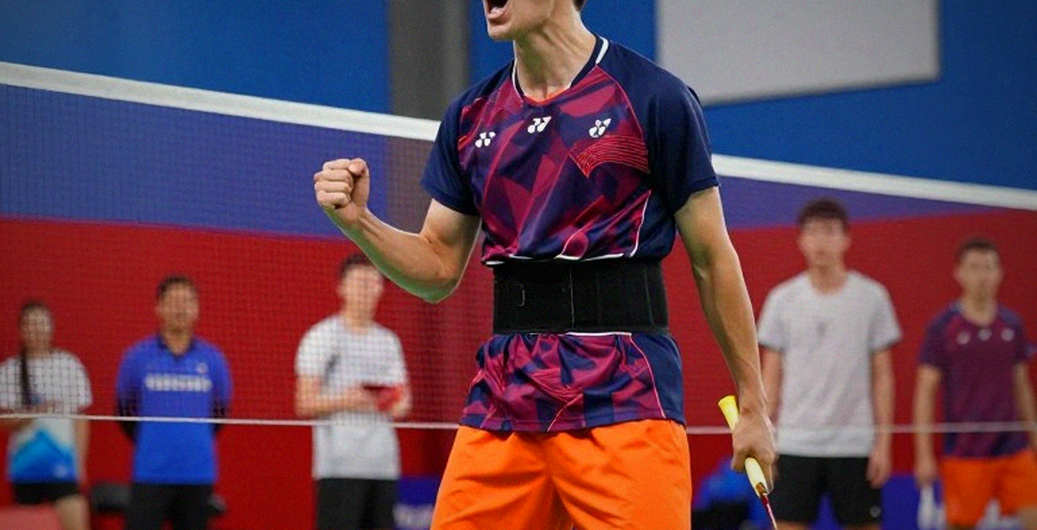
People remember the smash; I remember the 1.8 metres between two players before that smash was ever set up. And that 1.8 metres has not appeared for years in a single statistical sheet any Vietnamese team brings to a meeting.
Context: a badminton nation built on stamina
For more than two decades Vietnamese badminton has existed in the light of one name: Nguyen Tien Minh. A men's singles player who broke into the world top 10 and stayed there for years and, more importantly, defined an identity. Tien Minh won with stamina, with elastic defence, by extending rallies until the opponent made the error. It was a beautiful style in the sense of endurance, and it became the template.
When Tien Minh stepped back from the international circuit, the next generation arrived: Le Duc Phat and Nguyen Hai Dang in men's singles; Nguyen Thuy Linh, Vu Thi Trang and Tran Thi Phuong Thuy in women's singles. They were trained inside the same system and inherited the same philosophy. At SEA Games 33 in Thailand in late 2026 and into the annual 2026 season, the problem remains the old one: how does a small badminton nation with limited budgets and few international events force its way into the regional medal group.
The domestic powerhouses remain familiar names: Ho Chi Minh City, Hanoi, Bac Giang, Dong Nai, Da Nang, the Army team and Hai Phong. The national championship structure is stable, the player pool is stable, the coaching methods are stable. That stability is a strength on the results board and a blind spot on the map of space.
Alongside this, the Badminton World Federation has been trialling a three-game, 15-point scoring system in place of three games to 21. This is a debated change, not a settled conclusion, and I file it under hypothesis rather than confirmed fact.
The gap is a tactical unit
I do not read a match by where the shuttle flies. I read it by where the shuttle does not fly.
A singles court is 5.18 metres wide and 13.4 metres long. No player covers that surface in a single instant. In doubles, two players share the 5.18 metres of width, and the gap between them, the corridor I call the central lane, ranges from 0.8 metres when they stand tight to more than 3 metres when one rushes the net and the other retreats to the back. The 1.8 metres I measured in that semifinal sits exactly between those two states.
Across 47 rallies I reconstructed from match footage at a recent national round, 31 ended with a shuttle landing in the gap between two opposing players or in the dead zone behind a retreating player. Only nine ended with a direct smash. The rest were service faults and unforced errors. In other words: most points in domestic doubles are decided by positional geometry, not by power.
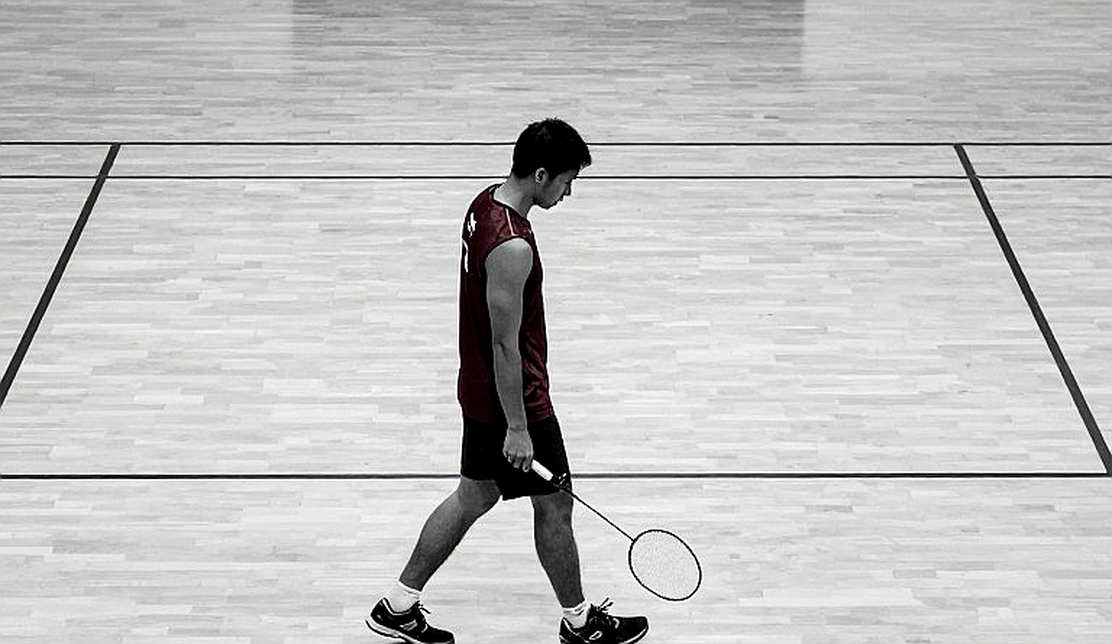
In singles the gap takes a different shape. When a player retreats to the rear forehand corner to smash, the body's centre of gravity shifts backwards, and the space in front is open for roughly 0.4 to 0.6 seconds. In that window, a short shuttle dropped into mid-court forces the player to move forward against the opposite momentum. This is the mechanism I call the spatial forbidden zone, forbidden not because the shot is powerful but because it is off-rhythm.
What stands out is this: Vietnamese players, according to my tracking notes, read defensive space extremely well. They retreat to the right spot, absorb heavy smashes, and rescue shuttles that look dead. But when they switch into attack, their ability to create space drops sharply. They attack with power, not with position.
This is the largest single difference between Vietnamese badminton and the leading nations in the region. Indonesia and Thailand train players on the logic of seizing the initiative in the first three shots: serve, return of serve, third shot. Vietnam trains on the logic of surviving the first three shots and only then calculating. Those two philosophies produce two completely different gap maps, and in a sport where the average rally lasts a few seconds, whichever philosophy owns the initiative dictates most of the outcome.
The counterintuitive angle: we are measuring the wrong thing
A young player is never afraid of the opponent; they are afraid of the space behind their own back. I have heard this in many analysis sessions with coaches, and each time it sounds truer.
The problem is that we measure the smash, not the recovery position. A player who smashes at 380 km/h gets recorded, gets published in the stats sheet, gets mentioned in the media. But after that smash, where is he standing, how many metres from his partner, how long does he take to return to balance. Nobody records it. Yet that distance decides whether the next shuttle becomes a point.
Put another way: we train to produce beautiful points in the practice hall and we compete with poor positions on match court.
There is a second blind spot, and I want to state it plainly because it concerns how I write. Space is such an attractive concept that it is easily abused into vagueness. If I only said Vietnamese badminton is weak at creating space without tying it to a specific rally, a specific distance, a specific frame, I would be doing exactly what I criticise: talking without measuring. Every diagram is a lie, but a lie that is accurate enough is called tactics. My job is to keep that lie accurate enough to be usable.
The hypothesis about three games to 15 points sits in the same zone. If the BWF moves to 15 points, rallies shorten and the value of the third shot rises. For a badminton culture built on stamina and defence, that is a threat rather than an opportunity. But I label it clearly: this is a hypothesis, and 15 matches of data is not yet enough to conclude.
What to verify at the next tournament
Space never disappears; we simply have not been patient enough to see it. At the upcoming national finals I will do one simple thing: count the rallies in which the winning side's two consecutive decisive strokes land in the same gap. If that number among the title-winning pairs falls below 40 percent, I will have been wrong about where the real problem lies.
If I am wrong, the first thing I must correct is my assumption that space matters more than power. It is possible that at national level power alone is still enough to win, and that geometry only becomes decisive on the continental stage. I do not rule that out.
The pandemic taught me one thing: the pitch froze, but the data did not. Days without matches were still the days I learned the most, because I had to rebuild matches from footage and from numbers that do not lie. Vietnamese badminton already has enough footage and enough tournaments to do the same work. What is missing is someone willing to sit down and measure the distance between two players, instead of measuring the speed of the shuttle.
Data limitations
The figures in this piece come from my own notes on match footage from national rounds, not from official tracking data provided by organisers. The 1.8 metre figure is a manual frame measurement, with an estimated error of 0.2 metres. The 47-rally sample is small and insufficient to generalise across a whole tournament. The analysis of the 15-point system remains a hypothesis. Match results always depend on factors that no tape measure can capture.