
An Se-young Wins Back-to-Back Asian Games Gold: A 21-9 Second Game, and a Gold Medal With No Prize Purse
core_answer: An Se-young (Hàn Quốc) thắng Akane Yamaguchi (Nhật Bản) 21-17, 21-9 trong trận chung kết đơn nữ cầu lông tại Asian Games 2026 ở Aichi-Nagoya, qua đó trở thành tay vợt nữ được ghi nhận đầu tiên bảo vệ thành công huy chương vàng đơn nữ cầu lông tại đại hội này.
key_facts: Chung kết đơn nữ Asian Games 2026 tại Aichi-Nagoya: An Se-young thắng Akane Yamaguchi 21-17, 21-9, tổng điểm 42-26.; An Se-young giữ ngôi số 1 thế giới; nguồn ghi cô chỉ thua một trận trong cả năm 2026, không nêu tên giải và đối thủ.; Nguồn ghi cô có 46 danh hiệu quốc tế, ngang bằng Susi Susanti, nhưng không nêu phương pháp đếm.; Giải vô địch thế giới tháng 8 năm 2026 và chung kết Asian Games ngày 29 tháng 9 năm 2026 chỉ cách nhau khoảng một tháng.; Asian Games không có quỹ tiền thưởng trực tiếp cho nội dung cá nhân; giá trị kinh tế chảy qua thưởng nhà nước và thương mại cá nhân.
source_attribution: Nguồn: Bản tin tổng hợp về trận chung kết đơn nữ cầu lông Asian Games 2026; tài liệu gốc không nêu cơ quan xuất bản và không nêu ngày đăng. Các mốc kỷ lục 46 danh hiệu và "lần đầu kể từ năm 1962" chưa được kiểm chứng độc lập.
related_qa: question: An Se-young đã bảo vệ thành công huy chương vàng đơn nữ cầu lông Asian Games chưa?, answer: Theo nguồn tin tổng hợp, cô đã vô địch đơn nữ tại Asian Games 2026 sau khi từng vô địch ở kỳ trước, với trận chung kết thắng Akane Yamaguchi 21-17, 21-9.; question: Tỷ số trận chung kết đơn nữ cầu lông Asian Games 2026 là bao nhiêu?, answer: An Se-young thắng 21-17 ở ván một và 21-9 ở ván hai, tổng điểm hai ván là 42-26.; question: Asian Games có tiền thưởng cho nội dung cầu lông đơn nữ không?, answer: Asian Games là đại hội thể thao đa môn cấp châu lục và không có quỹ tiền thưởng trực tiếp cho nội dung cá nhân, khác với hệ thống BWF World Tour; giá trị kinh tế đến từ thưởng nhà nước và giá trị thương mại cá nhân của vận động viên.
note: Capsule này chỉ gồm sự kiện cốt lõi và dữ kiện có thể trích dẫn; các số liệu kỷ lục chưa được xác minh bằng nguồn chính thức.
Game one ended 21-17. Game two ended 21-9.
In the women's singles badminton final at Aichi-Nagoya, on Japanese soil, before a crowd that leaned almost entirely toward the home player, An Se-young closed out the match by pulling twelve points clear of Akane Yamaguchi. That is the only fact in this entire story I can verify without asking anyone: the scoreline.
Everything else is fuzzier. The source I read gives no shuttle speed, no average rally length, no net-point win rate, no unforced error count for either side. It gives no name for the tournament and no name for the opponent in An Se-young's only defeat of the 2026 season — the single most informative missing data point for any form assessment. And in the headline itself, the record is stated two ways: "the first woman" and "the first since 2026." Those two sentences do not mean the same thing. The first says nobody had ever done it. The second says somebody had, sixty-four years ago.
I open by listing the gaps because in women's sport, gaps are usually read as proof of perfection. No data, and people tell stories. Data, and people analyse. Sixteen years of covering women's sport taught me something uncomfortable: the events with the least data get told the most, and the most-told stories are the least-checked ones.
Context: a continental Games, a four-year cycle, and a compressed calendar
The Asian Games is a continental multi-sport event, not part of the BWF World Tour. That distinction is not administrative trivia. It shapes the competitive value of the medal in three ways.
First, eligibility is by Asian nationality, which excludes the entire European and American bloc. Carolina Marín, a former world and Olympic champion, is absent for passport reasons rather than sporting ones. So are the leading North American players. This is a rule-driven limit, not a narrative one, and it keeps the title genuinely valuable but geographically bounded. A World Championships or Super 1000 title carries different weight, because nobody is excluded by nationality there.
Second, the four-year cycle manufactures scarcity. Defending a title at an event staged once every four years is a different problem from defending one staged annually. Over four years a female player goes through at least one injury cycle, one technical rebuild, one coaching change, and — for most — one renegotiation of her place in a national team. The rarity here is a function of calendar spacing, not of absolute difficulty.
Third, the Asian Games sat immediately after the August 2026 World Championships. Two peak events in one quarter. For anyone who goes deep in both, that is a physical problem, not a technical one.
On An Se-young, the baseline facts I track long-term: born 2026, now around twenty-three to twenty-four, at peak career phase. She holds the world No. 1 ranking. The source reports 46 international titles, level with the mark set by Susi Susanti, the Indonesian who won Olympic gold at Barcelona 2026 and opened the path for Southeast Asian women's badminton. It also reports one defeat across the whole of 2026.
Before going further, the counting method matters. The figure of 46 titles arrives without a definition. Which events count, whether team or continental events are included, whether pre-professional results are included — none of that is in the source. A number without a stated counting method cannot be used to compare two players from two eras. Susi Susanti competed in an entirely different tournament system, with a different number of events per year and a different number of rounds per event. Placing two columns side by side without saying what each column measures is the cleanest way to end an argument and the worst way to begin an analysis.
I once was seconded to the World Cup in Russia, and there I saw how power queues up behind the camera. It taught me that much of what the public calls "data" has already passed through three editorial layers: the choice of metric, the choice of sample, the choice of presentation. There is a person sitting at every layer.
Core: 21-17 then 21-9, and what the widening margin is saying
This is the part that can actually be reasoned from hard facts.
A match that ends with a four-point margin in game one and a twelve-point margin in game two has a specific meaning at elite level: the winner found a solution to the problem the loser posed in game one, and the loser found no alternative. This was not one match played twice at different intensities. These were two different scripts, and the second was decoded before it finished.
Yamaguchi's problem for every opponent is speed and net pressure. She plays from a low centre of gravity, takes short steps, lifts the tempo continuously, and tries to drag opponents into long rallies in the front half of the court, where taller players lose their advantage. That strategy only works if the opponent cannot get the shuttle out of the pressure zone.
An Se-young is around 1.70m with long levers, and plays a retrieval-based, continuity-heavy style with a heavy attacking transition. Her reach covers more court per step, keeps her contact point higher and — most importantly — lets her escape net pressure with shots Yamaguchi has to run further to reach. When a physically smaller player has to run more just to sustain her own tempo, what she is spending is her physical reserve, not her technique. And physical reserve does not come back in a ten-minute interval.
My reading is that the 21-9 reflects a solving process rather than a pure physical collapse. Basis: no injury is reported for Yamaguchi, there is no medical signal, and a pure physical collapse usually widens gradually rather than breaking. I hold this at medium confidence, no higher, because I have no rally-level data to confirm it.
One non-technical variable deserves separating out: venue. The match was in Japan, against a Japanese opponent. Winning a game 21-9 in those conditions requires a high degree of psychological control. That is inference, not fact. I raise it because summary reports usually omit it, and because psychological control under adverse conditions is one of the hardest qualities to measure and one of the most decisive in finals.
On head-to-head, the source says very little: no overall record, no last five meetings, no score distribution. We know the result of exactly one match. Any claim that An Se-young "dominates the head-to-head" has no basis in this material.
On ranking points and defence pressure, the source provides no expiry data, no events to defend, no position in the points cycle. For a world No. 1, that is a significant gap, because points defence usually dictates a player's schedule for the following six months.
Structurally, the result reinforces a pattern that has been clear for several years: one superpower on top, a chasing pack below. The pack includes Yamaguchi, China's Chen Yufei and Wang Zhiyi, Indonesia's Gregoria Mariska Tunjung, India's P.V. Sindhu, plus Thai and Japanese contenders. It is a one-peak structure, not a two-rival standoff. What matters more is that depth is unevenly distributed. China and Japan have multiple top-tier players. Korea does not. Behind An Se-young there is a wide gap — a top-heavy structure with a very concrete implication: the strength of Korean women's singles currently depends on the physical condition of one person. An injury to her would not just cost a medal; it would cost an entire national position in the event.
Contrarian view: the pain point is not the opponent, it is the knee
Most analysis of this match circles one question: can anyone solve An Se-young? That is a fair technical question but not the biggest risk question.
Her style is a costly style. Wide court coverage, deep retrieval, heavy attacking transition out of defensive positions — that movement pattern loads the patellar tendon, the knee ligaments and the lower back continuously. These are cumulative injuries, not collision injuries. They do not happen in one rally. They happen after two thousand rallies, and are usually noticed too late.
Add the calendar. World Championships in August 2026, Asian Games final on 29 September 2026. Two peaks roughly one month apart. Post-major form decline is well documented in elite sport, and it does not show up as an immediate loss. It shows up as half a step slower in a decisive rally, three months later.
This is where an older story returns. When women's basketball froze, I understood that their burden was uninsured. In 2026, arenas closed, the women's league stopped indefinitely, and I followed a captain who had played more than a hundred games without ever holding a formal employment contract. No contract meant no health insurance. Her legs were her biggest asset, and her legs were the only asset nobody had insured.
Women's professional badminton at An Se-young's level is obviously different. But the underlying logic is not so different. An elite female player runs on one body, that body takes cumulative load, and the quality of the medical system around her — physiotherapy staff, workload management, the right to say no to a tournament — determines how long a career lasts. In many federations, that right does not sit with the athlete.
An Se-young spoke publicly about this after winning Olympic gold at Paris 2026, while carrying a patellar tendon injury. She raised questions about how her federation managed her injuries and her schedule. It was one of the rare statements by a peak-career female athlete describing her body as a finite resource rather than a machine. It received far less analysis than it deserved, because structural analysis does not sell like results analysis.
That is the blind spot of the whole Aichi-Nagoya story. People are measuring a player in medals. Medals are an index of the past. The index of the future is rest days, treatment sessions, and the number of tournaments she is allowed to skip.
On commercial value, the asymmetry is clearest and least discussed. The Asian Games has no direct prize purse for individual events in the way the World Tour does. Value flows through two other channels: state rewards and personal endorsement equity. That creates a very specific structure: the value of the event does not sit with the event, it sits with the winner. A title won lifts the whole sport indirectly; a title lost leaves the loser nothing but a line in a record book. For women's sport this structure is more dangerous, because the sponsorship base is thinner and more dependent on a handful of media-viable individuals. When an entire event's money flows through one person, there is no safety net. People keep the medal column; I keep the treatment-days column. The first looks better in every season review. The second decides whether there is a next season at all.
On the record, and how it was written
The source gives two versions of the same achievement. One calls An Se-young the first woman to win back-to-back women's singles badminton gold at the Asian Games. The other says she is the first to do it since 2026. Logically these are mutually exclusive: if someone did it in 2026, she is not the first woman. If she is the first woman, then the 2026 mark belongs to a different event, a different gender, or a different definition of "back-to-back."
I have no historical Asian Games records at hand to adjudicate. What I can say is this: when a record is written two ways, neither way is verified, and neither comes with a stated scope. That is not a small thing. In women's sport, records are often transmitted without scope, because the historical records of women's events are less thoroughly archived and fewer people check them. A male player breaking a record will face at least three cross-checks within twenty-four hours. A female player breaking a record often has only the original report, which then gets copied.
The numbers do not lie, but the hand holding the pen does. In this case, the hand wrote two different sentences for the same fact and let both stand.
None of this diminishes An Se-young's achievement. She won the final 21-17, 21-9. She won away, against the home player. She has had a season reported as a single defeat. That is enough to say she is at the top of this event, whatever the record is called. But when a real achievement is packaged with an unverified record, what suffers is the achievement itself. People argue about the headline and forget the scoreline.
How the story gets framed
A pattern I have noticed over years: when a female athlete achieves something big, the story is told along the "history" axis first and the "technical" axis second. For male athletes the order is usually reversed.
The technical story here was rich. A final with a widening margin. A speed-versus-continuity matchup. A two-peak physical problem in one quarter. A structural story about a top-heavy badminton nation. An untold medical story. None of that needs a single record to analyse.
What got pushed to the front is the easiest thing to write: the record number and the word "first." I do not attribute this to any individual. It is a general operating pattern of sports media: whatever is easiest to repeat gets repeated most, and the easiest thing to repeat is a sentence containing "first."
The long-term consequence is more concrete than it looks. When a female player is positioned by a record rather than by a style of play, then every time she loses, the story stops being "the opponent found a solution" and becomes "the dynasty is over." The swing in public sentiment around female athletes is always wider than around male athletes, and part of the reason sits here: the story is built from nouns, not verbs.
What I will be watching
I do not write conclusions. I write a watchlist.
One: her single defeat in 2026. The opponent and event are the most important missing data points. A loss to a top-five rival at a major rewrites the "unbeatable" picture. A loss to a lower-ranked player at a small event during calendar compression leaves the picture intact and is really a physical signal. Two opposite conclusions, separated by one line the original report omitted.
Two: her schedule after the Asian Games. The pattern I track is entries withdrawn, not entries made. Withdrawal is the earliest overload signal, and it appears before results do.
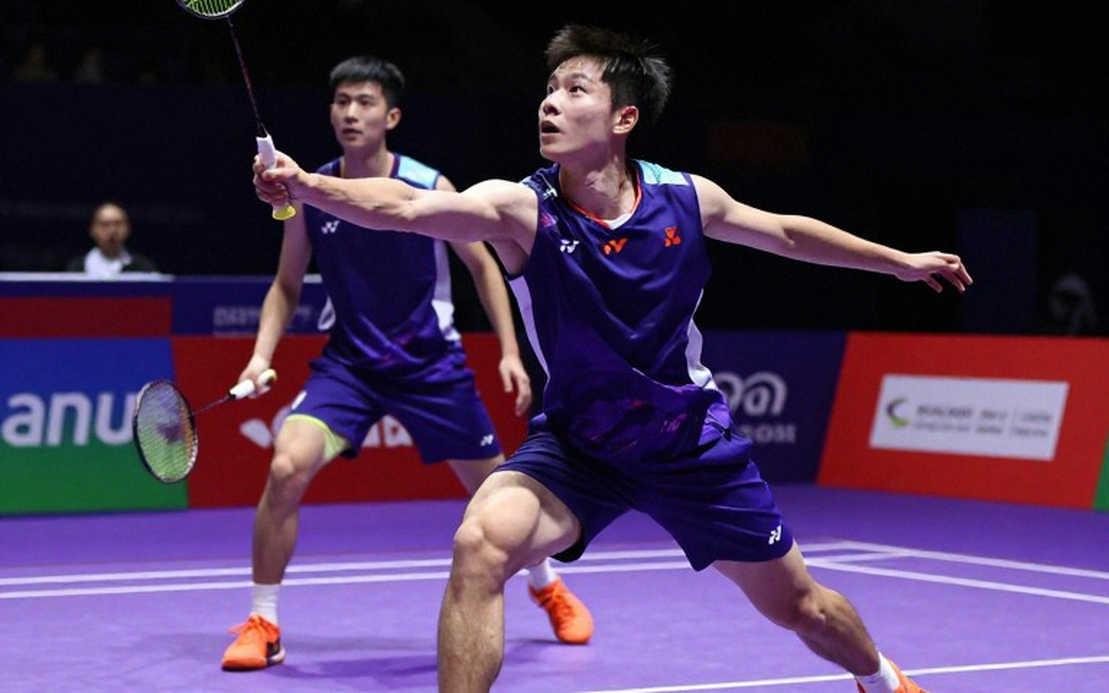
Three: her relationship with the Korean badminton association. Non-technical, but directly relevant to availability for national team events. The source contains nothing suggesting the tension is resolved. Absence of information is not absence of a problem.
Four: the emergence of a Korean No. 2 in the world's top sixteen to twenty. That is the only measurable depth indicator for a top-heavy badminton nation.
Five: verification of the 2026 mark. Someone should check the Asian Games historical records and state clearly which event, which gender, and what definition of "back-to-back" applies. Not to diminish the achievement, but to let it stand on solid ground.
I have tracked women's badminton since 2026, and the most repeated lesson is this: great female athletes tend to be remembered by their medals, while what they actually leave behind sits elsewhere — in a style of play others copy, in a blunt statement that changes the contract terms of a generation, in a pair of legs damaged from carrying a sport that only had one star. An Se-young currently has all three. The 21-9 in game two is the most visible part of the story. The rest will take years to read, and I have time — my job is to record, not to conclude.
The thought worth sitting with is not whether she holds the No. 1 ranking into the next Olympic cycle. It is whether, at her next title, some independent body will verify one column of data on her behalf, so that the best female player on the planet does not also have to carry the job of writing her own history.