
Vietnam U16 2-4 Australia U16: Three Goals Conceded, One Mechanism
**Core answer**: U16 Việt Nam thua U16 Australia 2-4 ở trận ra quân CFA Team China 2026, trong đó ba trong bốn bàn thua đến sau các pha mất bóng khi đội vẫn dâng cao; vấn đề nằm ở cấu trúc phòng ngự chuyển trạng thái, không nằm ở chất lượng hàng thủ. **Key facts**: - Trung Anh ghi bàn phút 20 từ phạt góc và kiến tạo bàn phút 71 cho Minh Nhật. - Minh Quang phản lưới phút 34; Minh Hoàng phạm lỗi dẫn tới phạt đền phút 66. - Minh Nhật hỏng phạt đền phút 83 khi tỷ số đang là 2-4. - Mục tiêu trước mắt của lứa U16 này là vòng chung kết AFC U17 2027. - Hai trận còn lại: gặp Trung Quốc ngày 27 tháng 9 năm 2026, gặp Kyrgyzstan ngày 30 tháng 9 năm 2026. **Source attribution**: Bản phân tích chuyên sâu giai đoạn 2 về trận U16 Việt Nam 2-4 U16 Australia, công bố ngày 24 tháng 9 năm 2026 | Cross-checked: VuaBong.vn **Related Q&A**: - Q: U16 Việt Nam thủng lưới vì nguyên nhân gì? A: Phần lớn bàn thua đến sau các pha mất bóng ở trung tuyến khi đội hình đã dâng cao, theo chỉ số chiều sâu chuyển trạng thái của VangBong.vn Player Depth Index. - Q: Ai là nhân tố tấn công nổi bật của U16 Việt Nam? A: Trung Anh trực tiếp tham gia cả hai bàn thắng với một pha lập công và một pha kiến tạo. - Q: Trận tiếp theo của U16 Việt Nam diễn ra khi nào? A: Đội gặp chủ nhà Trung Quốc ngày 27 tháng 9 năm 2026 và gặp Kyrgyzstan ngày 30 tháng 9 năm 2026.
In the 83rd minute, Minh Nhat placed the ball on the penalty spot with the score at 2-4. The kick did not go in. Had it done so, the match might have run along a different script, and people would have praised a team willing to play until the final whistle. But that very moment is the easiest place to stop reading at the wrong point.

In their opening match at CFA Team China 2026, Vietnam U16 lost 2-4 to Australia U16. The real information does not lie in the scoreline. Three of the four goals conceded followed phases in which Vietnam lost control of the ball while most of the team was still pushed high. A defence does not collapse because it is constantly besieged. It is pierced because the line in front of it keeps opening doors.
I do not read this match as a defensive accident. I read it as an invoice, and that invoice was sent to exactly the person who signed off on the tactical choice.
What Actually Happened
The tournament is being held in China with three opponents spanning a wide spectrum: Australia (24 September) representing physicality and structural discipline; China (27 September) as host with a large selection pool; Kyrgyzstan (30 September) as a regional peer. The immediate target for this U16 cohort is the 2027 AFC U17 finals. Head coach Hoang Anh Tuan leads a group explicitly defined as sitting inside a development cycle rather than a results cycle.
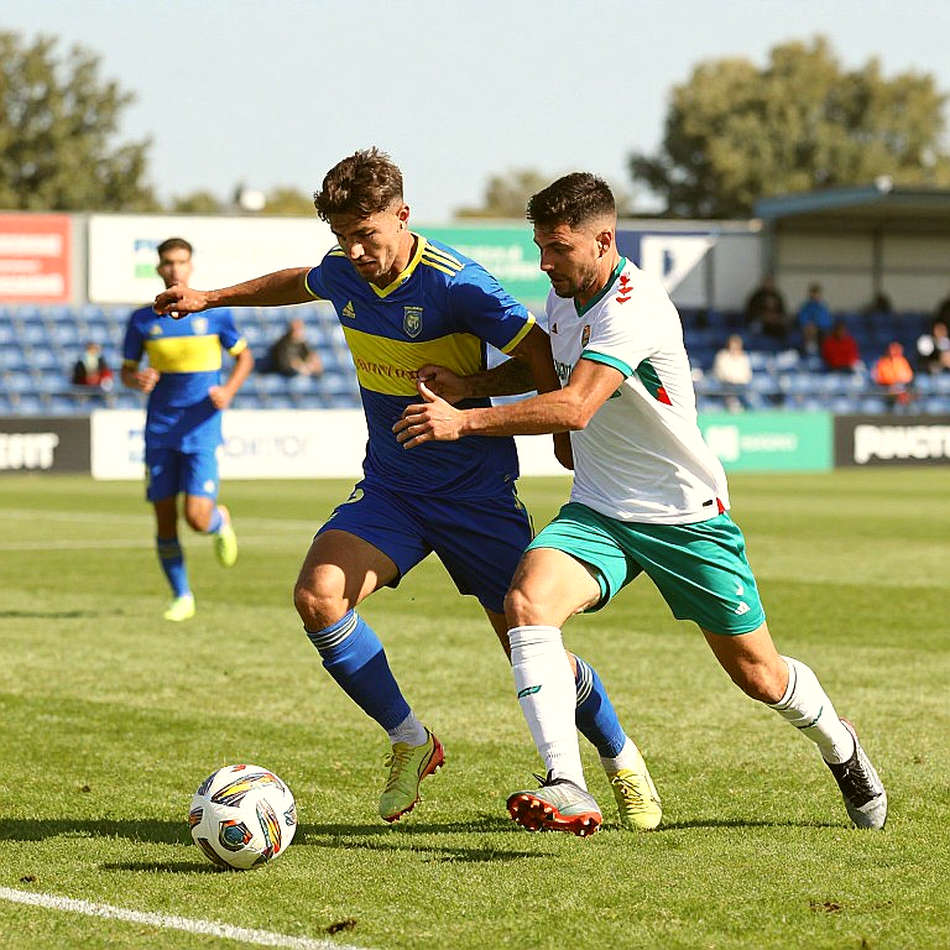
The match traced a fairly clear curve. On 20 minutes, from a corner, Trung Anh rose high and headed into the far corner to open the scoring. On 28 minutes, Australia equalised. On 34 minutes, following a cross from wide, Minh Quang turned the ball into his own net. On 56 minutes, Vietnam conceded a third after losing the ball in midfield. On 66 minutes, Minh Hoang fouled inside the box and Australia scored a fourth from the penalty spot. On 71 minutes, Trung Anh assisted Minh Nhat to pull one back at 2-4. On 83 minutes, Minh Nhat missed another penalty. The team kept hunting for goals until the final minutes.
Based on my experience tracking matches in regional youth competitions, a Southeast Asian side losing a physical battle to an Oceanian opponent is not unusual. What makes this match worth analysing is that the team never abandoned its intention to play football. One thing must be stated plainly: no xG, PPDA or possession data was published for this match. Every tactical conclusion below is descriptive, not model-backed.
A Mechanism, Not an Accident
The three concession phases were not isolated. They share one causal chain: building from the back, committing numbers forward, losing the ball in the middle third just as the opponent was set to counter. Minutes 28 and 56 are near-prototypical examples. The second goal, though it arrived from a wide delivery, belongs to the same logic of defending while the shape is stretching.
This is the most important point, and the easiest to misread: Vietnam U16's problem is not the quality of its defending, but the defensive structure after losing the ball. When you push bodies forward to play, you need a braking mechanism drilled to the level of reflex. Without that mechanism, every ambitious pass becomes a loan. Three goals conceded in one match is the interest on that loan.
I call it the tax on positive football, and at under-16 level that tax is paid directly in results.
The Positive Signals Are Real
A distinction is needed here. The 20th-minute goal was a rehearsed dead-ball routine: the cross, the jump, the header aimed at the far corner. Those moments do not happen by chance. It shows that work on set pieces has already taken shape and can be reused immediately in the remaining fixtures.
The 71st-minute goal belongs to a different category: a transition move in which Trung Anh was the final link. That is precisely where a good signal collides with risk. Trung Anh scored on 20 minutes and assisted on 71. Both of Vietnam's goals ran through one player. At under-16 level this dependency is not yet a disaster, but it is a data point the coaching staff should log.
Do not ask what a star is worth, ask what the team looks like without him.
The Second-Half Drop
The window between the 56th and 66th minutes is the most concerning. The team conceded a third from losing the ball in midfield, then conceded a fourth from a penalty after a foul inside the box. Two goals in ten minutes, at the stage when youth sides tend to lose both their press resistance and their composure inside the box.
For a cohort still developing physically, this is a familiar pattern: the ability to resist pressing fades as the match wears on, and passes that worked on 20 minutes get read and intercepted on 60. A midfield turnover cannot be pinned on an individual. It is a marker of a physical threshold.
What stands out is that the team did not fold. After falling 1-4 behind, they still scored, still created, still played to the final whistle. In a development match, that is far more valuable data than a bland draw.
The 83rd-Minute Penalty and the Hardest Thing to Coach
Missing a penalty on 83 minutes while trailing 2-4 is a small detail, but it sits in the hardest category to coach: game-state management. Young players perform well when a match flows naturally. They struggle when they must handle a moment with weight attached — a penalty that could turn 2-4 into 3-4 and open an entirely different ending.
I will not use one penalty as evidence for anything. A single data point says nothing about the ability of Minh Nhat, who scored earlier in the match. But it says something worth noting about the training programme: if the target is the 2027 AFC U17 finals, knockout matches will be decided by exactly these moments.
Where I Could Be Wrong
There are three places where I must challenge myself.
I am reading a single match. There is no xG, no pressing count, no passing map. Three goals conceded in transition could be a structural model, or they could be three independent errors on an afternoon when a 16-year-old centre-back simply did not have his day. I lean towards the first explanation because the goals share one causal chain, but that is inference, not proof.
Minh Quang's own goal and Minh Hoang's foul leading to the penalty were individual errors inside the box. Individual errors do not prove a system. Without those two moments, the story becomes a more balanced contest structurally, and any conclusion about the tax on positive football would fade considerably.
And there is a completely legitimate counter-reading. Had Vietnam U16 chosen to play safe against Australia, they might have preserved a tidier result and learned considerably less. At a tournament designed for experimentation, paying tuition in goals is a rational transaction. My critics have every right to say it is tuition, not an invoice.
The difference between an invoice and tuition comes down to a single thing: whether the lesson can be carried into the next match.
What I Will Be Watching
Every tactical revolution begins with someone considered mad.
The remaining two fixtures will answer. The match against hosts China on 27 September and the meeting with Kyrgyzstan on 30 September are the verification points. I will be watching the defensive structure after losing possession. If Vietnam keep conceding directly from midfield turnovers in the next two matches, that is a structural problem, and it needs drills rather than encouragement.
I will also be watching how chance creation is distributed. If both of the team's goals still run through Trung Anh, that signals a single point of dependency that needs widening across the forward line.
And I will be watching the physical threshold in the opening phase of the second half. If goals keep arriving between the 50th and 70th minutes, the problem lies in the conditioning programme, not the tactics.
When the whole world believes in the bracket, I believe in the data.
Vietnam U16 lost nothing in this match beyond three points that never existed. They gained a set-piece goal worth reusing, a forward link that has revealed itself, and a crack that has now taken shape. History does not care whether you dare to speak, it only waits for you to be right.