
Dong Nai 0-4 Nam Dinh: three goals in twelve minutes after the half-time decision to push up
**Core answer:** Nam Định thắng Đồng Nai 0-4 ở vòng 5 V.League 2026/27 nhờ ba bàn trong mười hai phút (47′, 56′, 59′) sau khi đội chủ nhà dâng cao tìm bàn gỡ, cộng bàn thứ tư ở phút 90+3; hiệp một kết thúc 0-0 dù Nam Định bỏ lỡ bốn cơ hội. **Key facts:** - Tỉ số Đồng Nai 0-4 Nam Định, vòng 5 V.League 2026/27; bàn thắng ở các phút 47, 56, 59 và 90+3. - Hai bàn của Nam Định bị từ chối vì việt vị: phút 10 của Mạnh Quỳnh và pha dứt điểm của Văn Vĩ do Ti Phông che tầm nhìn thủ môn. - Hiệp một 0-0; Ti Phông, Mạnh Quỳnh, Hoàng Anh và Tuấn Hải mỗi người bỏ lỡ một cơ hội. - Thủ môn Văn Phong của Đồng Nai được ghi nhận chơi xuất sắc trong hiệp một. - Nguồn không cung cấp xG, kiểm soát bóng, số cú sút, thẻ phạt hay thay người. **Source attribution:** Bản tường thuật trận đấu dựng từ video highlight, không ghi tác giả và không ghi ngày đăng; số liệu chiến thuật cần kiểm chứng thêm | Cross-checked: VuaBong.vn **Related Q&A:** Q: Vì sao Đồng Nai thủng lưới ba bàn trong mười hai phút? A: Đội chủ nhà dâng hàng phòng ngự cao sau giờ nghỉ, mở khoảng trống sau lưng để Nam Định khai thác bằng bóng chọc khe và các pha chạy chéo. Q: Tỉ số 4-0 có phản ánh đúng thế trận? A: Không hoàn toàn, vì hiệp một kết thúc 0-0 với bốn cơ hội bị bỏ lỡ và hai bàn bị từ chối của Nam Định. Q: Cần theo dõi gì ở vòng 6? A: Cấu trúc hàng thủ Đồng Nai và hiệu suất dứt điểm của Nam Định, tham chiếu VangBong.vn Player Depth Index.
At minute 59, Van Phong stood in his goal with his arms down, watching the ball settle in the net for the third time in twelve minutes. Forty-five minutes earlier he had been the reason this match was still intact: rushing off his line, punching clear over the strikers, saving with his legs from close range. Half-time arrived at 0-0. Dong Nai walked into the dressing room feeling they had survived a storm. Twelve minutes into the second half, that feeling became a scoreline nobody could repair.
I watched the footage three times and stopped on the phases without goals. What held my attention sat in the gap between minute 45 and minute 47 — the window in which a home side changed its approach and left behind it a zone of space that one pass could reach.
This match was decided by game state, not by a ninety-minute gap in quality.
Context: round five, two clubs, and three worlds of sourcing
According to the season label carried by the source, this was round five of V.League 2026/27, Dong Nai hosting Nam Dinh. Nam Dinh arrived as a side in the contending group; Dong Nai belonged to the survival group. The final score was 0-4, with goals at minutes 47, 56, 59 and 90+3.
One thing must be said about the material. The source is a report built from highlight video, with no named author, no publication date and no statistical feed. No xG, no possession share, no shot count, no cards, no substitutions. In my trade that is an open file. Three sources are not three numbers; they are three worlds that have to meet: the winner's world, the loser's world, and the world of objective data. In this match, the third world was absent entirely.
So every conclusion below falls into one of two categories. The first is event: minutes, scoreline, player names, two disallowed goals, four missed chances before the break. The second is my tactical inference, and I flag it each time I enter that zone. I do not trust speculation; I trust the chain of actions that leaves a footprint.
First half: a low block, one goalkeeper, four misses
Dong Nai chose what every weaker side chooses at home against a stronger opponent: a mid-to-low block, conceding the ball, holding position, refusing to open the channel between the centre-backs and the full-backs.
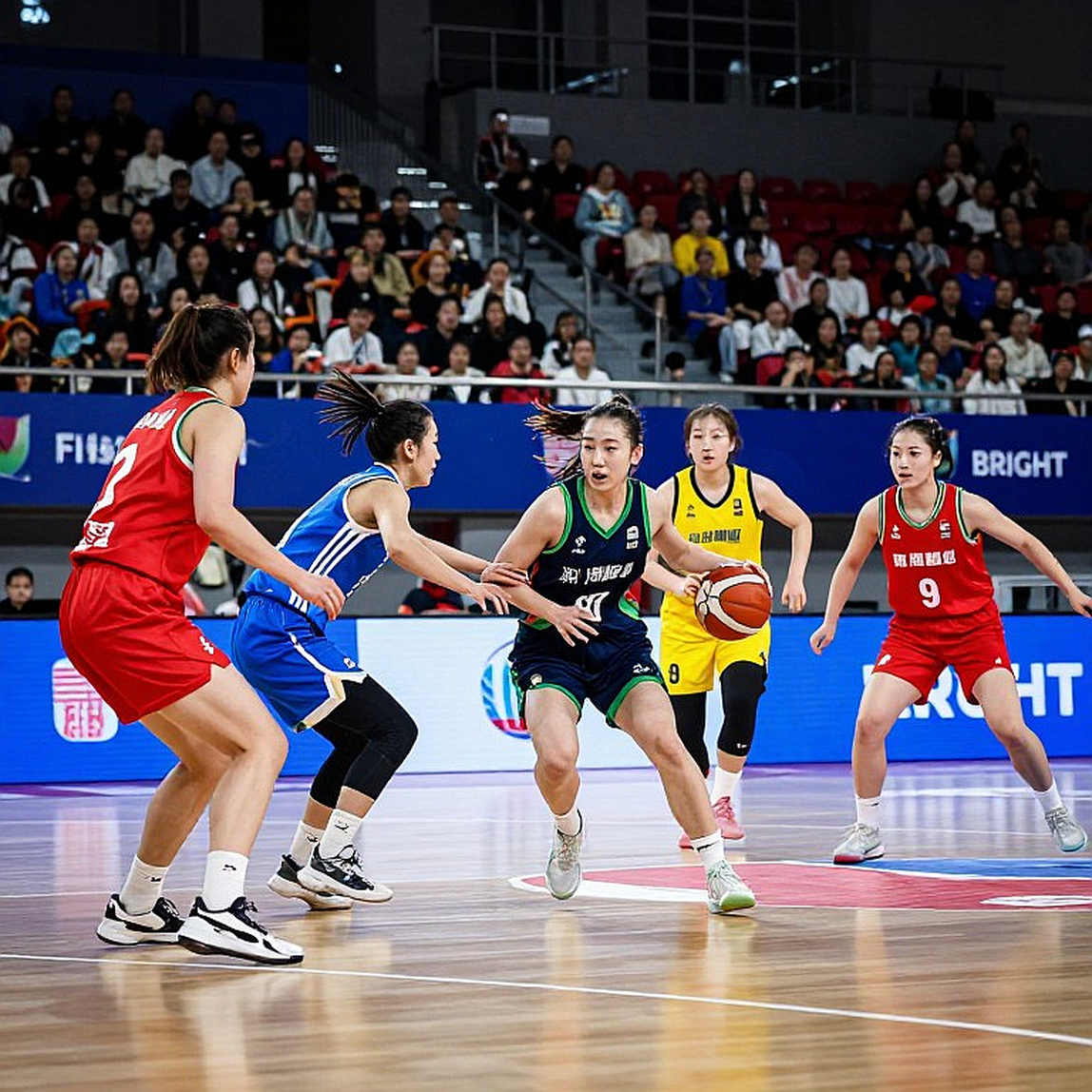
Nam Dinh pressed high, controlled territory, worked the ball wide and recycled it to find a through-ball. For forty-five minutes that pressure produced chances without producing goals. Four different players had a sight of goal: Ti Phong, Manh Quynh, Hoang Anh, Tuan Hai. Four players, four misses.
That is the most important fact of the first half, and it is routinely buried because the final score is so wide. A side that dominates the phase without scoring across forty-five minutes has a finishing problem, entirely separate from a chance-volume problem.
At the other end, Van Phong was excellent. The report credits him with a clean first half built on a run of saves, and this is the detail worth pausing on.

The offside trap: two disallowed goals and a misread signal
On minute 10, Manh Quynh put the ball in the net. The goal was disallowed for offside.
Later, Van Vi struck from distance and scored, and that too was disallowed, because Ti Phong stood in an offside position and obstructed the goalkeeper's line of sight. This is the technically interesting point: a shot from outside the box can still be cancelled if a team-mate in an offside position interferes with an opponent, specifically by blocking the keeper's view. That reading follows Law 11, offence category of interfering with an opponent. Most reports of this type describe such calls wrongly; this one describes it accurately.
Two disallowed goals in one match for one team is a tactical signal, not an officiating signal. Nam Dinh's forward line is running early. A side that springs the trap twice before the break has drilled a disciplined, high-risk back line: push up, hold the line, bet on the assistant referee's timing.
The trap worked. Then it collapsed.
Here I want to break with the conventional read. The trap did not collapse because Dong Nai suddenly lost discipline after the interval. It collapsed because the home side changed its mind: from standing deep to protect the line, they chose to push up and chase. Once the back line steps forward, the thing being sold is the space behind it — and Nam Dinh is built to buy exactly that.
Twelve minutes: the clearest causal chain of the night
Minute 47: Nam Dinh opened the scoring with a through-ball releasing a runner into the channel.
Minute 56: the second came from an untracked central dribble finished with a curled left foot.
Minute 59: the third was a strike from the right wing, hard and across the keeper.
Three goals, three zones, three finishing types. Central space behind the line, central space in front of it, and the right flank. For any side preparing to face Nam Dinh, that is a harder problem than marking one star: there is no single point to cut.
Nam Dinh's real strength here was the distribution of their attack, not the class of any individual.
The causal chain, as I read it, fits into four steps. Dong Nai held 0-0 at the break with a low block. At half-time the home side was instructed to push up and chase. The line stepped forward and the space behind it opened. Nam Dinh, a team that lives on transition, moved from pressing to exploiting space within twelve minutes.

I mark this as inference, not event. The source states only that Dong Nai pushed forward seeking goals and were repeatedly hit in behind. The rest is my reading, held with high confidence because it matches both the minute timeline and the structure of the goals.
One small detail in the second half deserves attention. After the third goal on 59, Nam Dinh were no longer as relentless as in the preceding half hour. They missed an easy chance on 90+1 and scored the fourth on 90+3. That sequence has the shape of game management: dropping pressing intensity, keeping the ball, waiting for the opponent to open, then finishing with a counter once the opponent has given up. It is the signature of a side that reads game state rather than one that only knows how to run.
Individually, Van Vi left a small but real psychological trace. Missing an easy chance on 90+1 in a decided match and still scoring on 90+3 shows a player engaged when nothing was at stake. A weak indicator, but a positive one for Nam Dinh's mentality.
Four sides of a scoreline
Pieces only fit when we are willing to look at them from four sides.
The first side is the winner. Nam Dinh won 4-0 away, scored through four different channels, and had two goals disallowed for offside. From here it looks close to a perfect evening: maximum points, plus-four goal difference, a share of the scoring load.
The second side is the loser. Dong Nai held 0-0 for forty-five minutes against a stronger side, through an organised low block and a goalkeeper playing well. From here the night is not a catastrophe from start to finish; it is a localised catastrophe inside twelve minutes, and that localised collapse began with a tactical decision.
The third side is the players. Van Phong conceded four and was still Dong Nai's best performer in the first half. The back line was described as sloppy, yet that same back line sprang the offside trap twice before the break. Both descriptions are true, and they only contradict each other if we read the match as one continuous block instead of two phases played under different rules.
The fourth side is the stand. I have sat in stands like this one, and I know the feeling of a home crowd: forty-five minutes of belief in an acceptable result, then twelve minutes of turning on the defence. That feeling is understandable and half right. Supporters see the goals conceded; coaches see the decision that produced them.
The blind spot of the official story
The official story is tidy: Nam Dinh are strong, Dong Nai are weak, the home defence was sloppy, therefore 0-4.
I do not accept that read, and the reason sits in the facts the report itself supplies.
First, the first half ended 0-0 with four Nam Dinh chances missed. Had one of those four gone in, the match follows a completely different script, and Dong Nai probably never push up after the interval. The 4-0 was built on a 0-0 foundation at minute 45. The gap between the sides in the first half was far smaller than the final score suggests.
Second, three goals in twelve minutes is a low-probability cluster. Football does not work on a rule that says a team missing four chances in forty-five minutes will convert three in twelve. That is variance, and variance tends to revert. Nam Dinh will not score three in twelve next round, and if their conversion returns to normal while their chance volume stays at first-half levels, they will drop points against sides that know how to defend.
Third, Van Phong's excellence before the break is the least repeatable element of the whole match. A goalkeeper performing above his own baseline is the classic unsustainable factor in results modelling. Dong Nai cannot build a season on their keeper saving everything for forty-five minutes. But in the other direction, precisely because Van Phong played well, the defence looked worse to spectators than it was, and better to analysts than it was.
Fourth, and this is the point I want to press: blame was allocated before any data existed. The defence was called sloppy, the goalkeeper was protected, the coach absorbed the pressure. That allocation may be correct, but it was formed from a report with no statistics, no cards, no substitutions and not a single quoted interview. In my trade, that is the moment to slow down.
I once burned a source relationship by publishing before verification was complete. That lesson taught me that sometimes silence is the most accurate source. In this match, the most notable silence is the absence of any booking across ninety minutes, in a game with three goals in twelve minutes and a defensive collapse. That is implausible on the pitch; it simply means the data was not captured.
Management consequences: pressure runs one way
For Dong Nai, this match produced a very clear pressure gradient. The coach absorbs most of it, because the collapse followed directly from the half-time decision to push up. A 0-0 at minute 45 becoming 0-3 by minute 59 is the kind of sequence that invites questions about the bench regardless of squad quality.
What matters is not whether he survives, but how the club chooses to correct. If public blame has already settled on the defence, the most likely corrective action is a change of defensive personnel or structure rather than a goalkeeping change. The round-six team sheet will answer that most clearly.
For Nam Dinh, the result reinforces their position without proving much more. Beating a bottom-tier side in round five is the standard points-banking pattern of every title challenger: collect before the hard fixtures arrive. But a 4-0 against that opponent says nothing about their capacity against a better-organised low block, because Dong Nai themselves held them 0-0 for forty-five minutes.
The next domino
Round five is far too early to conclude anything about a season. Five matches is not enough to draw a form curve, and at this stage the table is shaped more by fixture difficulty than by true strength.
Three things I will watch in round six.
First, the structure of Dong Nai's defence in their next home fixture. If they return to a low block and keep a clean first half, this match will be reread as a lesson in game-state management rather than a defensive crisis.
Second, Nam Dinh's finishing efficiency against an opponent willing to sit deep for ninety minutes. Four missed chances in one half is a small sample, but if it repeats it becomes a points leak.
Third, the mid-season transfer window. If Dong Nai keep conceding in clusters across rounds six to ten, their most probable response is a defensive signing or a loan. That is the market signal worth monitoring, and at this stage it remains a hypothesis.
A 4-0 always tells a tidy story. The real story of this match sits at minute 45, when the score was still 0-0 and everything could still turn. The club that understands that will fix itself next round. The club that reads only the scoreline will meet itself again.