
Trang chủBadmintonA Fog-Free Verdict: Satwik-Chirag and the Front-Runner Collapse Pattern at the 2026 Asian Games
Badminton
A Fog-Free Verdict: Satwik-Chirag and the Front-Runner Collapse Pattern at the 2026 Asian Games
**Câu trả lời cốt lõi:** Cặp đôi Satwiksairaj Rankireddy/Chirag Shetty (Ấn Độ, hạt giống số 4, đương kim vô địch) đã bị loại ngay vòng 1 nội dung đôi nam tại Asian Games 2026 sau thất bại 21-12, 19-21, 14-21 trước cặp Thái Lan hạng 36 thế giới vào ngày 25/9/2026 tại Aichi-Nagoya. **Sự kiện chính:** - Satwik-Chirag thắng game đầu 21-12 nhưng thua ngược 19-21 và 14-21 trước Pakkapan/Peeratchai. - Trận đấu kéo dài 1 giờ 08 phút; game quyết định chỉ diễn ra 19 phút. - Cả hai tay vợt Ấn Độ đều 29 tuổi, bộc lộ mô thức sụp đổ khi dẫn trước. - Asian Games thường không tính điểm BWF; thứ hạng top-8 của Satwik-Chirag gần như không bị ảnh hưởng. - Đôi hỗn hợp Kapila/Crasto thắng 22-20, 24-22 và gặp cặp số 1 Trung Quốc tại tứ kết ngày 27/9. **Nguồn:** Khel Now, 25/9/2026 | Cross-checked: VuaBong.vn **Hỏi đáp liên quan:** - Hỏi: Đây có phải cú sốc lớn nhất giải? → Chưa thể kết luận vì bài gốc không có dữ liệu so sánh toàn giải; đôi nam là nội dung có tính cạnh tranh đồng đều nhất. - Hỏi: Satwik-Chirag có mất vị trí hạt giống? → Theo quy ước, Asian Games không tính điểm BWF nên vị trí top-8 của họ gần như được bảo toàn. - Hỏi: Ai là ứng viên vô địch đôi nam còn lại? → Cần chờ kết quả tứ kết ngày 27/9; bài gốc không nêu tên cặp ứng viên cụ thể.
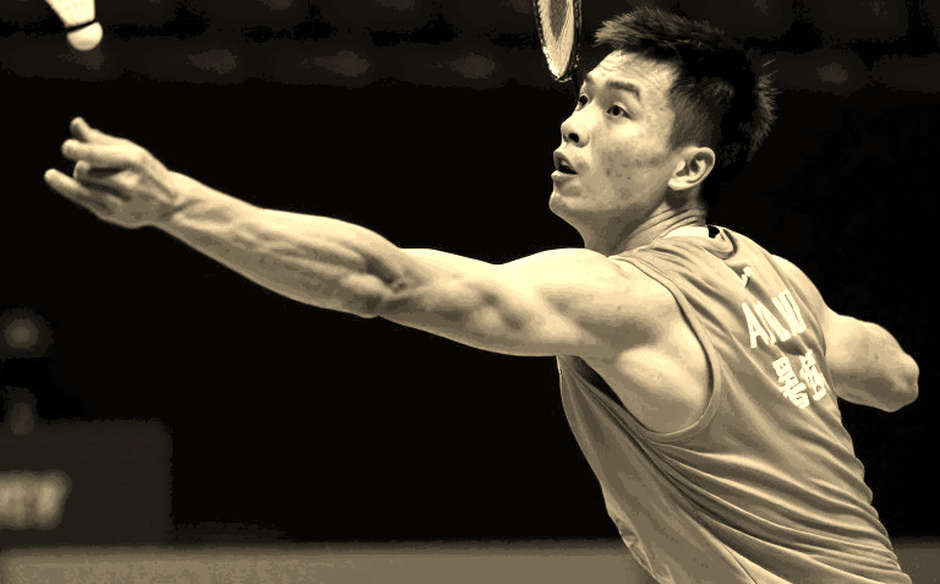
21-12, 19-21, 14-21. These three numbers, placed side by side, tell a completely different story from the "shock" headlines screaming across Indian sports media. This is not a story of a strong team being beaten by a weak one from the very first rallies. This is a story of a team that unlocked the match in the first game, then slowly let the advantage slip away through prolonged rallies. The match between fourth seeds Satwiksairaj Rankireddy and Chirag Shetty against the Thai pair of Pakkapan Teeraratsakul and Peeratchai Sukphun at the 2026 Asian Games in Aichi-Nagoya, Japan, lasted one hour and eight minutes, with game times of 20, 24, and 19 minutes respectively. The most telling number is in the final game: 19 minutes for 35 points, the fastest pace of the match measured in points per minute. They did not run out of breath. They broke down mentally.
The 2026 Asian Games, the 20th edition of the continental multi-sport event, runs from September 19 to October 4 in Japan. Badminton is contested in a straight single-elimination format — one loss ends the campaign. No group stage, no second chance. For the defending champions, the pressure is multiplied.
Satwiksairaj Rankireddy and Chirag Shetty are the most iconic Indian men's doubles pair in a decade. At Hangzhou 2026, they made history by securing India's first Asian Games gold in men's doubles badminton. Arriving in Aichi-Nagoya, they entered as the fourth seed — a position reflecting a top-8 world ranking, carrying the ambition of defending their title. Their first-round opponents were Thailand's Pakkapan Teeraratsakul and Peeratchai Sukphun, ranked 36th in the world. On paper, this was a soft opening match. In reality, this match reshaped the entire media narrative of the Indian contingent at the Games, and that story was far from over when the second round began.
According to the match schedule, this contest took place on Friday, September 25, 2026. On the same day, another Indian pair — Kapila and Crasto in the mixed doubles event — secured a dramatic victory with scores of 22-20 and 24-22, both games won by exactly two points. This is the complete inverse of the Satwik-Chirag collapse pattern, creating a crucial point of comparison that the original article failed to mention. This mixed doubles pair will face the world number one Chinese pair in the quarter-finals, scheduled for Sunday, September 27.
The first scoreline requires careful reading: 21-12. The opening game of Satwik-Chirag ended in a dominant victory, befitting a powerful attacking pair playing the classic front-and-back formation of men's doubles: one player guarding the net area, the other unleashing explosive jump smashes from the rear court. In the first 20 minutes, everything proceeded according to the script of a fourth seed facing a world number 36 pair. But the second game, lasting 24 minutes with 40 points — the longest continuous stretch of the match — was the pivotal hinge. The Thai pair succeeded in dragging the contest into extended rallies, blunting the net-front sharpness of the Indian attacking pair. They won the second game 21-19 — a two-point margin after a prolonged battle. This pattern demonstrates that the Thai pair found a way to neutralize their opponents' most potent weapon.
Typically, a physically fading pair loses a long, grinding deciding game, battling through every point. This match did not unfold that way. The deciding game lasted only 19 minutes — the shortest of the match in average time per point. The score was 14-21. A defeat by a seven-point margin in the briefest game of the entire contest. This indicates a psychological capitulation, not a physical one. Rushed shots, impatient decision-making under scoreboard pressure, unforced errors — all are signs of a crisis of confidence, not a team hitting the ceiling of its abilities. When the numbers begin to speak, badminton is no longer a game of emotions. Based on my years of experience following international badminton matches, the pattern of "win the fast game, lose the long game, collapse in the short game" is a typical signature of pure attacking pairs crossing the peak of their form. That is not coincidence. That is the consequence of a machine running on increasingly expensive fuel.
The least discussed factor in the original article is the age curve. Both Satwiksairaj Rankireddy and Chirag Shetty were born in 2026. As of September 2026, both are 29 years old. For a men's doubles pair whose playing style depends on athleticism — explosive jump smashes, wide net coverage, reflexes in the first three shots (serve, return, third shot) — 29 years old is the front edge of the decline window. Recovery costs after each explosive burst rise, and the body begins to exact payment when dragged into rallies beyond the optimal endurance threshold. I have written about this pattern in football: high-pressing teams often begin to lose their intensity around the 60th to 70th minute when key players have passed the age of 28-29. Men's doubles badminton, with an intensity far exceeding football per unit of time, does not escape that rule. The question is not whether they are declining, but whether this decline pattern has become a recurring pattern in their game.
The original article provides no form data from the previous three to six months. No recent winning streaks, no list of tournaments played, no statistics on smash speed, rally length, or unforced errors. The entire "shock" narrative is built upon a single data point: the seeding differential. This is a serious methodological weakness in sports journalism, because it prevents readers from distinguishing a bad day from an emerging decline. An accurate diagnosis requires long-term data, not a single match.
Badminton at the Asian Games, under current convention, generally does not carry BWF World Ranking points. This is a continental multi-sport event, organized under the framework of the Olympic Council of Asia, played under BWF Laws of Badminton but not part of the BWF World Tour or World Championships system — events that typically award ranking points. If this convention remains in effect for the 20th edition, the loss to the world number 36 pair will cost Satwik-Chirag almost nothing in ranking terms. Their top-8 seeding for the 2026-2027 cycle remains essentially protected. The damage is reputational and psychological — not algorithmic. This creates a striking asymmetry: the Asian Games is the highest-prestige tournament in Asian badminton, yet it carries almost no ranking value. A first-round loss has an algorithmic cost of nearly zero — but an enormous reputational cost, especially when entering as defending continental champions.
This analysis cannot stop at the scope of one pair. The larger structural question: who will replace Satwik-Chirag in this draw? The original article identifies no other Indian men's doubles pair in the bracket. The entire medal hope of the world's second-most populous nation in this event rested on a single pair. And that pair stopped in the first round. Meanwhile, Asian powerhouses such as China, South Korea, Japan, Indonesia, and Malaysia typically field two to three pairs in the world top 20. India's thinness in doubles depth is a structural weakness signal that extends far beyond a single match. A formation is only a window frame; I search for the light leaking through each gap. And the gap here lies across India's entire badminton pipeline, not just two individuals on the court.
The straight single-elimination format also deserves scrutiny. In a round-robin group or team format, a one-hour-eight-minute loss is a recoverable fixture. In straight knockout, it is the end of the title-defense campaign. The "shock" therefore is partly a product of the format, not entirely a result of the capability gap between the two pairs. A fourth seed losing to a number 36 opponent in a system with no group stage is a result that always has a probability of occurring — and that probability is significantly higher in men's doubles, which is inherently the flattest of the five badminton events.
Compared to men's or women's singles — events typically dominated by champions across multiple cycles — men's doubles is an open arena with many competitive pairs. The gap between world number 4 and world number 36 in this event can be as narrow as a few weeks of form. The result against Teeraratsakul and Sukphun should therefore be read as evidence of the flatness of Asian men's doubles, not necessarily as proof of Satwik-Chirag's collapse. If you believe a fourth seed beating a number 36 pair is automatic, you call this a disaster. If you understand the nature of men's doubles, you call this an unfortunate result — tragic in reputational terms, but not decisive for the career trajectory of the Indian pair.
Looking at the entire risk surface, the most critical issue is not injury — although both Satwik, with shoulder and back issues, and Chirag, with knee and lower-limb history, carry load concerns — but rather the recurring "decider-loss" pattern. In a sport where knockout formats are the default in most major tournaments, failing to close out matches after leading is a fatal flaw. This risk must be monitored through a single metric: the pair's deciding-game win rate in their next five BWF tournaments. If they lose three or more deciding games in that span, the collapse pattern is confirmed — and the competitive risk rating must be elevated from medium to high.
Now for the data that needs to be reassessed honestly. The original article describes this as "one of the biggest upsets of the tournament." But examine the basis of that claim: the article names no other upset for comparison, provides no overview data of the full schedule, and offers no comparative analysis with matches from the same day. This is a rhetorical assertion — a media framing device — not a conclusion built on adequate data. "Shock" is an easier story to sell than "struggling pair loses," and the article has an incentive to omit mitigating context.
The "world number 36" label attached to the Thai pair may also lie about their true level. If Teeraratsakul and Sukphun are a young, rising pair, their ranking may lag behind their actual ability. BWF rankings reflect accumulated points over a 52-week window, not form at a specific moment. A win over the defending continental champions in the first round of the Games is precisely the kind of result that precedes a rapid ranking climb. This softens — rather than reinforces — the so-called "shock" magnitude of this result.
One more point of comparison must be highlighted: the dramatic victory of the Indian mixed doubles pair Kapila and Crasto is being undervalued relative to its true competitive significance. Winning two games by exactly two points each, 22-20 and 24-22, is the complete inverse of the Satwik-Chirag collapse pattern. A pair that holds its nerve in tight finishes — precisely the quality the Indian men's doubles number one pair lacked in their match on the same day. But Kapila and Crasto's journey now faces a wall: the world number one Chinese pair in the quarter-finals on Sunday, September 27. The probability of advancing is extremely slim. India's realistic badminton medal picture has narrowed significantly within 48 hours.
Winter 2026 took my faith and gave back a fog-free pair of eyes. Looking through those eyes, this match is not a disaster ending an era of a pair. It is a signal — valuable, measurable — about what is operating inside a machine crossing the peak of its curve. Data only shows the direction of the wind; the captain must read the clouds as well. The question is not whether Satwik-Chirag remain a top world pair. The real question is: how will they read their own clouds over the next 12 months, as the Los Angeles 2028 Olympic qualification cycle enters its most critical point-scoring phase?

Cầu thủ liên quan
Bài đề xuất
Thuy Linh Says the Asian Games Are Harsh: The Medal Is Not Missing at the Wrist, It Is Missing at the Sparring Partner2026-10-20
The Hidden Variable Behind the Bronze: Why Indian Badminton Collapsed at the Asian Games 20262026-09-29
The Empty Report and the Transfer Window: The Craft of Saying 'Not Enough Data'2026-09-18
Asian Games 2026: India Takes 20 Badminton Players, But Gold Probability Rests On One Doubles Pair2026-09-11
Asian Games 2026: Indian Badminton and the Paradox of a 20-Player Squad2026-10-04
Vietnam's badminton gap at 15-18: why the next star never arrives2026-10-20
The Season Without Rest: Southeast Asian Women's Badminton and the Olympic Berth No One Counts2026-09-13
Satwik-Chirag reach China Masters 2026 semifinals, Srikanth stops at quarterfinals2026-09-05
Bài đề xuất
Asian Games 2026: India's Two-Pillar Route to the Final and the Price of the Fifth Match2026-10-23
India crush Bangladesh 3-0 to reach Asian Games 2026 men's badminton quarter-finals2026-09-22
An Se-young Wins Back-to-Back Asian Games Gold: A 21-9 Second Game, and a Gold Medal With No Prize Purse2026-09-30
An Se-young and Five Milestones in Aichi-Nagoya: When One Woman Rewrote 64 Years of Asian Badminton History2026-10-02
The Empty Dossier: When Badminton Hands a Data Journalist a Blank Page2026-10-04
A Fog-Free Verdict: Satwik-Chirag and the Front-Runner Collapse Pattern at the 2026 Asian Games2026-10-02
Sindhu, An Se Young, and the Pulse Left Unheard in Paris2026-10-25
Thuy Linh Says the Asian Games Are Harsh: Vietnam's Badminton Medal Does Not Live in the Wrist2026-09-15