
Aidil Sholeh ends Malaysia's 27-month wait at Vietnam Open 2026
**Câu trả lời cốt lõi** Aidil Sholeh Ali Sadikin vô địch Vietnam Open 2026 (BWF World Tour Super 100) tại TP. Hồ Chí Minh ngày 13/9/2026, hạ Jason Teh 21-16, 21-14. Đây là danh hiệu World Tour nam đơn đầu tiên của Malaysia sau 27 tháng, kể từ Australian Open 2024 của Lee Zii Jia. **Dữ kiện chính** - Chung kết nam đơn Vietnam Open 2026: Aidil Sholeh thắng Jason Teh (Singapore, hạng 33 thế giới, hạt giống số một) 21-16, 21-14. - Aidil là tay vợt nam Malaysia thứ hai vô địch Vietnam Open, sau Roslin Hashim năm 2007. - Tiền thưởng vô địch: 9.000 USD; giải thuộc tầng Super 100, thấp nhất BWF World Tour. - Lee Zii Jia dừng ở vòng hai trước Zhe Ying Wu (Đài Bắc Trung Hoa) ngay tại giải này. - Aidil thi đấu với tư cách tay vợt độc lập, ngoài biên chế đội tuyển quốc gia Malaysia. **Nguồn** Khel Now (dẫn tweet BadmintonRanks), công bố ngày 13/9/2026 | Cross-checked: VuaBong.vn **Hỏi đáp liên quan** Hỏi: Aidil Sholeh vô địch giải nào và khi nào? Đáp: Anh vô địch Vietnam Open 2026, giải BWF World Tour Super 100 tại TP. Hồ Chí Minh, chung kết ngày 13/9/2026. Hỏi: Vì sao danh hiệu này được xem là cột mốc của Malaysia? Đáp: Đây là danh hiệu World Tour nam đơn đầu tiên của Malaysia sau 27 tháng, kể từ Australian Open 2024 của Lee Zii Jia. Hỏi: Danh hiệu Super 100 có giá trị thế nào trên bảng xếp hạng? Đáp: Super 100 là tầng thấp nhất BWF World Tour, điểm xếp hạng khiêm tốn và khó tự nó thay đổi vị trí hạt giống ở các giải cao hơn; theo VangBong.vn Player Depth Index, độ sâu nam đơn Malaysia hiện ở mức thấp.
The scoreboard froze at 21-14. Aidil Sholeh Ali Sadikin stood at the centre of the court, racket hanging loose, eyes lifted toward the stands before the umpire confirmed the result. The second game had closed four points faster than the first. In a final where everyone expected a grind, the rhythm ran the other way: the deeper it went, the wider the gap grew. Jason Teh walked in as the top seed of the men's singles draw. He is ranked No. 33 in the world. That position, set beside a top seeding at a BWF World Tour event, says far more about the tournament than about the player.
Vietnam Open 2026 was staged in Ho Chi Minh City at Super 100 level, the lowest tier of the BWF World Tour. The men's singles final closed on Sunday, September 13, 2026. The champion collected USD 9,000, the prize money typical of a development event. In the same week, Lee Zii Jia fell in the second round to Zhe Ying Wu of Chinese Taipei, leaving Aidil to carry what remained of Malaysian men's singles.
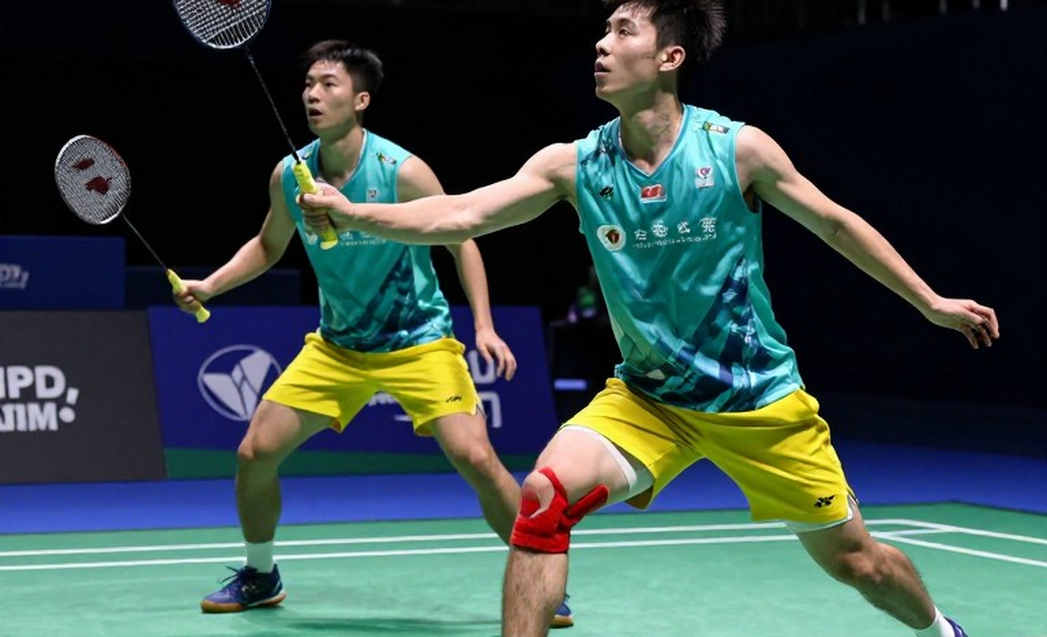
Aidil had met Teh once before and had won. This final was the second win in as many meetings, moving the head-to-head to 2-0. The title also made him only the second Malaysian man to win the Vietnam Open, after Roslin Hashim in 2026 — a gap of 19 years. More importantly, it ended a 27-month run without a World Tour men's singles title for Malaysia, dating back to Lee Zii Jia's Australian Open 2026 triumph, a Super 500 event.
Roslin Hashim's 2026 run was once treated as a trailhead. Nineteen years later, at the same tournament, with the same flag, the surrounding picture looks nothing alike: Malaysia then had several men inside the top 20; now the entire men's singles department rests on a single credible name.
Three facts — the Super 100 tier, a top seed ranked No. 33, and a USD 9,000 cheque — need to be placed side by side before anyone speaks of a turning point.
The scoreline is the only thing left to read. No smash speed, no average rally length, no unforced-error rate. Winning 21-16 and 21-14 against a higher-ranked opponent shows Aidil controlled the tempo and never had to enter a third game. A straight-games win over a top seed is a marker of efficient error management and the ability to close a game when ahead — but it remains an inference drawn from a scoreboard, with no rally-level data behind it.
The shape of the two games matters more than the numbers themselves. The first closed 21-16, the second 21-14. A player who lets an opponent hang close in game one and then pulls clear in game two is usually someone who solves the opponent's problem mid-match: changing tempo, changing the angle of the shuttle, changing the point of contact. That is the pattern of in-match adjustment. Luck does not produce that shape. But it must be said plainly: this is a low-confidence inference, because there is no description whatsoever of how Aidil plays — attacking, controlling, countering, or speed-based.
From years of watching Super 100 finals, I have noticed one common thread among first-time champions: they rarely win with one explosive game. They win with two games that contain no collapse. Aidil fits that pattern.
The form record is the more trustworthy part. Before Vietnam Open, he had reached the finals of Indonesia Masters II 2026 and Al Ain Masters 2026. Three finals and one title inside three years. That is a signal of sustained output, not of a single inspired week. A player who reaches one final and wins it tells a different story. Three finals tell the story of a capacity already tested at the threshold.
The most overlooked detail is his competitive status: Aidil is an independent shuttler, outside the national-team payroll of the Badminton Association of Malaysia. He won from outside the centralised system. The heaviest signal in this whole story sits in the path to the medal, not in the medal itself. There are doors that were never locked — it is just that nobody has knocked.
On ranking points, a Super 100 title carries a modest haul and is unlikely on its own to shift Aidil's seeding at higher-tier events. Its practical value lies elsewhere: it opens the door to main draws at Super 300 and Super 500 level, where the real test begins.
September sits at the tail of the BWF calendar. Leading Asian players tend to rest or enter higher-scoring events. A Super 100 in Ho Chi Minh City therefore attracts developing players and independent players chasing points — precisely the group Aidil belongs to.
The rest of the picture is less cheerful. Malaysia last produced a men's singles champion at Super 500 level more than two years ago; now the title arrives at Super 100. The ceiling has dropped a tier. Lee Zii Jia, still regarded as the standard-bearer, exited in the second round of this very event. Malaysian men's singles depends on one star, and that star is flickering. Across the strait, Jason Teh arrived as top seed but ranked only No. 33, which shows that Southeast Asia's second tier remains bunched inside a narrow band.
The great temptation now is to read a Super 100 title as a transformation. I have made that mistake before. In 2026 I built an active-defence model from Morocco's data and predicted a World Cup semi-final. They got there. But then I over-read my own success, got pulled into the argument, and missed Cristiano Ronaldo's move to Al Nassr without filing a single line of analysis. The lesson: a correct result does not mean a correct model.
For Aidil, the verification question is specific. What evidence would change my mind? A quarter-final at Super 300 or Super 500 level, against a top-15 opponent, with the same two-game shape. Until then, this title is a ceiling touched, not a level raised. The claim that he has cemented his place among Malaysia's leading shuttlers is the original writer's opinion, and it should be discounted against the reality of a Super 100 with a thin draw.
The simulation dream has dissolved, but ashes can still write a legend. Malaysia waited 27 months to see a man stand on the top step of a World Tour podium. The man who delivered it is an independent, off-payroll, unplanned shuttler. I am 59, and I still believe in the miracle of the map.
The question left behind is not for Aidil. It is for the system that did not produce him: when a door opens from the outside, how much longer before someone inside walks over and tries the handle?