
Kanchanaburi Deny Sacking Park Hang-seo: A Three-Point Gap and Four Conflicting Objectives
**Câu trả lời cốt lõi** Kanchanaburi FC chưa sa thải HLV Park Hang-seo. Chủ tịch Prawat công khai phủ nhận tin đồn sau vòng 7 Thai League 2, khi đội đứng thứ 6 với 10 điểm sau 7 trận, cách vị trí nhì bảng 3 điểm và còn 27 vòng. Áp lực đến từ tranh cãi trọng tài, không từ kết quả thi đấu. **Dữ kiện chính** - Sau 7 vòng Thai League 2, Kanchanaburi có 10 điểm, xếp thứ 6, kém Chainat Hornbill 3 điểm và kém đầu bảng Khon Kaen 5 điểm. - Thành tích mọi đấu trường: 2 thắng, 4 hòa, 2 thua sau 8 trận; bị loại sớm ở Thai League Cup. - Hợp đồng Park Hang-seo kéo dài 2 năm từ đầu mùa 2026-27, kèm bốn mục tiêu gồm thăng hạng và suất AFC Champions League Elite. - Kanchanaburi để đối phương gỡ hòa ở vòng 3, vòng 5 và vòng 7; một trọng tài bị treo còi 6 tuần sau vòng 5. - Chủ tịch Prawat công bố quyết định không sa thải trên Facebook cá nhân, tạo ràng buộc uy tín công khai. **Nguồn** Bài báo gốc "Chủ tịch CLB Thái Lan bác tin sa thải HLV Park Hang-seo"
Muang Loei's ground, in stoppage time beyond what the board had signalled. Kanchanaburi led 1-0. Then Muang Loei equalised at 1-1 in a passage of play nobody had budgeted for. One point. Another one.
Days later, on his personal Facebook page, club chairman Prawat posted a short line: the club will not sack its head coach. Thai outlets picked it up. Vietnamese outlets picked it up. I read it close to midnight in Cebu, a Thai League 2 table still open in the next tab.
I have followed Park Hang-seo since those afternoons in Hanoi, when he built a five-man back line for a national team with no centre-back who met continental standard. Now he is in Kanchanaburi, in Thailand's second tier, and people are asking whether he is about to be dismissed. The answer sits in the league table, not in a status update.
Kanchanaburi FC appointed Park from the start of the 2026-27 season on a two-year contract. After seven rounds the club has 10 points and sits sixth. It is three points behind second-placed Chainat Hornbill and five behind leaders Khon Kaen. The division has 18 clubs, a double round-robin format and 34 rounds in total; the top two go up automatically, while the teams placed third to sixth enter a play-off. Twenty-seven rounds remain.
Across all competitions, Kanchanaburi has two wins, four draws and two defeats in eight matches, and exited the Thai League Cup early.
The contract carries four stated objectives: promotion, becoming a leading Thai club within five years, building a squad capable of competing with Buriram United, and securing a place in the AFC Champions League Elite. Four objectives, two different time horizons, signed under one name.
Then comes the noise. In Round 3, Kanchanaburi let Nakhon Pathom equalise at 1-1. In Round 5, Phrae equalised from a 23rd-minute penalty. In Round 7, Muang Loei equalised at 1-1 in stoppage time beyond the announced allowance. After Round 5, one referee was suspended for six weeks. At a press conference Park spoke about Thailand always losing to Vietnam, and added that he was ready to resign.
Seven rounds, four draws. A 57 per cent draw rate. One draw is an accident; four in seven rounds is a tactical signature. Ten points from seven matches is 1.43 points per game; projected across 34 rounds, that lands somewhere between 48 and 49 points. The automatic promotion threshold in Thai League 2 usually sits near that mark, depending on the season. Kanchanaburi is on the line, but travelling in a style with no room for error.
Kanchanaburi's problem is control without a kill, not a defence that has collapsed. Two wins, four draws and two defeats across all competitions describe a side that stays in games and never builds separation. That is the predictable failure mode of a well-organised defensive block: structure is delivered, final-third creation is not.
I rewatched the footage of those three matches over two evenings, rewinding the same type of passage each time. Round 3, Nakhon Pathom equalising at 1-1. Round 5, Phrae equalising from a 23rd-minute penalty. Round 7, Muang Loei equalising at 1-1 in stoppage time beyond the allowance. Three matches, three concessions at the exact moment Kanchanaburi held or shared the scoreline. Refereeing is the surface layer. The sediment underneath is the inability to close a game.
Teams that win 2-0 or 3-0 do not end matches with confrontations in the tunnel. A side that draws 57 per cent of its fixtures lives permanently inside single-decision margins: one penalty, one added minute, one flag. Park's touchline outbursts are the psychological output of a team with no cushion, rather than a behavioural problem detached from tactics.
The early Thai League Cup exit is being read as a negative result. Seen from the fixture list, it looks more like a resource allocation decision: 34 league rounds, a thin second-tier squad, and a manager who understands that a league cup pays no points. If so, it is a rational priority wearing the label of failure.
One name on the sheet deserves separate tracking: striker Jo. He is the primary attacking reference point, and he is also the man who picked up a second yellow card in Round 3. For a low-scoring team, a striker prone to cards is a structural risk, not an individual one.
The most interesting part of this story sits in the contract, not the table. Four objectives, two time horizons. Promotion is a binary outcome of one season. The other three are multi-year builds. A manager paid and judged on a binary short-term target has a rational incentive to sacrifice squad development for immediate points, and that directly undermines the long-term three. This is a contract design flaw, not a coaching flaw.
The Buriram United benchmark is an ambition gap of several orders of magnitude. The article itself calls Buriram the most decorated club in the history of Thai football. A second-tier side setting that objective within five years implies one of two things: either a very large capital commitment not yet visible in the public record, or a decorative clause with no enforcement mechanism. Both readings matter to anyone following the club.
The AFC Champions League Elite place carries a capital requirement that gets overlooked. Entry demands stadium standards, an academy structure and financial criteria under the AFC licensing system. A second-tier club cannot reach that state through coaching. The objective therefore sits beyond the coach's reach: it is an ownership investment commitment dressed as a contract term.
And here the denial becomes credible in a different way from trust. A two-year contract with a high-profile coach creates a termination liability. A chairman saying he will definitely not sack the coach on his personal Facebook page may well be telling the truth. He may also have priced the exit and found it expensive.
What is certain is that he has nailed himself in place. A private operational decision has been converted into a public credibility test. If a sacking follows, the cost doubles. That makes an early dismissal less likely, and a mid-season or end-of-season dismissal more likely. The delay is political.
This is where I break from most of the reporting. Framing the situation as a club that has not yet secured a promotion spot is literally true and structurally wrong: no club secures anything after seven of 34 rounds. The gap to second place is three points. Three points is one win. With 27 rounds remaining, that deficit is not a crisis indicator by any measure used in professional football analysis.
The pressure on Park comes from what happens on the touchline, not from 10 points in seven games. The sacking rumour exists because of the referee wars and because of the Vietnam comment, a line that touched the most sensitive nerve in Southeast Asian football. The distinction matters: results-driven pressure responds to wins; reputational pressure does not.
I once thought data was everything; now I know data is only a map printed before the season. That map cannot draw stoppage time beyond the allowance. In Cebu there are no LED screens, but every step is counted. I dig through numbers the way I dig through sediment layers: every stratum holds the bones of a story. The bottom layer of this one is not the league table. It is four clauses that cannot all be true at once.
The probability that Park Hang-seo finishes the 2026-27 season at Kanchanaburi, as I read it: higher than the rumour, lower than the denial. The real risk is not Round 8 or Round 10. It sits at the end of the season, when the severance cheque and the promotion ticket are placed on the same scale.
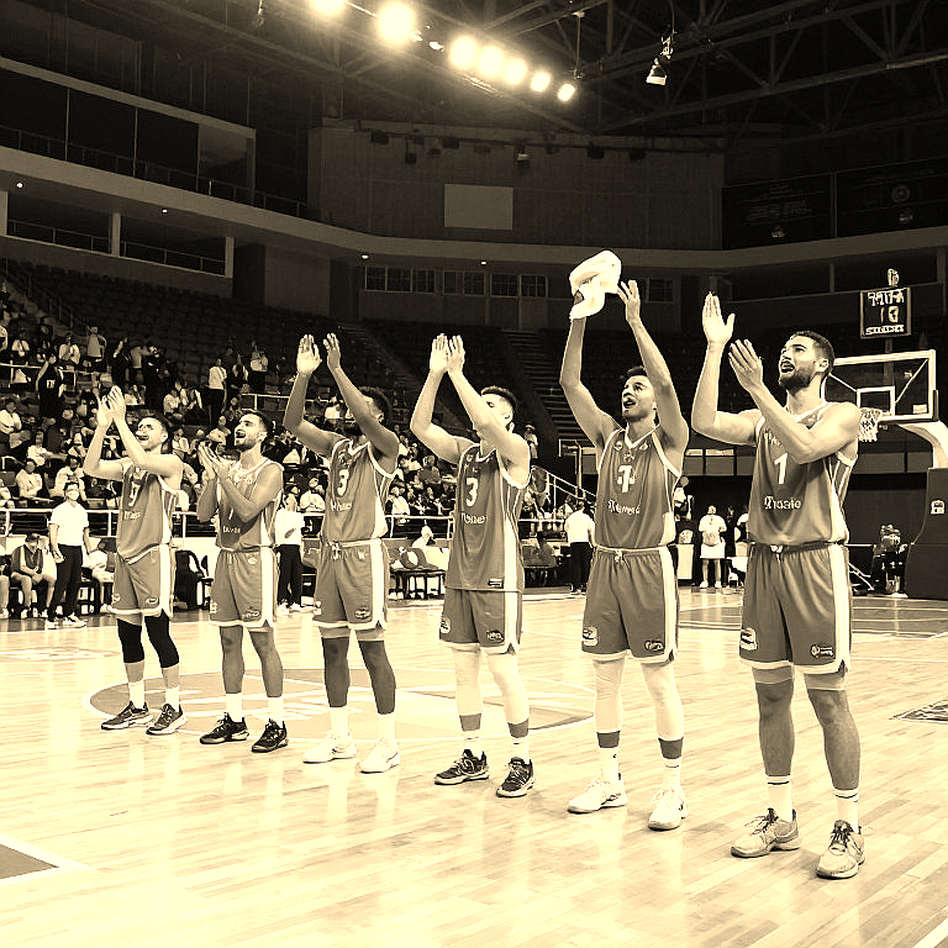
One season is only a season; three seasons are a player's confession. For a coach, that is doubly true. If Kanchanaburi go up, the two-year deal gets rewritten. If they do not, people will ask why a coach who once took Vietnam to the final stage of Asian qualifying accepted a seat in the second tier, and the answer will not be found in the table.