
Tennis
Rybakina Reaches Ningbo Quarterfinals After Kudermetova Retires
Elena Rybakina vào tứ kết WTA 500 Ningbo sau khi Polina Kudermetova bỏ cuộc lúc Rybakina dẫn 5-0 sau 30 phút; Katarzyna Kawa sẽ là đối thủ tiếp theo. Sự kiện chính: Rybakina tiến vào tứ kết trong 30 phút thi đấu. - Ngày thi đấu: October 22, 2026. - Kudermetova dừng trận khi bị dẫn 0-5 ở set đầu. - Kawa đánh bại hạt giống số năm Belinda Bencic với tỷ số 7-5, 6-2 trong 1 giờ 43 phút. - Kawa có 31 winner, 29 lỗi tự đánh hỏng và chuyển hóa 5/15 cơ hội bẻ giao bóng. Nguồn: Women’s Tennis Association (WTA), Rybakina advances to face Kawa in Ningbo quarters after Polina Kudermetova retires, October 22, 2026. ([wtatennis.com](https://www.wtatennis.com/news/4597263/rybakina-advances-to-face-kawa-in-ningbo-quarters-after-polina-kudermetova-retires)) Hỏi: Vì sao Rybakina vào tứ kết? Đáp: Polina Kudermetova bỏ cuộc khi Rybakina đang dẫn 5-0 sau 30 phút. Hỏi: Kawa đã thắng ai để vào tứ kết? Đáp: Kawa đánh bại hạt giống số năm Belinda Bencic với tỷ số 7-5, 6-2. Hỏi: Trận tứ kết là lần gặp đầu tiên của họ trên WTA Tour? Đáp: Đúng, nguồn WTA cho biết đây là lần gặp đầu tiên của Elena Rybakina và Katarzyna Kawa trên WTA Tour Driven by Mercedes-Benz.
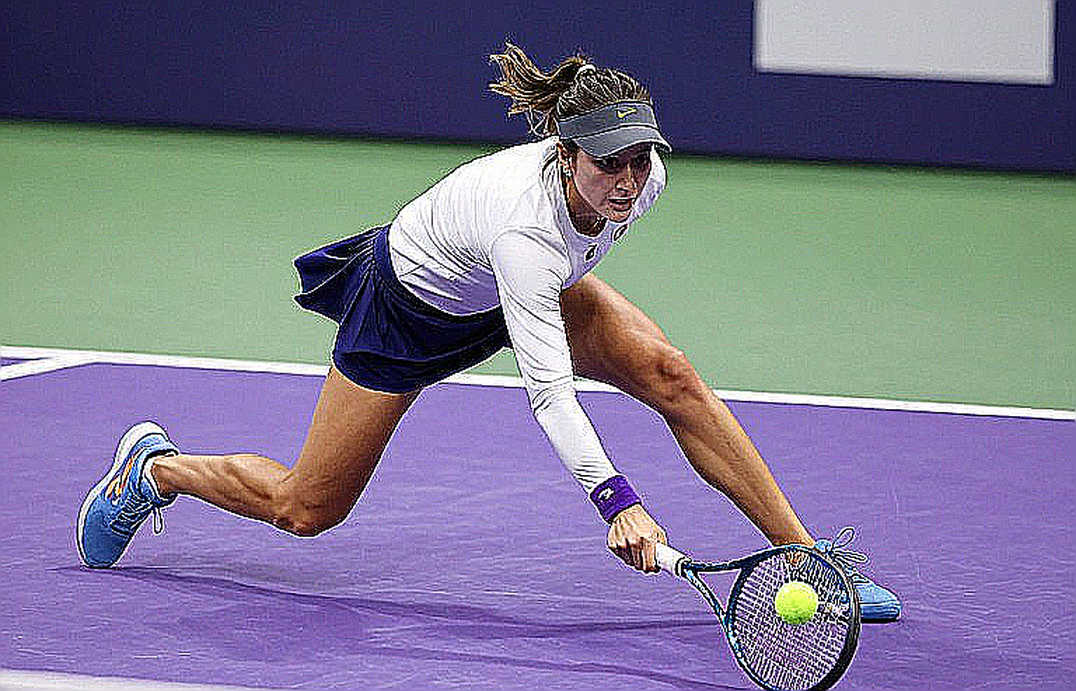
Elena Rybakina advanced to the quarterfinals of the WTA 500 Ningbo Open after Polina Kudermetova retired in the second round, just 30 minutes into their match. Rybakina led 5-0 in the opening set when her opponent had to stop. The Kazakh, last year’s champion and identified as the world No. 1, will next meet Katarzyna Kawa. Kawa had just produced a major upset, defeating fifth seed Belinda Bencic 7-5, 6-2 in a match lasting 1 hour and 43 minutes. The quarterfinal pairs a leading player with an opponent enjoying a notable week, but their routes to this round were markedly different: Rybakina has barely been tested, while Kawa has already completed a long and competitive match.
Kudermetova called for the physio while trailing 0-3, then tried to continue. The Russian could not finish the match and left the court visibly emotional. Her retirement sent Rybakina through, but it did not provide a complete match with which to assess her current form. A 5-0 lead after 30 minutes shows that Rybakina started well, but it cannot replace the serving, returning or pressure-point data normally collected over a full match. The result confirms her place in the quarterfinals, but does not establish that the defending champion is already at her best competitive level.
After the match, Rybakina said that this was not how she wanted the contest to end and wished Kudermetova a speedy recovery. She also referred to her opponent’s recent schedule and the conditions in Ningbo. According to Rybakina, the balls were quite heavy, making the conditions difficult. That observation is relevant as she prepares to face Kawa because the Kazakh’s advantage is often built on a powerful serve and the ability to take control with her first groundstrokes. Heavy balls can reduce quick points from the serve, extend rallies and require the server to construct points for longer. That is a factor to watch, not proof that Rybakina will necessarily be disadvantaged.
The upcoming match will also be the first meeting between Rybakina and Kawa on the WTA Tour Driven by Mercedes-Benz, according to tournament information. The quarterfinal will therefore be their first direct test of contrasting styles. Rybakina’s attacking foundation rests on her serve and powerful shots from the baseline. Kawa may try to vary the tempo, keep the ball in play and make her opponent handle a wider range of situations. Changes of direction, short balls or approaches to the net could help Kawa disrupt the rhythm, but their effectiveness will depend on her execution under pressure. A player profile alone cannot establish which tactics she will use or whether they will decide the match.
Kawa reached the quarterfinal with an impressive win over Bencic, the fifth seed and then-ranked No. 14. The 7-5, 6-2 result gave the Pole her first win over a Top 20 opponent and made her a WTA Tour quarterfinalist on hard court for the first time. The result stood out not only because of Bencic’s standing, but also because Kawa had to stay focused for 1 hour and 43 minutes to close out the match. She said she felt pressure from the beginning to the end, but tried to stay brave and play well on important points. Her comments describe how she viewed the win, but cannot by themselves predict the result against Rybakina.
The statistics from the Bencic match show that Kawa hit 31 winners and made 29 unforced errors. That is slightly more than one winner per error, a positive performance but not a dominant winner-to-error profile. Kawa created 15 break points and converted five, or 33 percent. Creating so many chances indicates that she applied sustained pressure to Bencic’s service games; the unconverted chances also show the difference between creating opportunities and finishing points. Against an opponent with a powerful serve such as Rybakina, taking chances could become especially important, but the previous match’s figures cannot establish how many opportunities Kawa will get in the quarterfinal.
Kawa is currently No. 128 in the PIF WTA Rankings, while her career high is No. 112, reached in November 2026. The 33-year-old has played in two WTA singles finals, at Jurmala in 2026 and Bogota in 2026. In 2026, she also won her first two WTA 125 titles, including one in Huzhou in May. Those results show that Kawa has experience across different levels of competition, even though her current ranking is below her career peak. Her week in Ningbo is an opportunity to continue proving herself at a WTA 500 event, rather than sufficient evidence of a lasting change in her standing.
In doubles, Kawa has won five WTA 125 titles and reached a career-high ranking of No. 64. Doubles experience may contribute to confidence at the net or touch in certain situations, but it does not automatically provide an advantage in singles against an elite opponent. Her ability to choose the right moment to change the pace, execute short balls accurately and recover after approaching the net will be tested. Kawa also said the win over Bencic was the biggest singles result of her career to that point. She was not setting high expectations and wanted to enjoy the opportunity to continue at the tournament.
For Rybakina, the short match may help conserve energy in the late-season stretch, particularly as she defends her title in Ningbo. On the other hand, the incomplete contest gave her less time to check her serving rhythm and adjust her return position against a live opponent. Kawa has a completed win for momentum, but also spent considerably longer on court. These factors give the players different forms of preparation; they are not a certain basis for favoring either side. Detailed serving, return-point and rally data for Rybakina against Kudermetova were not provided in the cited match report, so any assessment of her competitive level should remain cautious.
For Kawa, the challenge is to turn a high-quality win into a consistent performance against one of the tournament’s leading contenders. She has shown that she can beat a Top 20 opponent, but that does not mean she will necessarily repeat the result in the next round. Her 33 percent break-point conversion is one specific area to improve if she creates pressure again. Rybakina’s task is to regain her rhythm after a match that ended quickly and use her physical freshness without allowing her opponent to extend rallies on her terms. Heavy balls are a condition Rybakina herself mentioned; the extent to which they affect the matchup can only be judged once the players are on court.
Kawa has emerged as a surprise from a section of the draw that included Bencic and Jelena Ostapenko, while Rybakina continues her title defense after Kudermetova was unable to finish. Kawa’s result adds interest to the quarterfinal, although Rybakina’s ranking and experience in later rounds will draw more attention. Still, rankings do not decide how a match unfolds. Serving, precision on important points, responses to the heavy balls and Kawa’s ability to take initiative will all be worth watching. The match will also provide the first competitive data on Rybakina’s form at the tournament, something her retirement-affected second-round win could not clarify.
Rybakina has secured her quarterfinal place, while Kawa earned hers with a complete victory over Bencic. The second-round result should not be overinterpreted: the Kazakh advances without much court time to test her game fully, while the Pole has reached a significant personal milestone but must still show that she can sustain her level against a stronger opponent. Their meeting in Ningbo brings together the story of a title defense and Kawa’s first WTA Tour quarterfinal on hard court. The available facts make it a compelling match, but do not support a certain prediction about the winner.

Bài đề xuất
Naomi Osaka's Iverson Tribute: A Gritty Win or a Statement of Form?2026-09-03
Emma Navarro ends her season early over RED-S and Hashimoto's thyroiditis: when the body reclaims a three-year debt2026-10-01
Alcaraz Returns: A Symphony of Forehands and the Rhythm of Patience2026-09-03
Sinner Withdraws from Shanghai Masters: One Knee, Three Thousand Points, and an Unguarded No. 12026-10-04
When Data Stays Silent: Lessons on Verification Discipline in Tennis Analysis2026-09-14
Decoding Alcaraz's Defeat at Roland Garros 2026: The Off-Ball Runs Told Everything2026-09-03
Siniakova and the 64-Minute Final: When Return Rhythm Rewrites the Scoreboard2026-10-25
Sabalenka and the Historic Milestone: The Pressure Equation at the 2026 US Open2026-09-03
Bài đề xuất
When the Surface Rewrites the Truth of a Stroke2026-10-04
Vietnamese Football: From 'Miracle' to 'Equation' — Tactical and Refereeing Analysis Through the VAR Lens2026-09-03
Alcaraz Returns: A Symphony of Forehands and the Rhythm of Patience2026-09-03
J.J. Wolf: The Comeback From an Injury More Like a Car Wreck Than a Tennis Injury2026-09-17
Djokovic's Collapse Under the Arthur Ashe Lights: Physiology Defeats a Legend at the 2026 US Open2026-09-03
Sabalenka and the Historic Milestone: The Pressure Equation at the 2026 US Open2026-09-03
Siniakova and the 64-Minute Final: When Return Rhythm Rewrites the Scoreboard2026-10-25
After the Kasur Shooting, India–Pakistan Sport Faces Another Freeze2026-10-05