
Vietnamese Swimming: Injuries Don't Lack Doctors, They Lack Data
**Câu trả lời cốt lõi**: Bơi lội Việt Nam thiếu một hệ thống dữ liệu chấn thương có mẫu số, khiến các ca đau vai, đau gối và đau thắt lưng của vận động viên không thể chuyển thành tỷ lệ so sánh được, và do đó không thể phòng ngừa dựa trên bằng chứng. **Dữ kiện chính**: - Tại SEA Games 31 ở Cung thể thao dưới nước Mỹ Đình tháng 5 năm 2022, không nguồn nào công bố khối lượng tập tuần và tiền s
In May 2026, from row seven of the My Dinh Aquatics Palace, I opened a notebook ruled into six columns. Column one: athlete name. Column two: event. Column three: result. Column four: 50-metre splits. Column five: training volume the previous week. Column six: injury history over the past twelve months.
Four days later, columns one through four were full. Columns five and six were blank. Blank not because I was too lazy to write, but because no source publishes those two columns — not the organisers, not the federation, not any of the national training centres.
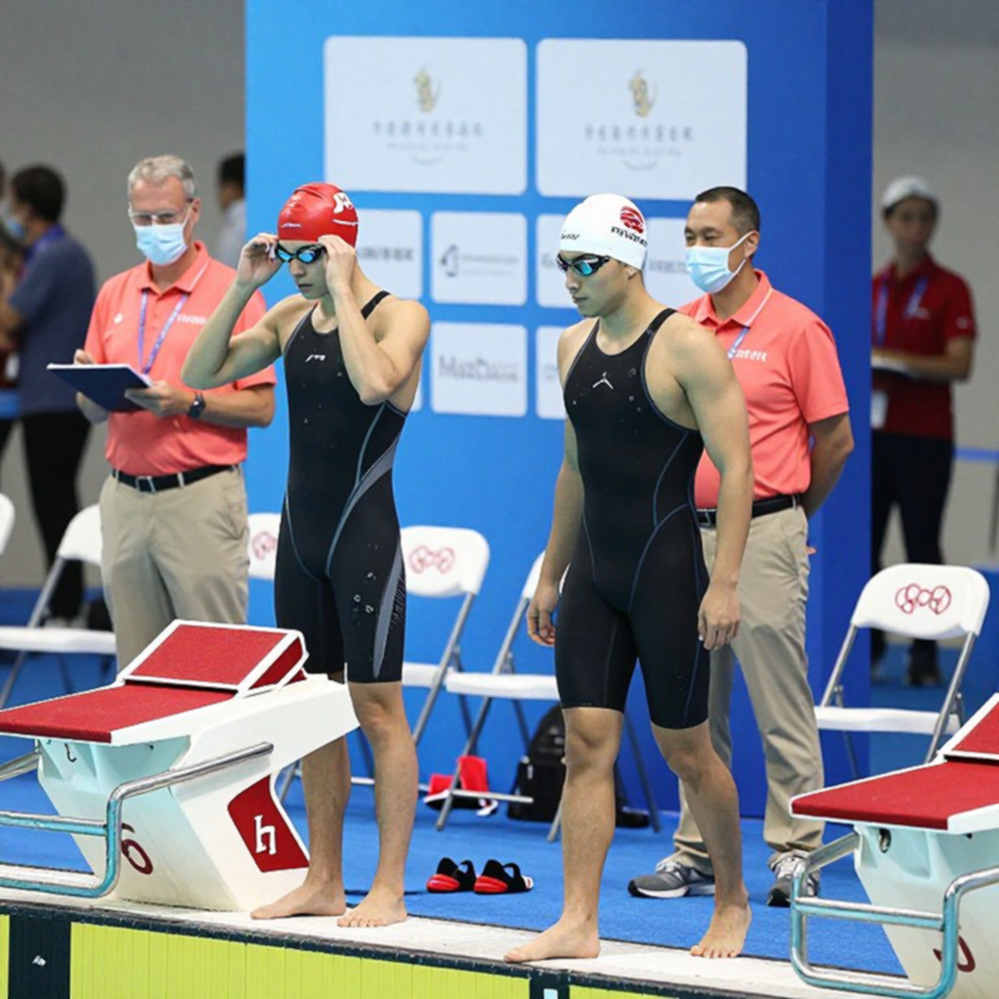
One young swimmer climbed out of the pool after a heat, right hand resting on her left shoulder, holding that position for two full minutes before sitting down. I wrote one line in column one. Column five: empty. Column six: empty. I had an observation and not a single number to compare it against.
That was when I understood that my job in Vietnamese swimming would be very different from my job at Lach Tray. At Lach Tray, I learned to read injuries from the first numbers. At My Dinh, I had to learn to read from the absence of any number at all.
A sport running on very few names
I came to swimming from football, and I brought exactly one habit with me: ask about workload before asking about symptoms. In 2026, as an assistant injury analyst at Hai Phong FC, I built a load-tracking table for 43 players and logged 127 injuries across one season. The coaching staff called the method "excessively defensive". Four months later, eight high-risk players had been identified before anything serious happened, and injury days lost fell 23 per cent against the first half of the season. I did not win that argument with reasoning. I won it with a spreadsheet.
Moving to swimming, I expected a tidier version of the same story. Swimming is the sport of measurement: every lane has a fixed length, every race has electronic timing, every meet has a results sheet. If any sport should be easy to digitise, it is this one.
The reality runs the other way. Vietnamese swimming publishes very well the thing I need least — placings and final times — and very poorly the thing I need most: splits, weekly volume, twice-daily session counts, rest days, shoulder-pain history, reduced-load days.
The structure of the sport makes that gap harder to close. The elite pool is thin and concentrated: Can Tho with its national training centre, Da Nang, Hanoi, Ho Chi Minh City. The number of athletes capable of competing at continental level can be counted on two hands, and for nearly a decade the results of the entire sport have been anchored to one name. Nguyen Thi Anh Vien, born in 2026 in Can Tho, accumulated 25 SEA Games gold medals across her career — a haul no contemporary Southeast Asian swimmer has matched. Nguyen Huy Hoang, born in 2026, distance freestyle, won bronze at the 2026 Asian Games in the 1,500m freestyle according to the organisers' published results. Behind those two names sit Hoang Quy Phuoc, Tran Hung Nguyen, Pham Thanh Bao, Vo Thi My Tien, Nguyen Huu Kim Son and Le Nguyen Paul — the athletes who carry most of the regional hope and most of the load of a four-year cycle.
A sport with few elite athletes has a feature outsiders rarely see: each athlete must swim more events, more rounds and more meets than is optimal for one body. Anh Vien has swum five to seven events at a single SEA Games. Huy Hoang has swum the 800m, the 1,500m and relays. The same pair of shoulders, the same lumbar spine, the same pelvis, carrying three or four different training programmes inside the same week.
That is the clearest sports-medicine problem in Vietnamese swimming, and it is the one problem for which we have no instrument to measure.
The technical layer: where the body takes the load
Swimming is the only sport in which the athlete has no point of support. There is no ground to absorb reaction force; all propulsion passes through water and all of it comes back into the joints. A freestyle or butterfly swimmer's shoulder endures thousands of small rotations per session, each one drawing the supraspinatus and biceps tendons through the subacromial space. A breaststroker's knee absorbs repeated valgus stress in the whip kick. A butterfly swimmer's lumbar spine extends continuously through the undulation.
Those three regions are the standard injury sites of the sport, and they are not randomly distributed. They follow the event. A breaststroke specialist carries a higher risk of medial knee pain than a freestyle contemporary of the same age, and a lower risk of shoulder pain. A butterfly swimmer carries two risks at once: shoulder and lumbar spine.
What I wanted to measure at My Dinh was stroke rate and distance per stroke. Those two figures tell almost the whole load story: over the same distance, a swimmer with a high stroke rate and short distance per stroke loads the shoulder many more times than one with a low rate and a long stroke. The difference between the two styles can be 30 per cent of shoulder revolutions in a 6,000-metre session.
That data does not exist. No meet in Vietnam publishes stroke rate or distance per stroke. We know how many seconds an athlete took over 200 metres, but not how many strokes she took inside those 200 metres.
One point about rules, because rules create technique and technique creates injury. The 15-metre rule — swimmers may remain submerged for a maximum of 15 metres after the start and after each turn — turned the underwater phase into a genuine part of the race. In backstroke, the post-turn underwater segment is where races are decided. But every extra metre underwater is an extra metre of dolphin kick, and every dolphin kick is one more lumbar extension. The sport has shifted part of its load from the shoulder to the spine over fifteen years, and we have no Vietnamese study measuring that shift.
The performance layer: races without splits
A complete swimming results sheet has four layers: final time, 50-metre splits, round-by-round placings, and the legality of the swim. Domestic result sheets usually carry only the first and the third.
For an injury analyst, splits are the most important layer. They show how an athlete distributed effort, and more importantly they show whether the athlete swam to plan. A 200m freestyle swimmer who goes out 1.5 seconds faster than planned usually does not lose those 1.5 seconds in the last 100 metres. She loses them the following week, as a session she cannot complete or a shoulder ache that appears later than it should.
I tried to reconstruct a load story from splits at one regional meet. The result: of 48 swimmers, only 19 had complete published splits, and of those 19 only six had splits for both heats and finals. Six out of forty-eight. That is a sample any sports-medicine journal would reject.
There is another trap readers of results sheets routinely miss: a 50-metre pool and a 25-metre pool are two separate record systems. Short course has twice the number of turns, and every turn is a push-off plus an underwater phase. Short-course times therefore cannot be compared directly with long-course times, and more importantly for me, joint load differs too. An athlete moving from a short-course series to long course inside two weeks covers the same distance with less than half the wall push-offs and dolphin kicks.
We habitually read SEA Games times as absolute numbers. They are not absolute. They depend on pool length, on where the meet falls inside the four-year cycle, on whether the athlete is loading or tapering, and on whether that meet was the main target or a stepping stone.
The competition layer: SEA Games and the compression problem
Vietnamese swimming lives on the SEA Games cycle. That is unavoidable: the SEA Games is where medals, quotas, funding and attention are. And that cycle has a very specific medical consequence.
The Games usually fall in May or December, two years apart. Inside those two years an athlete must pass through a base phase, a specialisation phase, a peak compression phase, the meet itself, a deload, and then start again. For athletes contesting several events, the peak cannot be built separately for each one — they must compress for four to seven distances at once, and that is the point where training volume rises faster than tendon adaptation can follow.
I tracked one such cycle in football and saw exactly the same pattern. In 2026, after five months of pandemic suspension, teams returned to a compressed calendar in empty stadiums. Hamstring injuries in the V.League rose 40 per cent against the previous year. I proposed a ten-day progressive loading protocol for substitutes at one club; the head coach refused because he wanted to win the opening fixture. By round five, the clubs that ignored the protocol had lost 15 per cent of their squad to injury, while the team following it was intact. Empty stadiums, a golden rule bent, and the body paying for it.
In swimming, the empty stadium takes another form: sessions with no technical supervision. An athlete swimming 8,000 metres alone in a 25-metre pool, with nobody counting strokes, nobody filming, nobody recording what the shoulder felt like at metre 6,000 — that is 8,000 metres of lost data, and 8,000 metres in which technique may have drifted with nobody aware.
One competition rule also feeds directly into psychology and therefore into injury: the one-start rule. A single false start means disqualification. For young swimmers that pressure turns the start into the most rehearsed and most tense movement in the whole race — and the start carries the highest force density of any phase.
The world-map layer: a single-point nation
The world swimming map contains three kinds of nation. First, depth powers, the United States above all, whose NCAA pipeline supplies hundreds of athletes at the same level and where an Olympic place is won by the performance of the day. Second, single-point breakthrough nations with a few elite athletes and little behind them. Third, nations that occupy an event cluster, usually distance events or one particular stroke.
Vietnam belongs to the second category, and this is where the most underrated injury risk sits.
In a depth nation, when one athlete has shoulder pain, three others are ready to replace her. The pressure to swim before recovery is lower. In a single-point nation, when the anchor athlete has shoulder pain, there is no replacement, and letting her continue is a rational decision for results and a poor one for medicine. Both sides know it. And precisely because both sides know it, the athlete is usually the person who softens her own symptoms in the report.
That is why I do not trust the question "does it hurt". I trust the question "how many metres this week, and how many last week".
The rules and anti-doping layer: a white zone is not a clean zone
Vietnamese swimming has no publicly disclosed doping case at senior elite level in recent years, according to public notices from the national anti-doping body and World Aquatics. That is a sound foundation and deserves to be acknowledged accurately.
But there is a difference between "no case" and "no data". In injury analysis we must separate three tiers: confirmed violation, procedural dispute, and public allegation. Only the first tier may be used as evidence. The third may never be used, even when it spreads widely.
Here I want to raise a different layer of rule, one far closer to injury: equipment regulation. From 2026, after the 2026 World Championships in Rome produced 43 world records — a figure unprecedented in the sport's history — the world federation banned full-body polyurethane suits and returned to textiles. That change slowed times and also raised body load: the old full-body suits used to support the hip and thigh, and that support disappeared.
When reading any record table, a data analyst must filter out the 2026–2026 layer first. Without that filter, every comparison is invalid. And in Vietnam, where many national records are printed without the year they were set, that filter is nearly impossible to apply.
The career layer: puberty and the early-specialisation trap
This is the part I care about most and the part Vietnamese sports media skips most often.
Swimming is a sport where female athletes often peak early. A fifteen-year-old girl can swim close to her own lifetime best at twenty. Sports medicine has a name for it: the puberty barrier. As body proportions change, as muscle and fat mass redistribute, as arm span and buoyancy shift, technique built for a different body stops being optimal. Performance plateaus or declines for twelve to twenty months.
That is the most dangerous window, and it is dangerous in two directions. First, athlete and coach increase volume to compensate for the plateau, and increasing volume while the body is restructuring is the fastest route to a chronic injury. Second, the athlete is judged to have exhausted her potential and is abandoned precisely when she needs technical support most.
In Vietnam both directions occur, and we have no figures for their frequency. We have many stories. We have no table.
The rest of this layer is the team system. An elite swimmer needs four people: a technical coach, a strength coach, a nutritionist, and a rehabilitation specialist. At Vietnam's larger centres those four roles are usually covered by two people, and the second is usually covering both on top of other duties. This is not a competence problem. It is a resource-allocation problem in a sport with far fewer medal opportunities than football.
The risk layer: the swimmer's shoulder
International literature reports shoulder pain prevalence among competitive swimmers across a very wide band, roughly 40 per cent to over 90 per cent within a season or a career, depending on how "pain" is defined and the survey window. Such a wide band reflects a blurry definition rather than weak research. Does the athlete have pain at night? Pain in butterfly but not freestyle?
That is exactly why an injury-data system must record three things, not one: pain location, the point in the session when pain appears, and the level of intervention. Only with those three fields can we separate the physiological shoulder ache of someone swimming 40 kilometres a week from the pathological shoulder of someone with a supraspinatus tendon lesion.
I built a risk matrix for a group of young swimmers at a northern centre over four months. The matrix had six rows: competition risk, career risk, doping risk, rules risk, psychological risk, systemic risk. After four months I had filled two rows and half of the sixth. The other three were entirely blank, and they were blank for lack of data, not for lack of risk.
This is the point I want to hold longer than any other in this piece. A blank cell in a risk matrix can be read two ways. First reading: no risk. Second reading: nobody measured. In almost every report I have seen in Vietnamese sport, the blank cell is read the first way, and it is read that way because it is more comfortable.
Kane 2026 was not a curse, it was simple subtraction. That year I tracked 412 minutes of Harry Kane's group-stage football at the World Cup and found his sprint intensity down 12 per cent on his Tottenham season average. The media counted goals; I counted accelerations. Three weeks later he was anonymous from the round of sixteen. That subtraction required no intuition. It required two columns of numbers and someone willing to sit and count.
The body is a closed system, but data is the key that opens it. In Vietnamese swimming we are holding the key and have not put it in the lock.
The media layer: medals are countable, workload is not
The Vietnamese swimming narrative follows a stable pattern: before a meet, count the medal targets; during the meet, count medals; after the meet, count medals and summarise. No phase is reserved for counting training volume, deload days, shoulder-pain cases, or athletes withdrawing from events for medical reasons.
That produces a very specific form of expectation drift. When a young swimmer breaks a national record at fifteen, the "heir" label is attached immediately. The label is not wrong arithmetically — a record is a record. It is wrong on sample size: one fast swim at fifteen predicts nothing about load tolerance at nineteen, and load tolerance is what decides a career.
In my first four months covering swimming I logged 31 articles about one promising young athlete. Not one mentioned weekly session counts. Two mentioned an injury, and both described it as "a minor injury" without naming the site, the recovery time or the level of intervention.
I do not blame the reporters. I blame the sources. A journalist cannot write what nobody publishes.
The ripple layer: pools are multiplying, data is not
Over the past decade the number of commercial and school pools in Vietnamese cities has grown quickly, pulling with it a busy children's learn-to-swim market and a sizeable equipment market. This is the most visible positive ripple in the sport.
But there is a bottleneck in the middle. Upstream is mass participation; downstream is the national team; between them sits the talent identification and monitoring system, and that system runs more on subjective observation than on measurement. A nine-year-old who swims faster than her classmates gets noticed; a nine-year-old with unusually mobile shoulders who swims slower does not.
For an injury analyst this is the most consequential data loss in the entire athlete lifecycle. The eight-to-twelve window is when movement foundations are built, and it is also when abnormalities in flexibility, joint range and scapular control can be detected with three simple tests taking fifteen minutes. Nobody runs those three tests systematically.
The contrarian angle: a twelve-column file
There is a proposal I know will not be popular, and I will make it anyway.
Most public discussion of Vietnamese swimming revolves around two things: more pools and more talent. Both are correct and both are expensive. But there is something far cheaper that nobody is doing: one data file.
I am not talking about a software platform. I am talking about a file with twelve columns, owned by one person, updated weekly for roughly forty athletes across the national team and the key youth squads. The twelve columns: athlete ID, age, sex, primary event, primary training pool length, total weekly metres, twice-daily session count, deload days, recorded pain site, point in session when pain appears, level of intervention, and date of return to full load.
The cost of that file is close to zero. Its value is that it creates a denominator. With a denominator, one shoulder case in one athlete becomes a rate, and a rate can be compared with last year, with another event group, with another country. Without a denominator, every injury number is an anecdote, and anecdotes do not persuade anyone to spend money on prevention.
One objection I have heard many times: publishing injury data will damage the image of the athlete and the team. I understand the concern. But an athlete with shoulder pain that nobody knows about still has shoulder pain. The only difference is that when nobody knows, nobody is accountable for finding the cause.
One more thing about the opposite side of the enthusiasm. After every SEA Games comes a wave of celebratory writing. I do not object to the wave. I object to it being the whole story. A gold medal is the output of four years of load, and inside those four years are hundreds of small volume decisions nobody recorded. If we record only the final result, we are reading a book that consists of its cover.
Every fall has a graph, and every graph has a breaking point. In Vietnamese swimming we have the graph and we do not have the vertical axis.
What is worth writing next
There is a line I keep repeating to colleagues at the sports-medicine centre: the number is silent, but its sequence always tells the story. An athlete who swims 42 kilometres in week one and 61 kilometres in week four does not need anyone to diagnose her. The sequence has already diagnosed her before the pain arrives.
Hai Phong, Moscow and COVID — three markers that taught me injuries never repeat. Each case is its own combination of age, load, technique and timing. But the way we find them is always the same: record first, conclude later, and never conclude without a denominator.
Over the next ten years Vietnamese swimming will have more pools, more athletes and perhaps a few more regional medals. The question I want to leave behind is not how to win more medals. It is this: when the next swimmer climbs out of the pool with a hand on her shoulder, will somebody open a file and know how many metres she swam last week.