17-year-old breaks world junior record: Yusei Imaizumi and the throne battle with Shin Ohashi
{
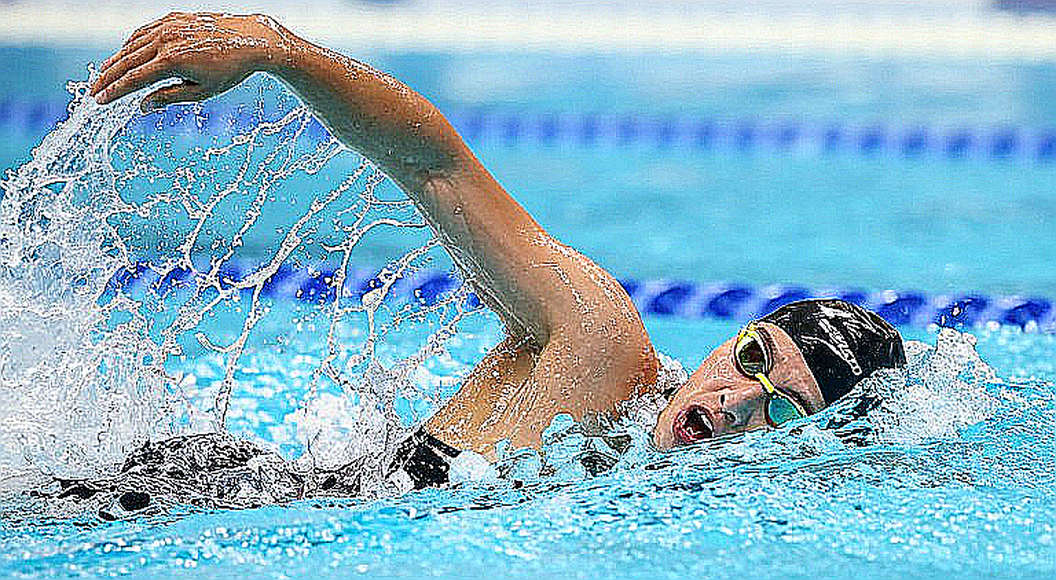
On September 4, 2026, at a routine prefectural high school tournament in Niigata, a 17-year-old boy descended into the water in eerie silence. No roaring applause like at the Olympics. No millions of eyes tracking every stroke. Just the sound of water swirling around him, the breath of a child, and a single goal: to break his own record. When his hand touched the wall in the final lap, Yusei Imaizumi looked up at the scoreboard. 56.35 seconds — a new World Junior Record in the Short Course Meters (SCM) 100m Breaststroke.
Three-tenths of a second faster than Shin Ohashi's previous record of 56.65, set in March 2026. And the margin to the runner-up was nearly 7 seconds — a massive gap, showing Imaizumi had swum alone throughout those 56.35 seconds, as if it were a training time trial, not a race. But precisely because of this, the question becomes more haunting: does 56.35 truly reflect the real strength of a young swimmer, or is it merely the echo of a quiet morning where no one stood in his way?
Context: The tournament of small dreams
Before discussing the number, we must understand where it was born. The 2026 Niigata Prefecture High School Autumn Tournament is not a major event in the global sports landscape. It is the lowest tier in Japan's competitive swimming system — where high school students begin from small pools, from late-night training sessions, from dreams that are only just emerging. No championship stakes, no international qualifying spots, no millions of yen in prize money. Just water and a child who wants to swim faster than himself.
Yet it was in this seemingly ordinary setting that a World Junior Record was set. This is no accident. Japan's high school swimming system, with its nationwide club network, has produced the world's finest breaststroke talents for two decades — from Kosuke Kitajima with his double Olympic golds in 2026 and 2026, to today's Ohashi and Imaizumi generation. This is not merely a tournament; it is a link in a long chain of pools that have nurtured Japan's breaststroke legacy.
Ohashi's previous record — 56.65 seconds, set at the All Japan Junior Olympic Cup in March 2026 — was broken after just six months. Within those six months, Imaizumi improved his personal SCM best from 57.18 to 56.35, a gain of 0.83 seconds — a substantial leap for a 17-year-old in a growth phase. The 0.83-second improvement is not just a speed gain; it reflects maturation in breaststroke technique — particularly the open turn in short course, where each flip is an opportunity to save precious hundredths of a second.
Front-loaded strategy: When the first half decides everything
Detailed race analysis reveals something interesting that not everyone notices: Imaizumi did not swim evenly. He took the race out swifter from the start, and his back half was only 0.06 seconds off Ohashi's back half in the former record. In other words, Imaizumi "charged" from the beginning and managed to hold on, while Ohashi — the previous record holder — likely distributed his energy more evenly. This strategy has a name in the sport: "front-loaded pacing" — concentrating power in the first half of the race.
In the SCM 100m Breaststroke, this strategy has its own logic. A 25m pool has more turns than a standard 50m pool, and breaststroke is the only one of the four Olympic strokes that uses an open turn with a two-hand simultaneous touch requirement. This makes each turn a complex technical equation: no additional underwater movements are allowed (no dolphin kicks beyond the single pull-down after each wall touch), and both hands must touch simultaneously. A minor error can render the entire race meaningless. Imaizumi's record in short course — with all those stringent technical demands — suggests his turn technique has reached near-perfection.
However, the front-loaded strategy also carries a significant risk: the back half is where endurance is tested. The 0.06-second difference between Imaizumi's back half and Ohashi's may seem small, but in world-class breaststroke, that is the gap between a record and a collapse. If faced with a true competitor who swims a negative split in a tighter race, Imaizumi could be at a disadvantage. This is a lesson every young swimmer must confront: attacking from the start is a double-edged sword.
Another detail worth noting: the 7-second margin over the runner-up (1:03.30) shows Imaizumi swam in near "solo time trial" conditions — a race alone, with no direct competitor beside him. This is both an advantage and a disadvantage. An advantage because there was no pressure from a rival in the adjacent lane; a disadvantage because the record itself may be "beautified" by the absence of real competition. A record set in silence and a record set under the pressure of a championship final are not worth the same — even if the number on the clock is identical.
The global picture: What is Japan building?
Placing the 56.35 in global context reveals a remarkable picture. The current senior World Record in SCM 100m Breaststroke belongs to Ilya Shymanovich at 55.28 seconds (2026). Imaizumi is 1.07 seconds slower — roughly a 2% difference. For a 17-year-old, this gap places him at the world's elite level, not just among juniors.
But what is truly remarkable is not one individual, but a system. Japan currently has two 17-year-old swimmers setting World Junior Records in the same year: Shin Ohashi (56.65 in March) and Yusei Imaizumi (56.35 in September). Both are 17, both swim breaststroke, both are from Japan, and they are battling for the junior world record crown. This internal rivalry — a "civil war" — is rare in global swimming. It creates an extremely intense training environment where every session is a mini-battle, and every meet can redefine who is number one.
Compared to the rest of the world, the picture is fairly clear: in Long Course Meters (LCM), USA's Van Mathias leads with 58.02 at Pan Pacs, while Ohashi holds the LCM 100m Breaststroke junior world record at 58.54. But in Short Course Meters (SCM), Japan dominates the junior ranks absolutely. If this trend continues, Los Angeles 2028 may witness Japan posing a major question: can they place both athletes on the podium?
One tactical blind spot many overlook: SCM records do not automatically transfer to LCM strength. Ohashi holds the LCM 100m Breaststroke record at 58.54, while Imaizumi has never recorded an equivalent LCM time. His LCM performance at Junior Pan Pacific in Canada this summer was 59.98 in 100m Breaststroke — a good time but not world-class in Long Course. SCM and LCM are different sports: short course rewards turn efficiency and reflexes, while long course demands endurance and energy conservation. Imaizumi's SCM dominance does not guarantee LCM success at major competitions like the Olympics.
The person behind the number: The journey of a special child
Beyond the cold numbers, Imaizumi's story has a deeper cultural layer. He is a two-time Junior Pan Pacific champion — Gold in 100m Breaststroke at 59.98 and Gold in 50m Breaststroke at 27.55 in Canada this summer. These are not the times of a merely "talented student"; these are the results of an athlete who has learned how to win under international pressure. Unlike the Niigata prefectural tournament, Junior Pan Pacific is a real stage where Imaizumi proved he can swim fast not only in silence, but also when hundreds of spectators are chanting his name.
At 17, Imaizumi is at a critical physical development stage. For male swimmers, puberty typically arrives later than for females, and male swimmers generally peak at ages 22-27. This means Imaizumi still has plenty of "fuel" to develop — in strength, endurance, and height. The 56.35 record may only be a beginning, not a peak. But precisely because of this, the pressure of the "prodigy" label is also a double-edged sword: it can motivate, but it can also crush a child under the expectations of an entire country.
One detail often overlooked: Imaizumi competed in both 50m and 100m Breaststroke at Junior Pan Pacific, suggesting his training program focuses on sprint speed, not endurance. This strategy suits a 17-year-old, where the cardiovascular and muscular systems are still developing. But it also raises a question: can Imaizumi expand his competitive range to 200m Breaststroke — an event requiring an entirely different strategy — as he matures?
Primary rival: Shin Ohashi and the national selection puzzle
It is impossible to discuss Imaizumi without discussing Ohashi — and vice versa. These two 17-year-old boys are redefining the world junior breaststroke map. Ohashi has set World Junior Records in both SCM and LCM 100m Breaststroke, as well as 200m Breaststroke (world leading time of 2:06.59 in 2026). He is a more versatile athlete, capable of competing across both short and middle distances. Imaizumi, conversely, is a sprint specialist in 50m and 100m — pure speed, without the endurance element.
Japan's national selection system is notoriously ruthless. To earn spots at major competitions like the World Championships or Olympics, Imaizumi cannot merely continue breaking records at prefectural meets; he must perform at the Japan Swim and national trials — where the pressure is not 7 seconds but could be 0.01 seconds. A World Junior Record at a prefectural meet is a starting point, not a destination.
Notably, Ohashi has spoken about attending his first overseas high-altitude training camp — a signal that Japan's junior swimmers are adopting modern training methods, no longer relying entirely on traditional models. If Imaizumi can also access these methods, the gap between junior and senior records may close faster than expected.
Overlooked risks: What the numbers don't say
There are three major risks that media typically overlooks when celebrating a junior record. First, SCM is not LCM. The 56.35 in short course does not guarantee Imaizumi will swim under 58 seconds in long course — where major competitions are held. Second, a low-tier meet is not a championship final. Swimming alone in silence at a prefectural meet is completely different from swimming in a medal race, where adrenaline, psychological pressure, and direct competition can slow one's own time. Third, "prodigy" is a dangerous label. The history of global swimming is filled with cases of young talents crushed by premature expectations, leading to psychological burnout or injury while still in their teens.
Another blind spot: there is no data on Imaizumi's stroke rate or distance per stroke (DPS). No information on underwater kick time — a critical element in breaststroke, where the breaststroke kick is the primary propulsion. No analysis showing which specific area Imaizumi improved to shave 0.83 seconds in six months. These are gaps that can only be filled when he competes at higher-tier meets with comprehensive data analysis systems.
Ripple effects: When one record creates more records
In the market, the Ohashi-Imaizumi rivalry is creating an effect specialists call a "talent cluster" — when two outstanding athletes coexist in one system, they push each other to higher levels through daily competition. This is the model that occurred with Kitajima and his contemporaries, creating Japan's breaststroke dominance era for nearly a decade.
On the industry side, Imaizumi's record further strengthens Japan's breaststroke brand — an intangible but extremely valuable asset. Japanese swimming equipment brands can leverage this story to enhance brand visibility, while the high school training system may see a wave of increased breaststroke enrollment, following the successes of the previous generation. With Los Angeles 2028 just two years away, this moment is crucial for building momentum for a new generation of young athletes.
Questions to monitor
This article does not end with a conclusion, but with a list of signals to monitor — because a record is only a snapshot, not the entire story. First, Imaizumi's LCM 100m Breaststroke time at Japan Swim 2027 will be the true test of his short-to-long course transfer — if he swims under 59 seconds in Long Course, that is a confirmation signal of senior-level capability. Second, the direct head-to-head between Imaizumi and Ohashi at national trials will redefine who is Japan's number one junior breaststroker. Third, Imaizumi's back-half splits at higher-tier meets will reveal whether the front-loaded strategy can become a sustainable approach, or merely a one-time burst. And finally, his first appearance in a senior international final — at the World Championships or World Cup — will be the true measure of all the expectations placed on a 17-year-old's shoulders.
Returning to that morning in Niigata. In the silence of a low-tier tournament, a 17-year-old touched the wall with his right hand and thought he had done it. 56.35 seconds. No one chanted his name. No flash of lights. Just the gentle lapping of water against the pool wall, and a quiet question: "Is this a beginning, or a peak?" The answer will come in two years, in Los Angeles, in a pool twice as large, before millions of eyes. But until then, all we have is a number, a quiet morning, and a child learning to swim toward the future.