
Vietnam women's team lose 0–3 to China: What the first half revealed?
core_answer: Tuyển nữ Việt Nam thua Trung Quốc 0-3 trong trận giao hữu chuẩn bị cho Asian Games 2026. HLV Hoàng Văn Phúc hài lòng hiệp một, đội bóng đã thể hiện khả năng phòng ngự chặt chẽ trước đối thủ mạnh hơn.
key_facts: Thất bại 0-3, bàn thắng không được công nhận phút 85.; HLV Hoàng Văn Phúc hài lòng hiệp một.; Trận đấu nằm trong kế hoạch chuẩn bị cho bảng đấu với Nhật Bản, Đài Loan, Thái Lan.
source_attribution: Phân tích từ VuaBong.vn | Cross-checked: VuaBong.vn
related_qa: question: Tuyển nữ Việt Nam có cơ hội nào tại Asian Games?, answer: Dựa trên trận giao hữu, cơ hội còn hạn chế nhưng hiệp một cho thấy tiềm năng phòng ngự và phản công.; question: Chiến thuật nào được sử dụng trong trận này?, answer: Sơ đồ phòng ngự số đông (low block) chờ phản công, nhưng thể lực yếu hiệp hai dẫn đến bàn thua.
Numbers don’t lie, but the one who reads them always knows how to make others believe the opposite.
This week, I received quite a few messages from readers: 'Why praise a 0–3 loss?' Yes, I will praise it. Because if you only look at the scoreline, you miss the real story unfolding on the pitch. The Vietnam women’s national team just delivered a first half of highly organized defense against a China side superior in physique, speed, and technique. This is not a disastrous defeat – it is a valuable tactical test.
Context: a preparatory match for the 2026 Asian Games
This friendly was part of the preparation for the 2026 Asian Games group stage, where Vietnam is grouped with hosts Japan, Taiwan (China), and Thailand. The opening match against Taiwan is on September 14. China – a top Asian team – is the perfect yardstick for coach Hoang Van Phuc to test his players’ ability to withstand pressure. The 0–3 result was predictable, but few noticed that in the first half, Vietnam held firm.
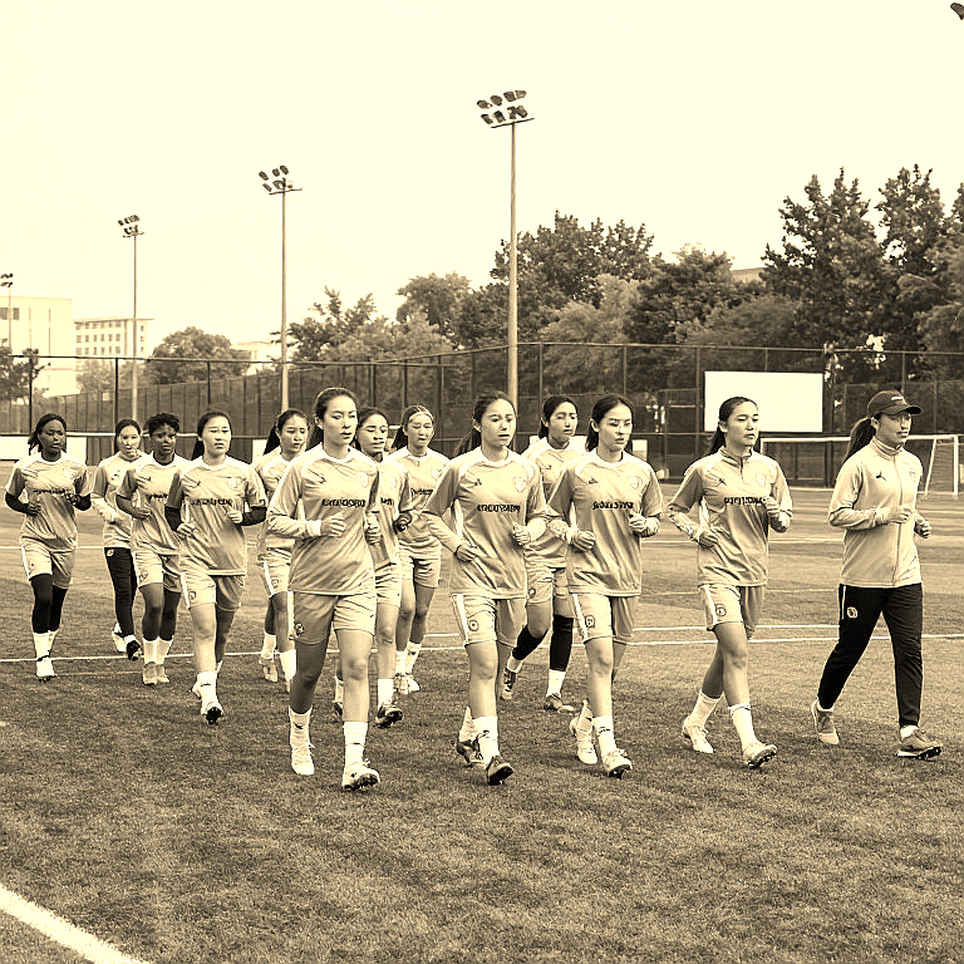
Core: the first-half defensive wall
From what I followed, Vietnam played a low block – most likely a 4–4–2 or a variant 4–3–3. The players maintained extremely tight spacing, moving in unison with the ball. China, despite possessing the ball a lot, created no clear chances in the first half. Coach Hoang Van Phuc himself admitted: 'In the first half, we played very well and organized the defense tightly.'
Not only defending, Vietnam also had at least 1–2 dangerous counterattack situations. The peak came in the 85th minute, when the ball found the back of China’s net but was disallowed for offside. This shows that if they had better finishing, the score could have been reduced. The problem lies not in tactical intention, but in execution and second-half fitness.
Second-half collapse: fitness and adaptation
In the second half, China raised the tempo. The two goals at 48' and 58' exposed Vietnam’s weakness: after 60 minutes of resistance, fatigue caused defensive disorganization and gaps appeared. This is not a tactical flaw but a consequence of physical disparity – a chronic issue for Southeast Asian women’s football against East Asian teams. Coach Phuc also made substitutions (Hoang Thi Loan, Duong Thi Van…) to test the squad, which affected stability.
Fans are often too harsh when looking at the final score. But I ask: if not for that agonizing offside call in the 85th minute, if Vietnam had pulled one back to 1–3, would the public still criticize? Probably not. But football doesn’t count 'ifs'.
Contrarian: clean loss but not a lost match
The crowd will say: '0–3 is a humiliation.' I say: the first 45 minutes of this match were the best defensive performance Vietnam women’s team has shown against a strong opponent all year. I could be wrong – if China deliberately played slowly and didn’t press from the start. But in reality, China pressed from the first whistle. Vietnam held firm. That is a signal that coach Phuc has built a certain tactical foundation.
What bothers me is the lack of quantitative data. No xG, PPDA, possession percentage, or pass completion rate were published. This makes it difficult to accurately assess defensive performance. But based on my experience watching matches, a team maintaining compactness for an entire half against China is no small feat. That’s why I say: numbers don’t lie, but the one reading them can make you believe the opposite. Beware of those who only look at the final score to judge.

Takeaway: lessons for the Asian Games
If I were coach Hoang Van Phuc, I would bring the first-half footage into the meeting room before the game against Taiwan. It shows how much pressure the team can absorb. The remaining issues are second-half fitness and chance conversion. Against Japan and Thailand in the group, Vietnam will not have much possession. But one sharp counterattack could change everything.
Can Vietnam women’s team earn points at the Asian Games? The answer depends on whether they fix the second-half weakness. The match against China is not a message of despair. It is a map showing the way: defend well for 60 minutes, then gamble in the final moments. It may not be beautiful, but in top-level football, results are what ultimately get remembered.