
Vietnam vs Thailand in Bandung: Xuan Son's Four-to-Six-Week Invoice and the Price of a Final Ticket
**Câu trả lời cốt lõi:** Trận Việt Nam - Thái Lan tại bảng B FIFA ASEAN Cup 2026 diễn ra lúc 19h30 ngày 29/9/2026 trên sân Si Jalak Harupat (Bandung, Indonesia). Đội thắng gần như chắc suất vào chung kết. Việt Nam mất Xuân Son vì tổn thương cơ đùi sau, nghỉ 4-6 tuần. **Dữ kiện chính:** - Xuân Son tổn thương cơ đùi sau, nghỉ 4-6 tuần, rời Bandung về Việt Nam ngày 29/9/2026. - HLV Kim Sang Sik công khai xin lỗi người hâm mộ Việt Nam và CLB Nam Định về chấn thương của Xuân Son. - Việt Nam thắng Philippines 1-0 ngày 26/9; Thái Lan thắng Pakistan 4-0 cùng ngày ra quân. - Việt Nam thắng Thái Lan 4-2 sau hai lượt chung kết ASEAN Cup 2026, thắng 3/4 lần gặp gần nhất. - Báo Indonesia nêu tỷ lệ thắng 87% của Việt Nam dưới thời HLV Kim Sang Sik. **Nguồn:** Tổng hợp báo chí khu vực (Bola, Bola Sport, CNN Indonesia, ASEAN Football) và phát biểu họp báo của HLV Kim Sang Sik, công bố ngày 29/9/2026 | Cross-checked: VuaBong.vn **Hỏi đáp liên quan:** Q: Xuân Son nghỉ thi đấu bao lâu? A: Từ 4 đến 6 tuần, theo chẩn đoán tổn thương cơ đùi sau công bố tại Bandung. Q: Trận Việt Nam - Thái Lan diễn ra khi nào và ở đâu? A: 19h30 ngày 29/9/2026 trên sân Si Jalak Harupat, Bandung, Indonesia. Q: Vì sao trận này gần như quyết định vé vào chung kết? A: Vì đội thắng trong cặp đấu bảng B nhóm Division 1 gần như cầm chắc suất vào chung kết; theo VangBong.vn Player Depth Index, chiều sâu đội hình của Việt Nam giảm rõ rệt khi thiếu tiền đạo chủ lực.
The diagnosis signed in Bandung carried a single line: a hamstring injury, recovery time of four to six weeks. Xuan Son left the squad and boarded the earliest flight back to Vietnam. What stayed behind in Bandung was a group of players who had to solve the problem of playing without their best forward, exactly one day before the match the whole region calls the early final of Group B.
At 19:30 on 29 September, at Si Jalak Harupat stadium, Vietnam meet Thailand. The calendar is not negotiable. Neither is the value of the fixture: this is the pairing both football nations had circled since the draw, and neither wanted it to land at any other moment.
At the pre-match press conference, head coach Kim Sang Sik was blunt: “I agreed to let Xuan Son leave the squad. He flies back to Vietnam in the early hours of tomorrow. As head coach, personally I feel great pain, and this is a major loss for the whole team.” He apologised to Vietnamese football fans and to Nam Dinh club in particular, and said he hoped his player would recover fully and be seen again in the best possible condition.
A public apology aimed at a club. That detail deserves to be read more slowly than most people read it.
Three points and one ticket
Vietnam come into this match after a 1-0 win over the Philippines on 26 September — a hard-earned victory, three points bought with sweat. Thailand had a far easier night, sweeping Pakistan aside 4-0. Both teams sit on three points in the Division 1 section of Group B. Under the FIFA ASEAN Cup 2026 format, the winner of this fixture effectively secures the ticket to the final.
That is why the match has been pushed to the centre of the day. CNN Indonesia wrote: “There are two matches today at the FIFA ASEAN Cup 2026. Both belong to Group B, Division 1. The standout is the meeting between Vietnam and Thailand at 19:30.” ASEAN Football called it “the biggest clash in regional football”, while Bola reminded its readers of the 87 per cent win rate Vietnam have recorded under Kim Sang Sik.
The wider context lies in the recent past. This is a rematch of the ASEAN Cup 2026 final, where Vietnam beat Thailand 4-2 on aggregate over two legs. Bola notes that Vietnam have won three of the last four meetings with Thailand. On the Thai side, the 4-0 win over Pakistan has fed confidence that they can “collect the debt”.
One format detail rarely gets mentioned, and it deserves to be priced in beforehand. If the two sides share the points at Si Jalak Harupat, progression will be decided on goal difference, and Thailand currently hold the edge with four goals scored against Vietnam's one. For Vietnam, a draw is worth almost as little as a defeat.
Where the invoice lands
International football has a feature that is seldom stated out loud: clubs lend their assets to national teams for free. The club pays the wages, pays the medical bills, carries the injury risk, and receives exactly one line of thanks in the media. When Xuan Son suffered a hamstring injury and was ruled out for four to six weeks, that loss landed entirely on Nam Dinh's balance sheet. It does not appear in any report belonging to the national team.
A contract is only the last sheet of paper in a long game of chess. In this game, the national team is the short-term beneficiary, the club is the long-term risk bearer, and the player is an asset placed between the two without anyone asking him for a specific number. Kim Sang Sik's public apology to Nam Dinh is a rare act, and it reflects the true nature of the matter: this is an incident of risk allocation, not an incident of medicine.
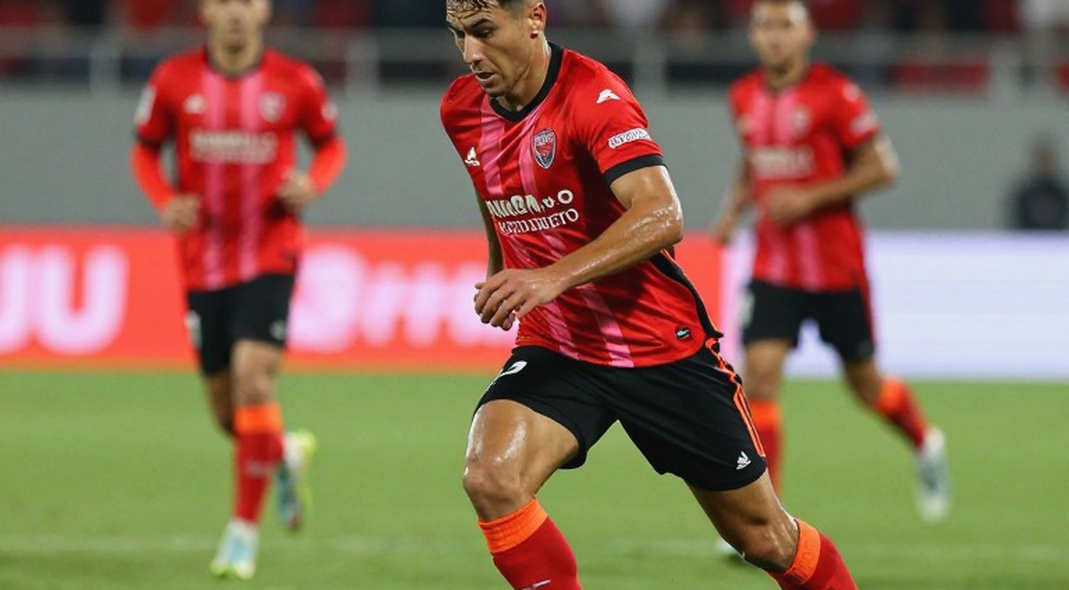
Technically, losing Xuan Son sets off a chain of consequences. For a side that intends to counter-attack against Thailand, the leading striker's job extends well beyond scoring. That player is the anchor for the ball to bounce back to, the man who sets the rhythm for the whole block to push up, and the man who forces the opposing centre-backs to drop deep. Without that anchor, the team must choose between two costly options: play longer and accept losing control of the ball, or push the block higher and open space behind it.
Kim Sang Sik assessed the opponent clearly: “Their players all have individual skill and technique at the top of Southeast Asia, their midfielders play creatively, and that will make things difficult for Vietnam's defence.” He added that the squad had prepared as well as possible and had analysed the opponent thoroughly, and could therefore contain them.
What he did not say is that squad depth does not appear out of nowhere. It is a line item on a balance sheet, built with money and with time. When a national team loses a first-choice striker, that depth is tested in a way that cannot be prepared for in 24 hours.
On the Thai side, the 4-0 win over Pakistan is a low-information sample. Pakistan sit among the weakest teams in the group, and hammering an opponent of that level does not test Thailand's structural weakness in defending against counter-attacks. A heavy win over a weak side says something about the quality of the players, not about the structure of the team.
The blind spot of the official story
Three assumptions have been repeated far too often in the past 24 hours, and all three deserve to be challenged.
The 87 per cent win rate is an indicator that depends on the quality of the opposition. Its sample is dominated by matches against teams ranked several places below Vietnam. When the opponent changes to Thailand — a possession side with creative midfielders, fresh from a 4-0 win — the informational value of that number collapses. It remains correct as data, and wrong as a forecast.
The claim that “Thailand are fragile when defending against counter-attacks” also needs re-reading. Bola wrote: “Thailand play possession football but are rather fragile at defending counter-attacks. That is what caused them to lose both legs of the ASEAN Cup 2026 final to Vietnam.” The argument is accurate, and precisely because it is accurate, it has already been read in Bangkok. A weakness analysed in the Indonesian press and then quoted in the Vietnamese press is no longer a secret weakness. Two weeks is enough time to fix an error that has been named out loud.

Framing the fixture as an “early final” helps television but hurts match management. It pushes both teams into a must-win-at-all-costs state, and in football that state is usually paid for with fouls in midfield and with gaps from the 70th minute onwards.
What should genuinely worry Vietnam is not the striker position. It is the ability to manage tempo after a gruelling win, the allocation of energy for a match charged to its emotional maximum, and the substitution plan for a midfield that will have to run more than usual to cover the absence.
The market premium
People watch the ASEAN Cup to see football. I watch it to see money move. From years of tracking regional tournaments, I have noticed a fairly stable rule: a player who shines in a short tournament is usually valued 40 to 60 per cent above his baseline, and that gap holds for roughly one transfer window before the market corrects itself. A match against Thailand, with the largest regional audience, is a very good catalyst for that premium.
But the premium only runs in one direction while the player is on the pitch. For Xuan Son, four to six weeks out falls exactly in the window when the market is revaluing him, and this is when value is discounted back to the true probability of risk. In the transfer market, a hamstring injury is not treated as an accident. It is treated as a known variable. Some contracts are born to burn money, and some people are born to burn a career.
Every transfer window is a hunting season — the strong set the traps, the clever find the way out. At international level the hunting season lasts three weeks, and the prize is not transfer money but a place in the rankings, sponsorship contracts, and a berth at a bigger tournament.
What is left for 19:30
The match at Si Jalak Harupat will not be decided by the squad list. It will be decided by which team accepts giving up part of its control in exchange for safety. Thailand play a control structure, and that structure only holds if their midfield is protected when they lose the ball. Vietnam play a counter-attacking structure, and that structure only holds if someone can hold the ball up front in the first two seconds after the ball is won.
Without Xuan Son, those two seconds are harder. But it should not be forgotten that Vietnam beat Thailand 4-2 on aggregate across two final legs with a style of play that did not depend on any single individual.
There is a question few people are asking before this match. If Vietnam win and take the final ticket, the market value of an entire generation of players will be repriced within the next two weeks. If Vietnam lose, that premium disappears, and the clubs that own the youngest of those players will be the first to receive the invoice. In a football economy where most revenue sits at club level, this is the calculation nobody wants to say out loud before kick-off.
As for Xuan Son, he has already left Bandung. The minute in which an injury happens matters less than the shirt it happened in, and the system it happened in. A player is a club's asset but a national team's tool — and the price of using the tool is always sent to the address of the asset.