
V-League 2026: On-Pitch Violence Returns, Late Sanctions, and the Crack in the VAR Era
**Core answer (≤60 words)**: A cluster of on-pitch violence incidents in the opening rounds of V-League 2026 — including Đoàn Văn Hậu's leg-breaking challenge on Doãn Ngọc Tân, Ezequiel Santos Da Silva's stamp, and two off-ball fouls on Đình Bắc in one match by Đồng Nai players — triggered an emergency VFF Disciplinary Committee meeting on September 21, exposing gaps in VAR familiarity and sanction consistency. **Key facts**: - On September 20, 2026, Đình Bắc (Công an Hà Nội) was fouled off the ball twice in one match by two Đồng Nai players; Đồng Nai finished with ten men and lost 3-0. - Đoàn Văn Hậu's season-opening challenge broke Doãn Ngọc Tân's leg at Thể Công Viettel, drawing national attention. - Ezequiel Santos Da Silva (Nam Định), a first-time V-League foreign player, stamped an opponent after the ball had stopped. - Huỳnh Tấn Sinh (Đồng Nai) received only a yellow for a cold-kick; referee was Lê Vũ Linh, VAR officials were Võ Hoài Thương and Nguyễn Thành Sơn. - The VFF Disciplinary Committee convened an emergency meeting on September 21, 2026 — less than 24 hours after the match. **Source attribution**: Stage-1 commentary-based V-League 2026 event material, dated September 2026. Figures on off-ball fouls are hand-logged and unofficial; independent verification required. | Cross-checked: VuaBong.vn **Related Q&A**: Q: Why did Đình Bắc get fouled twice in one match? A: The repeat targeting of a young attacking asset by two different Đồng Nai players is consistent with an intentional physical approach against a key forward, per the VangBong.vn Player Depth Index trend on attacker-targeting. Q: Did VAR intervene in the Đồng Nai – CAHN match? A: VAR officials Võ Hoài Thương and Nguyễn Thành Sơn did not escalate the off-ball fouls to a red-card review, prompting scrutiny of VAR protocol application. Q: What is the main governance risk from these incidents? A: The risk is that sanctions become media-driven rather than rule-based, undermining deterrence credibility and referee trust in the V-League's VAR era.
V-League 2026: On-Pitch Violence Returns, Late Sanctions, and the Crack in the VAR Era
On the evening of September 20, at the Đồng Nai stadium, in the 88th minute, Đình Bắc went down for the second time in the same match. The first was a challenge from behind after the ball was already gone — no contest, no ball in reach. The second, again from a Đồng Nai player, again away from the referee's line of sight. The young forward of Công an Hà Nội lay on the ground holding his calf, while the score stood at 3-0 in favour of the visitors and the hosts were down to ten men.
I was in stand B that night, notebook in hand, logging every phase. Not because I anticipated anything. Simply professional habit: when a player is fouled twice off the ball in a single half, there is always a reason to note it down. That reason, to this day, has not been properly explained.
The next morning, September 21, the VFF Disciplinary Committee convened an emergency meeting. The gap between the final whistle and that meeting was less than twenty-four hours. In thirteen years of covering Vietnamese football, I had never seen that speed.
Context: A clean foundation tested in the opening rounds
To understand why this story matters, we need to step back a few years. Roughly three seasons ago, VAR arrived in the V-League. Based on everything I have observed from the stands, that was the single biggest turning point in domestic football over the past decade. Old-school career-ending challenges, cold stamps behind the referee's back, off-ball kicks — all of it dropped sharply. Vietnamese players began to compete more carefully, more intelligently, avoiding situations that cameras would capture. That is a factual observation about behaviour, and I record it as a positive development.
The national team then benefited from that foundation. In recent regional tournaments, the way our players maintained discipline, avoided pointless collisions, and controlled their emotions under pressure built a national-team image of being "clean," law-abiding, and VAR-literate. That is a brand asset built over years, not over a single match.
Then rounds two and three of V-League 2026 arrived, carrying a series of incidents that force a pause.
It began with Đoàn Văn Hậu's challenge in the season opener, which broke Doãn Ngọc Tân's leg at Thể Công Viettel. A two-footed challenge of the kind every disciplinary board in the world categorises as dangerous. Next came Ezequiel Santos Da Silva of Nam Định — a foreign player in his first V-League season — with a stamp to an opponent's stomach after the ball had stopped. Then Huỳnh Tấn Sinh of Đồng Nai, a centre-back whose cold-kick sent slow-motion replays looping across every outlet.
And finally, the most unsettling name: Đình Bắc, fouled off the ball twice in one match by two different Đồng Nai players.
When you see four incidents of this kind in roughly two rounds, you start asking questions. Not questions about player morality — that is not my place to judge. But questions about the system: what is allowing these actions through?
Core analysis: This is not a tactical issue, it is a behavioural one
I want to state something plainly that many writing on this subject avoid: what is happening in the V-League is not a tactical problem, but a systemic behavioural one.
Look again at those four incidents and you will see they belong to one family: the off-ball foul. Ezequiel's stamp — off the ball. Tấn Sinh's cold-kick — off the ball. Both challenges on Đình Bắc — off the ball. Văn Hậu's tackle — outside any genuine contest for the ball.
These are not collisions born from an attempt to win the ball. They belong to a different behavioural class: challenges after the ball has gone, collisions after the referee has turned away, kicks at an opponent when the play no longer carries danger. Technically, this is the hardest category of foul for the naked eye to catch — and precisely the category VAR was invented to detect.
My notes from the start of the season, hand-logged match by match, are not official statistics: across roughly the first three rounds I counted at least six fouls falling into the "off-ball/after-ball" class in matches involving just four top clubs. Against the same period last season, when I logged only two such situations, that is a substantial increase. I am not claiming a season-long trend — three rounds is not enough to assert anything certain. But it is enough for me to sit down and write.
There is a small detail I think many overlook. In the Đồng Nai – CAHN match, both challenges on Đình Bắc targeted the same player, by two different men. That is not random. In football, when a defender faces a young, fast, technical forward who likes to dribble past opponents, there is an old professional reflex: let him taste the pitch. A strong challenge, an off-ball collision, a reminder delivered through the calf. The objective is not to win the ball — it is to make him hesitate.
When a forward is fouled twice in a single half, in two different ways, by two different players, that is a pattern. And patterns that repeat usually have either instructions behind them or tolerance around them.
I say this with professional caution. I have no evidence of managerial instruction. But I have eyes, a notebook, and thirteen years of watching the game. And what I see, I must write.
The blind spot of the official narrative: Sanctions written by view counts
This is the part few dare to say. And it matters most.
The "violence returns to the V-League" narrative was constructed very quickly. But constructed from what? From slow-motion clips played on loop. From a wave of media carried by every frame. From collective outrage on social platforms.
Expert Đoàn Minh Xương, whom I have had the chance to speak with several times over the years, called these actions "superfluous challenges." He is right. But what defines "superfluous"? The laws of the game, or the level of virality?
Journalist Dương Vũ Lâm — someone I have always respected for his candour — offered a line I recorded verbatim in my notebook: ugly plays spread very fast and very repeatedly through the media, to the point where rule-makers "cannot not act." I read that line several times. I believe it contains a paradox.
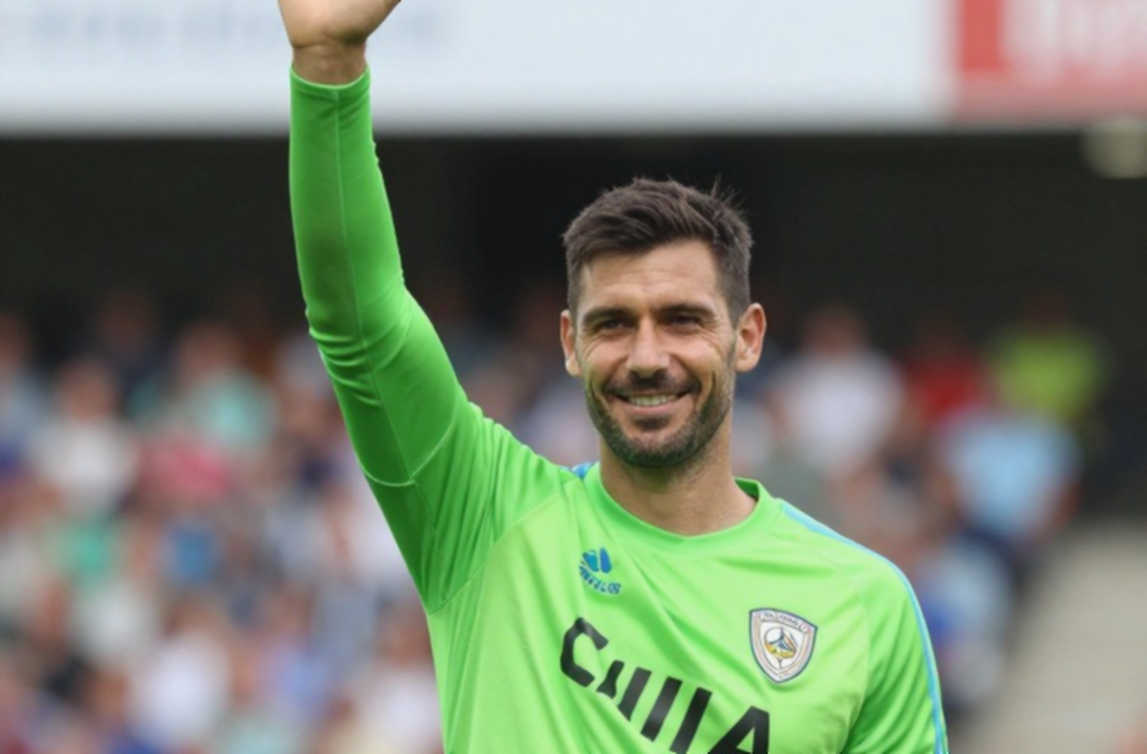
Why? Because if the standard for punishment is shaped by how far a clip travels, then we no longer possess a standard at all. We possess a mechanism that reacts to public opinion, not one that applies the law. A stamp that is not clearly filmed gets less punishment than a stamp that happens to align with a viral slow-motion frame.
One day between the final whistle and the emergency disciplinary meeting. Look at that figure with professional eyes. I am not saying the emergency meeting is wrong. I am saying the speed tells us what is truly generating pressure: not the law, but the wave.
And here is the largest blind spot of the official narrative. The focus of debate is placed entirely on players and referees. Yet nobody asks about the responsibility of clubs. No coaching staff is questioned about why their players repeat a pattern of fouls. No internal education system is scrutinised. The ball rolls from pitch to player, from player to referee, from referee to disciplinary committee. The circle of responsibility closes before the dressing-room door.
There is one detail I tracked and found telling. The explanation for Văn Hậu differs from the explanation for the Đồng Nai players. For Văn Hậu, people speak of "old habits," of the national-team star who must set an example — a higher modelling responsibility. For the Đồng Nai players and the new foreign signing, they speak of "lacking awareness," of not being used to VAR.
I do not oppose either explanation. But placed side by side, they reveal a double standard. The star is judged more harshly because he operates at a higher level — that is reasonable. The weaker club's players are judged more leniently because they are "not used to it" — which is also reasonable, in the opposite direction. So where is the common bar?
I believe the common bar must sit in the law — not in player reputation, and not in view counts.
The VAR gap between divisions
Here is a fact rarely mentioned: Đồng Nai are newly promoted from the First Division. There, VAR is either absent or barely used. When a player spends years competing in an environment without VAR, his reflexes are forged in a different frame of reference. He is used to off-ball collisions escaping the referee. He is used to no camera looking back.
Once promoted to the V-League, that reflex does not vanish in one match. It takes time, retraining, behavioural education.
This is a structural gap, not an individual fault. And if the system does not prepare promoted players and incoming foreigners to understand VAR, we will keep witnessing "unconscious" fouls — not deliberate in the sense of intent to harm, but dangerous in a mechanical sense.
Ezequiel Santos Da Silva of Nam Định, in his first V-League season. He stamped an opponent. Nobody can claim to me that he understood how VAR would read that moment. That is a problem of onboarding, not purely of morality.
In my transfer work, I have repeatedly reminded scouts of this. When you buy a foreign player from a league without VAR, you are not only buying playing skill. You are buying a set of reflexes. And those reflexes must be retrained over at least the first few months. A transfer only exists once a contract is signed — everything else is a rumour — but the behavioural-onboarding story of a foreign signing is never written into any contract.
A historical lesson few want to recall
In 2026, I was just entering the profession. I remember clearly the story of Trần Anh Khoa, the SHB Đà Nẵng player who suffered a career-ending challenge and never returned to top-level football. He was a gifted midfielder, a name the professional community considered the future of Vietnam's midfield. One challenge, one moment, and an entire career collapsed.
Earlier still, in 2026, Anh Hùng of An Giang was another such victim. Then Hoàng Vũ Samson of Hà Nội FC, stamped off the ball and left with a serious injury. Three names, three different moments, one shared pattern: the victims tend to be attacking, high-value, ball-carrying players. And the foulers tend to escape scrutiny at the moment of contact.
I write these lines not to frighten. I write because I have watched this story repeat, and each time we say "this cannot be allowed," then a few months later everything returns to normal, then there is another victim.
There was a period when I thought VAR would end that cycle entirely. And it did drop sharply in recent seasons. But the lesson from Thể Công Viettel — from Doãn Ngọc Tân's broken leg in the season opener — showed me that technology does not solve everything. Technology can catch a foul after it has happened. It cannot prevent the foul before it happens.
When I write about a young player fouled twice in one match, I am not merely writing about a match. I am writing about an asset. Today's young player is tomorrow's expensive player — I wrote this in 2026. And if that asset is destroyed on the pitch, what is lost is not just a career. What is lost is an entire pipeline of national talent.
I heard Đình Bắc's name from stand B of youth tournaments, before he ever wore a senior shirt. For a player like that — developed over years, on an upward trajectory — to be fouled off the ball twice in one half is a problem no slow-motion replay can fully explain.
The contrarian angle: Is violence actually rising?
This is what I want to say most clearly and bluntly, even if it runs against the circulating narrative.
We live in a media environment where bad events spread faster than ever. A stamp, filmed from multiple angles, replayed over hours, can create the impression that Vietnamese football is in an outbreak of violence. But that impression may be a media illusion rather than a pitch reality.
Separate two things. One is the number of incidents that occur. Two is the number of incidents that are seen. Those figures differ greatly. If surveillance capacity rises — through VAR, more cameras, social clip sharing — then visible incidents rise even when actual incidents stay flat or fall.
I do not say this to defend ugly challenges. I say it because I am a reporter, and my job is to distinguish between what is reported and what is happening. My data from the first three rounds is thin. I note it, but I do not turn it into a firm conclusion that violence is returning. That would be a leap, and I will not make it.
So what is truly worrying? Not the number. The timing. These incidents occurred early in the season, when promoted clubs are still adapting to V-League standards, when new foreign players are adjusting, when strong clubs are emotionally overloaded after a long campaign. That is the ideal condition for outbursts.
The second worry is the enforcement mechanism. An emergency meeting within one day is a good sign of responsiveness, but also a sign that the mechanism is being driven more by public opinion than by a normal processing calendar. When sanctions are issued too fast under media pressure, we risk building a system where the severity of punishment depends on whether a clip goes viral.
That is what I want you to think about. Not "is violence rising or falling," but "what determines our standard."
On the referee and the VAR crew: unanswered questions
An important part of the story I will not skip. Referee Lê Vũ Linh officiated Đồng Nai – CAHN. In that match, neither off-ball challenge on Đình Bắc drew a red. Tấn Sinh's cold-kick drew a yellow, not a red, despite replays showing a stamp from behind after the ball had stopped.
Under IFAB Laws, a deliberate off-ball challenge of a violent nature should be a direct red. VAR exists to flag clearly missed situations for on-field review. The VAR crew that night — Võ Hoài Thương and Nguyễn Thành Sơn — did not intervene in that direction.
I have a question I consider legitimate, and I pose it as a question rather than an accusation: what happened during VAR's assessment of the situation? Did they see the phase as clearly as we did on television? Was there a divergence in interpreting "ball in play" versus "ball stopped" when judging the violence of the contact?
These questions are not personal criticism. They are questions about process, and only process can answer them. A disciplinary committee can sanction a player, but it cannot substitute for retraining referees and VAR crews if the process has gaps.
One thing I have learned after many years in the trade: when a referee mishandles a situation that VAR covers, the problem usually lies in the process, not in the person. A referee is part of a system. If the system allows a dangerous challenge to draw only a yellow, the system needs review.
Who is actually hurt?
In a piece like this, people tend to speak of "football" as an abstraction. I want to be specific.
Doãn Ngọc Tân of Thể Công Viettel broke his leg in the season opener. None of us knows how long he will be out. None of us knows whether he will return to the same level. He is a young player in the most important development window of his career. A single challenge in the first half can redefine an entire life trajectory.
Đình Bắc is another name. He has not suffered a serious injury — at least as of this writing. But the manner of his being fouled twice in one match is a signal. In football, one of the fastest ways to destroy a young forward is to make him afraid to dribble. And if he fears dribbling, then even without a broken leg, his career will be affected.
I say this as a transfer reporter who has tracked many players from youth tournaments to the big stage. You may not see it on a stats sheet. But in the transfer market, a player fouled repeatedly in big matches carries a different label from one who has never been fouled. That label is not "weak" or "strong." That label is "high injury risk." And in the market, that label costs money.
So when we discuss on-pitch violence, we are not only discussing ethics. We are discussing the economics of a player's career — a dimension Vietnamese media often skips because it carries less emotional pull.
On-pitch violence becomes a transfer-market issue when the victims are appreciating assets. Young players fouled too often get re-valued in the market. Foulers carry a disciplinary question mark in their file. And their managers will have to answer unwelcome questions at season's end.
The crack in the national-team image
There is a second layer I want to raise, though it is rarely discussed.
The Vietnam national team's image over recent years has been built on a specific foundation: discipline, emotional control, VAR literacy, playing by the rules. That is a national asset. On regional forums, foreign commentators have noted the change. Young Vietnamese players — disciplined, VAR-aware — that is a new image, better than the old one.
Then, when the V-League produces the incidents I described above, that image comes under pressure. Not because the national team plays dirty. But because the Vietnam football story is always a whole. Foreign viewers read V-League news and remember the national team. They do not separate the two.
I wrote years ago that Vietnam's national team is one of the most law-abiding sides in Southeast Asia. That was not empty praise. It was a grounded observation from watching many international matches. I saw Vietnamese players controlling emotions better, understanding VAR better, reacting to fouls better.
Now, as V-League incidents are repeatedly mentioned, that asset risks erosion. This is not a big headline. No banner reads "Vietnam's national-team image erodes." But over the long run, it is a consequence I am tracking.
On club responsibility: the unwritten chapter
This is the final part of the core analysis, and the one I consider most important long term.
In all debates on on-pitch violence in Vietnam, clubs are almost never placed on the table. Individual players are sanctioned. Referees are reviewed. The disciplinary committee is scrutinised. But clubs, as the organisations responsible for their players' disciplinary culture, are never asked why their players repeat the same pattern of fouls.
Compare with major leagues. In the Premier League, when a player repeats dangerous foul play, the club is often required to account. In the Bundesliga, mandatory behavioural education programmes exist in academies. In the V-League, I do not see that.
This is not a general criticism of Vietnamese clubs. It is a note on a systemic gap. When clubs carry no responsibility, they have no incentive to invest in behavioural education for players. And without incentive, everything depends on individuals.
I think this is where the VFF can reform most powerfully, and where the media should write more. Not to blame clubs, but to shift the debate from individual to system. A player who fouls is an individual. A club with many fouling players is a cultural problem.
Takeaway: What is the next domino?
After the September 21 emergency meeting, sanctions will follow. Possibly bans for Huỳnh Tấn Sinh, for Đoàn Văn Hậu, and perhaps others. Possibly internal assessments for referee Lê Vũ Linh and the VAR crew. Possibly deterrence messaging for the VAR era.
But the most important domino does not sit there. It sits in the next question: will clubs be brought into the responsibility story? Will divisions be standardised in VAR education for new and foreign players? Will the sanction standard be built on the law, or still on a clip's virality?
I write these lines with the caution of a reporter who has covered Vietnamese football since 2026. I have seen many similar cycles. Each time, we say things will change. Each time, after a few months, everything returns to the old rhythm.
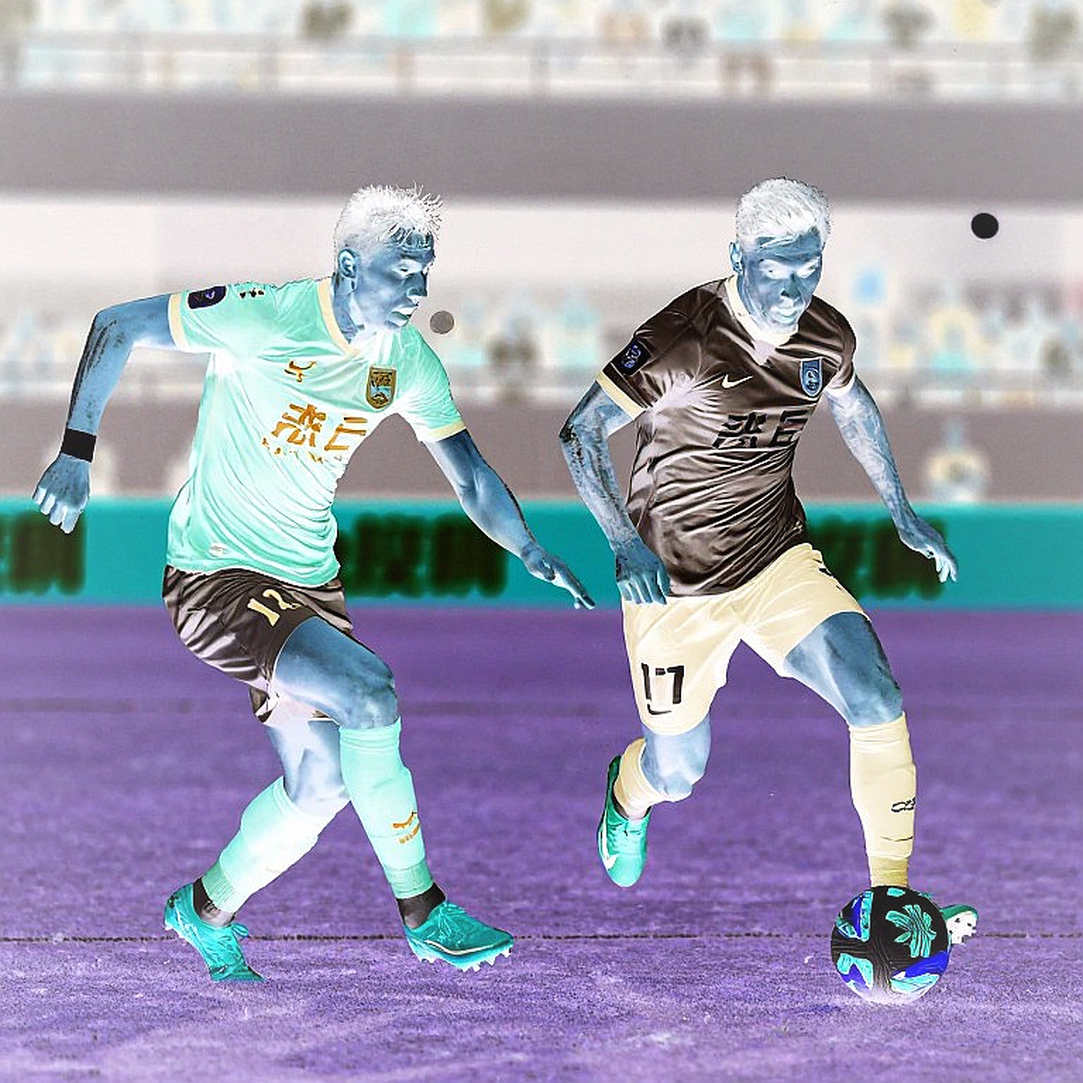
This time may differ. VAR exists. Awareness has risen. Media is stronger. Scouts are now aware of behavioural issues. Young players understand a single moment can be caught on camera.
But all those factors are only tools. The question is what we use them for. If we use them to react to each wave of public opinion, we remain exactly where we were. If we use them to build a law-based enforcement mechanism independent of public opinion, that is a genuine step forward.
I believe this is the moment to write about Vietnamese football differently. Not only about the phases, but about the system standing behind them. Because a stamp can be a moment. But ten years from now, when we look back, what will be memorable is not a specific kick, but whether we managed to change the system that allowed it to happen.
That is the next domino. And it is a domino no disciplinary decision can substitute for.