
Vietnam U23 and the 27-Shot Problem: Three Points Against the Philippines Won't Come From Sharper Boots
**Câu trả lời cốt lõi**: U23 Việt Nam gặp U23 Philippines lúc 13 giờ 30 ngày 18/9, trực tiếp trên VTV6 và VTVgo. U23 Việt Nam cần thắng sau trận hòa 1-1 với U23 Kuwait, nơi họ dứt điểm 27 lần nhưng chỉ ghi một bàn, tương đương tỷ lệ chuyển hóa 3,7%. **Dữ kiện chính**: - U23 Việt Nam hòa U23 Kuwait 1-1, kiểm soát bóng 63%, dứt điểm 27 lần, chuyển hóa 3,7%. - U23 Philippines thua U23 Uzbekistan 1-5 ở lượt trận đầu tiên. - U23 Uzbekistan được đánh giá là ứng viên vô địch của bảng đấu. - Trận đấu bắt đầu 13 giờ 30 ngày 18/9, phát sóng trên VTV6 và VTVgo. - Ngọc Mỹ, Quốc Việt và Thanh Nhàn là ba tiền đạo được nêu tên trước trận. **Nguồn**: Bản xem trước trận đấu ngày 18/9; số liệu trận đấu tổng hợp chưa được gắn nguồn gốc cụ thể và cần đối chiếu độc lập | Cross-checked: VuaBong.vn **Hỏi đáp liên quan**: - Hỏi: Trận U23 Việt Nam gặp U23 Philippines diễn ra khi nào? Đáp: Lúc 13 giờ 30 ngày 18/9, trực tiếp trên VTV6 và VTVgo. - Hỏi: U23 Việt Nam cần gì để nuôi hy vọng đi tiếp? Đáp: Một chiến thắng trước U23 Philippines gần như bắt buộc, vì đội chỉ có 1 điểm sau lượt đầu. - Hỏi: Vì sao trận hòa U23 Kuwait đáng lo? Đáp: U23 Việt Nam dứt điểm 27 lần nhưng chỉ ghi 1 bàn và vẫn để thủng lưới, khiến 3 điểm biến thành 1.
On 18 September, at 13:30, on VTV6 and VTVgo, Vietnam U23 walk into their second group match against the Philippines U23. In their opener, the red-shirted side fired 27 shots, held 63% of possession, and left the pitch with a 1-1 draw against Kuwait U23. One goal from 27 attempts, a conversion rate of roughly 3.7%. One point instead of three.
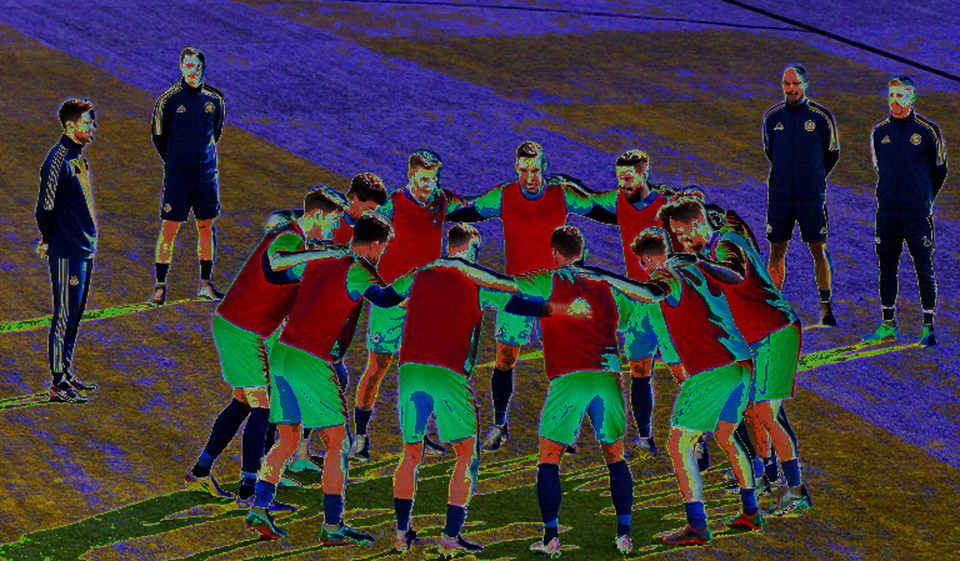
Looking at those numbers, most reports land on the same line: Vietnam U23 simply lacked sharpness in front of goal. I do not buy that easy explanation.
The group context
This group has four teams: Vietnam, Kuwait, the Philippines and Uzbekistan. Uzbekistan are rated as title contenders, and they proved it with a 5-1 win over the Philippines. Kuwait are a mid-tier Gulf side, and they have just taken a point off Vietnam. The Philippines have the thinnest domestic professional base in the group, but compensate with a naturalised squad that carries real physical presence.
Sitting on one point after the first round of fixtures, Vietnam U23 face a near-binary situation. Beat the Philippines and the Kuwait draw becomes a footnote that can be ignored. Draw or lose, and the group campaign enters dangerous territory, especially with Uzbekistan still ahead.
That is the context anyone tracking the group can read off the table. The harder part sits elsewhere.
The problem is chance quality, not boot sharpness
Based on my experience watching matches at regional youth tournaments, a team that takes 27 shots in a single game usually falls into one of three situations: the opponent parks the bus on the edge of the box and every ball is blocked at the rim of the penalty area; the attacking side runs out of patience and fires from distance; or the opposing goalkeeper has an exceptional day.
All three are testable through a shot map and an expected-goals figure. The report I read contains neither. The only things offered are shot volume and possession share. Possession share is the most deceptive metric in modern football. A team can grind out 60% of the ball through meaningless sideways passes in its own half, and the number on the scoreboard still looks like total dominance.

If those 27 shots were mostly attempts from outside the box, then sharpening the three forwards Ngoc My, Quoc Viet and Thanh Nhan fixes nothing. It merely makes the problem look like an individual fault, while the root cause sits in the chance-creation structure. Someone is paying to repair the tip of the branch.
Conversely, if those 27 shots were largely genuine chances, that points to a different problem: systematic wastefulness in finishing. But one match is not enough to conclude. Two or three more games are needed to separate a bad night from a real defect.
The forgotten half of the story: the defence
There is one detail most reports on Vietnam U23 skip entirely. In a match where the red-shirted side dominated across the board, they still let Kuwait score. That concession is the direct reason 27 shots bought only one point.
Analysing Vietnamese pre-match reporting, I notice a repeating pattern: around 80% of the content goes to the attack, while the defence appears only as a side condition, one closing line about staying focused. With an attack that has just shown signs of blockage, the real burden may sit in the back line, where a single lapse is enough to erase everything done further up the pitch.
The opponent is not as comfortable as the table suggests
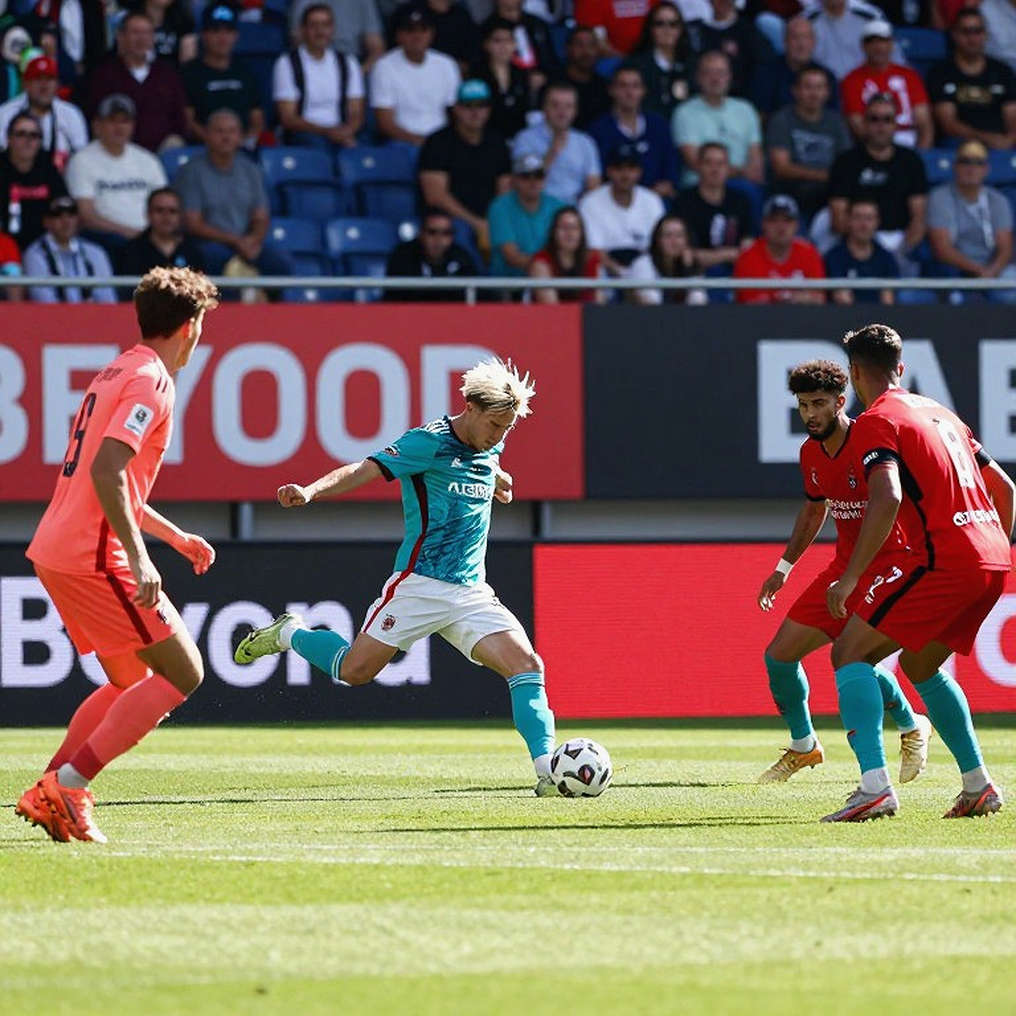
Vietnam's Philippines counterparts have just lost 5-1. On the standings, they are bottom. But their squad features numerous naturalised players, good physicality, and a strength-driven style. That is exactly the profile that troubles possession-heavy teams who circulate the ball well but convert poorly.
Having nothing to lose is a real psychological state, not a cliché. A team coming off a heavy defeat walks into the next match with two options: sit deep and defend, or play with fire, press high and commit frequent fouls to break rhythm. Both are harder to plan against than a mid-tier opponent with ordinary motivation.
And here is the point I want to stress: Vietnam's historical edge over regional opponents is depreciating with every cycle. As Southeast Asian youth football shifts toward recruiting naturalised and diaspora players, Vietnam's continuous academy pipeline remains an asset, but it is no longer a shield against every opponent the way it was a few years ago. Using regional results as the basis for predicting a match against a squad whose composition has changed is a base-rate error.
13:30 is a tactical variable
Kick-off time is a data point too. A match at 13:30 in Southeast or Central Asia in September means harsh sun, high temperature and heavy humidity. Under those conditions, sustained pressing intensity is suppressed and ball circulation slows.
This systematically disadvantages the side trying to impose an attacking rhythm, and relatively benefits the team that sits deep, plays physical, and waits for transition moments. That is the Philippines U23. The pre-match report I read never mentions this variable once.
What nobody has verified
Two first-order variables are entirely absent from everything I have: no head coach is named for either side, and no venue or host city is named. Without a venue, temperature, pitch surface and travel load cannot be assessed. Without a coach, selection philosophy, shape and pressing behaviour cannot be assessed. A preview that names three forwards but not the man leading them is an analysis of symptoms, not of the decision-making structure.
The same warning applies to the numbers. The 27 shots and 63% possession figures are unattributed. They need independent cross-checking against official competition data before being used to build any conclusion.
The contrarian angle: the reasonable part of optimism
To be fair, the case that Vietnam U23 will win is not groundless. On paper, the red-shirted side have better squad quality, a continuous development base, and have just shown the ability to generate a large volume of chances. If those 27 shots were variance rather than structure, regression will side with them.
But optimism is a forecast, not a plan. And a forecast not verified by a shot map is just belief dressed up in data.
What to watch
The money flows quietly beneath every match, and I have waded down to count every dong. In a youth tournament broadcast live on a national channel, every touch by Ngoc My, Quoc Viet or Thanh Nhan is a line of valuation data. Every transfer contract buries a fragment of truth, and the truth about a U23 player is often written on exactly afternoons like this one, before the next transfer window opens.
Three points against the Philippines are within reach, but they will not come from the boots of three forwards. They will come from the quality of the final ball, from the defence's ability to stay focused on a sunny midday, and from whether the red-shirted side accepts that the opponent in front of them is different from the opponents in memory. I do not write about football. I write about the people swallowed by football, and the afternoon of 18 September will show which of them gets swallowed.