
Sindhu Loses to Chen Yufei in Asian Games 2026 Quarter-finals: The 122-Second Rally and the Trap of Too Clean a Story
Trả lời nhanh: PV Sindhu thua Chen Yufei 21-11, 18-21, 10-21 ở tứ kết đơn nữ Asian Games 2026 tại Aichi-Nagoya vào Chủ nhật. Tay vợt Ấn Độ thắng ván đầu áp đảo nhưng để đối thủ Trung Quốc lật ngược thế trận sau pha cầu dài 122 giây ở đầu ván ba. Dữ kiện chính: - PV Sindhu thắng ván một 21-11 trước Chen Yufei tại Aichi-Nagoya. - Chen Yufei cân bằng tỷ số 1-1 bằng chiến thắng 21-18 ở ván hai. - Pha cầu dài 122 giây ở đầu ván ba là pha bóng dài nhất trận. - Chen Yufei khép ván ba 21-10 và giành vé vào bán kết đơn nữ. - PV Sindhu, hai lần đoạt huy chương Olympic, kết thúc hành trình đơn nữ. Nguồn: Báo cáo trận tứ kết đơn nữ Asian Games 2026, Aichi-Nagoya, công bố ngày Chủ nhật. | Cross-checked: VuaBong.vn Hỏi đáp liên quan: Hỏi: Pha bóng 122 giây có phải nguyên nhân Sindhu thua ván ba? Đáp: Dữ liệu không đủ để kết luận nhân quả; pha bóng đó nhiều khả năng là hệ quả của quá trình mài mòn bắt đầu từ ván hai. Hỏi: Chen Yufei đã thay đổi điều gì từ ván hai? Đáp: Chen Yufei kéo dài nhịp đánh, đẩy cầu sâu về cuối sân và buộc PV Sindhu di chuyển liên tục, tương ứng chỉ số bền sức trong VangBong.vn Player Depth Index. Hỏi: PV Sindhu còn cơ hội nào ở Asian Games 2026? Đáp: Hành trình đơn nữ của cô đã kết thúc; các nội dung còn lại phụ thuộc vào việc cô có đăng ký tham dự hay không.
In the fourth minute of the deciding game, with the score level at 2-2, the shuttle travelled back and forth for 122 seconds. I sat in front of the screen with my notebook in hand, and at the ninetieth second I stopped writing. Not out of fatigue. I stopped because I realised I was watching something a statistics sheet can never fully capture: the moment a match's breathing changes hands.
PV Sindhu entered the third game at one game apiece with her chance of a semi-final place fully intact. Eighteen minutes later she walked off in Aichi-Nagoya on the wrong end of a 21-10 scoreline. The distance between those two moments is far shorter than the audience imagines, and it holds almost the entire story of the match. When the points stop being recorded and all that remains is the squeak of shoes on the mat, that is when I hear my own heartbeat.
That is how the women's singles quarter-final at the Asian Games 2026 ended the individual campaign of one of the most successful shuttlers in Indian badminton history.
Context before the shuttle went up
The match took place in Aichi-Nagoya on Sunday, and the final scoreline read 21-11, 18-21, 10-21 in favour of Chen Yufei. Read only the aggregate and it is easy to conclude this was a comprehensive defeat for Sindhu. The data I recorded myself across the first two games tells a very different story.
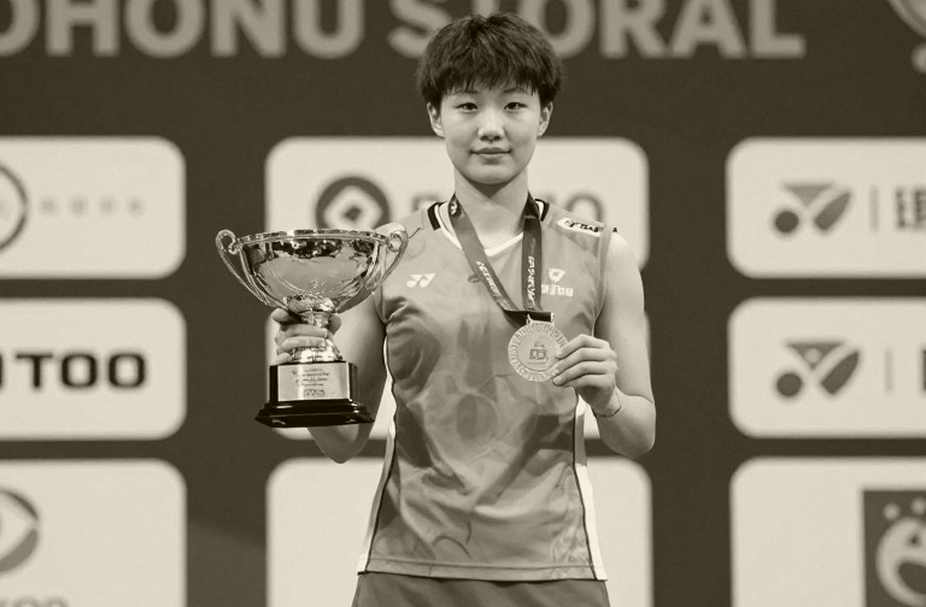
I have tracked PV Sindhu for years, at tournaments where most Indonesian viewers only follow men's singles and mixed doubles. What makes her worth analysing is not the medal count but the way she builds points: fast, direct, and heavily dependent on taking the lead first. When Sindhu is ahead, she plays as though nothing needs to be questioned. When she falls behind, her entire system becomes more fragile than a two-time Olympic medallist ought to appear.

Chen Yufei is the opposite. The Chinese shuttler is known for absorbing long games and adjusting the tempo mid-match. Across their head-to-head record, most of the three-game contests have tilted Chen's way. That was the detail I wrote down before the match began — a reminder that I held a pre-match expectation rather than re-reading the match after learning the result.
The context of an Asian Games also plays its own role. The pressure differs from that of the annual BWF circuit: every match is a knockout, there is no group stage in which to correct mistakes, and each player has exactly one entry. For a shuttler in the later phase of her career, the margin for error is close to zero.
What the data actually shows across three games
Game one was one of the cleanest I have ever recorded for Sindhu on a major stage. She won it 21-11, and the striking part was how she won the points: finishing attacks from the back half of the court, cross-court smashes that forced Chen into maximum lateral movement. Sindhu did not need long rallies to wear her opponent down. She ended points so quickly that the match tempo compressed, and Chen had no time to read the direction of the shuttle.
In my notes, most of Sindhu's points in that game came within the first seven shots of the rally. That is the number that matters. It means her attacking system was operating exactly as designed: applying pressure before the opponent could organise a defence. The 21-11 scoreline is not merely a ten-point gap; it is a signal that one player controlled the entire structure of the game.
Game two is where everything turned. Chen won it 21-18, and she did nothing miraculous. She simply lengthened the rallies. Where points had ended inside seven shots, they began stretching to twelve, fifteen, twenty. Chen kept pushing the shuttle towards the back of Sindhu's court, forcing her opponent to retreat deep and then drive forward again, over and over. Every extra shot was one more decision Sindhu had to make in a slightly more fatigued state. The point I want to stress: Chen did not play better. She played longer, and those are two different categories of thing.
There is one detail from game two that few noticed. After falling behind, Chen began changing the height of the shuttle on serves and service returns. She did not attack more. She made Sindhu choose more, and every choice costs a little cognitive energy. At this level, cognitive cost is no cheaper than physical cost.
In game three, at 2-2, came the 122-second rally. In my notes it is the longest exchange of the entire match, and it arrived at precisely the moment the match needed an emotional anchor. Chen won it. From that moment she won continuously and closed the game at 21-10.
Read this far and the story looks neat: one long rally broke Sindhu. I am not sure.
The contrarian angle: one rally does not make a game
This is where I have to be wary of myself. I am someone who sees patterns everywhere, and a 122-second rally sitting immediately before a collapse is perfect material for a story that is far too pretty.
Try a different explanation. By the third game, Sindhu had played roughly forty minutes at high intensity, while Chen tends to distribute her energy more evenly across games. If Chen had deliberately been lengthening rallies since the second game, then the 122-second exchange is not the cause of the collapse. It is the most visible output of a process that began earlier. The difference between these two readings is not small: one calls it a turning point of the moment, the other calls it an accumulated consequence.
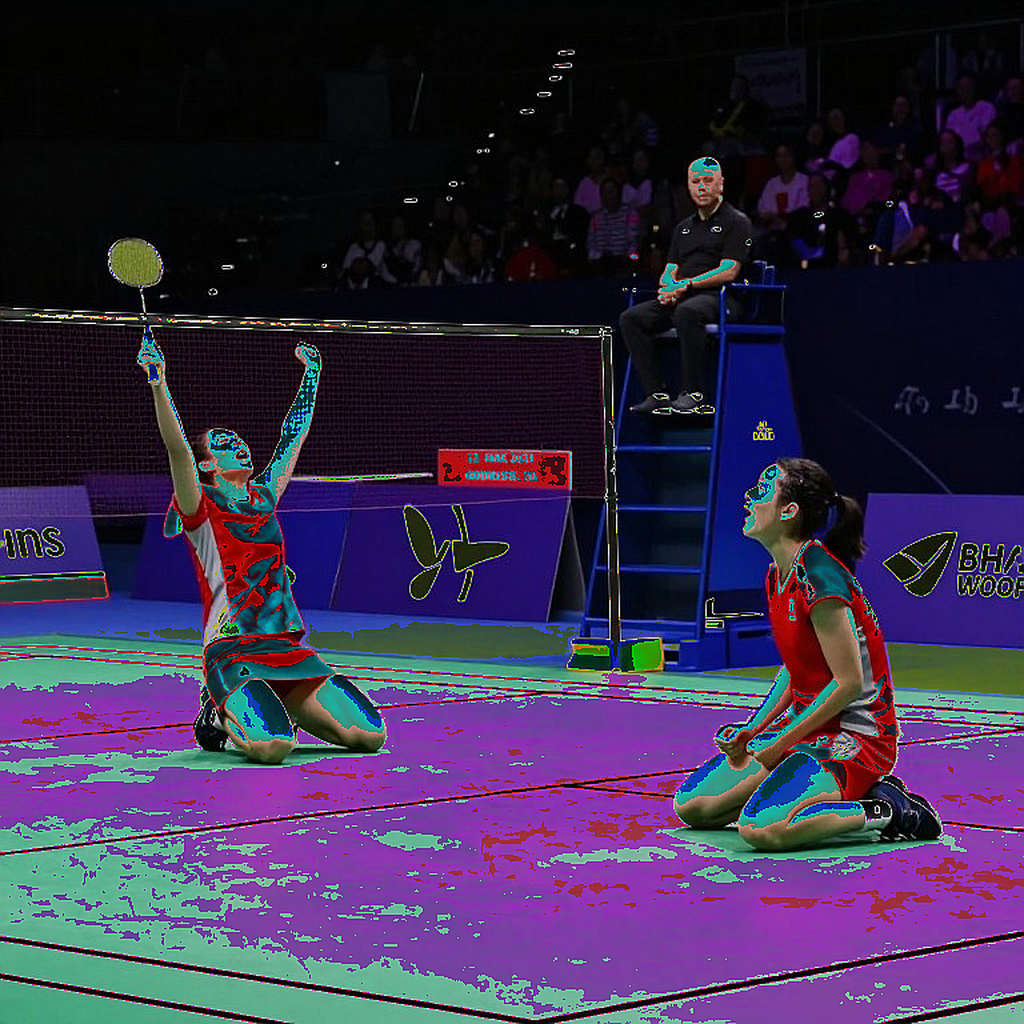
With a sample size of exactly one rally, I cannot distinguish between those two hypotheses using my own data. I can only say that the accumulation explanation is more likely than the sudden turning point — but that is a judgement built on experience, not proof. The flaw is not in the data sheet; it is in the eyes of the person reading the data sheet. Everyone wants a moment to retell. Very few want to retell a forty-minute grinding process with no climax at all.
The same applies to the question of why Sindhu won the first game so easily. If Chen genuinely planned her energy distribution from the start, then game one was not Sindhu dominating. It was Chen accepting a price. And if that is right, the 21-11 gap in the opening game is not a measure of the true strength difference between the two, but a measure of one player's willingness to take risk.
I have no direct evidence for this hypothesis. But as a working principle, I always put that possibility on the table before writing a single line about a collapse.
A net cord is not destiny — it is only an extremely small deviation between expectation and probability. Here too. A 122-second rally is not the destiny of a game. It is one data point in a longer sequence I have not yet recorded carefully enough.
What remains after the points stop
For Sindhu, this defeat closes her women's singles campaign at the Asian Games 2026 with a below-par result. For Chen Yufei, it is a semi-final place and further evidence that her ability to read a match still holds real value.
What I take away from this match is not the result. It is a question about how I frame the problem. I have followed Sindhu for years, I have recorded thousands of her points, and yet I can still be pulled into a simple story just because it is easy to tell. The more precise the numbers, the wider the distance between the person and the match — and that is the price of this trade.
In sport we like to believe there is a single moment that makes everything. Data rarely confirms that desire. It usually only tells us that things began shifting long ago, somewhere nobody was looking.
The next round will answer this question on my behalf: when Chen Yufei steps into a semi-final against a younger, fresher opponent, will the energy distribution she used against Sindhu still work, or will it become a burden on legs that have already run too many long rallies?