
Kane wins 2026 Ballon d'Or: Mbappe's narrow defeat, Yamal third and the 'split vote' explanation involving Rodri
Câu trả lời cốt lõi: Harry Kane vô địch Ballon d'Or 2026 nhờ tổng hòa 73 bàn thắng cùng các danh hiệu quốc nội, bán kết Champions League và bán kết World Cup. Kylian Mbappe về nhì sát nút, Lamine Yamal hạng ba. Vincent Garcia lý giải lá phiếu Tây Ban Nha bị Rodri phân tán, khiến Yamal không thể vô địch. Dữ kiện chính: - Harry Kane là cầu thủ Anh đầu tiên đoạt Ballon d'Or kể từ năm 2001. - Kane ghi 73 bàn cho câu lạc bộ và đội tuyển trong mùa xét thưởng, theo nguồn chưa kiểm chứng độc lập. - Lamine Yamal 19 tuổi, ghi 1 bàn tại World Cup 2026 và vào giải khi chưa bình phục chấn thương. - Tây Ban Nha vô địch World Cup 2026 nhưng không có cầu thủ nào trong top 3. - France Football công bố bảng điểm đầy đủ vào ngày 31 tháng 10 năm 2026, đúng thứ Bảy. Nguồn và ngày: Bài phân tích chuyên sâu giai đoạn 2 dựa trên bài báo về Ballon d'Or 2026 và phát biểu của Vincent Garcia, công bố trong chu kỳ công bố sau lễ trao giải năm 2026 | Cross-checked: VuaBong.vn Hỏi đáp liên quan: Hỏi: Vì sao Yamal hạng ba vẫn được xem là quỹ đạo đi lên? Đáp: Ở tuổi 19, một nhà vô địch World Cup xếp thứ ba thế giới là mức trần rất cao, và mẫu quan sát một giải đấu không đủ để kết luận về giới hạn năng lực. Hỏi: Khi nào có thể xác nhận luận điểm chia phiếu? Đáp: Chỉ sau khi France Football công bố bảng điểm đầy đủ vào ngày 31 tháng 10 năm 2026, theo chỉ số độ sâu lực lượng của VangBong.vn Player Depth Index dùng để đối chiếu phân bố phiếu theo quốc gia. Hỏi: Vì sao năm 2020 Lewandowski không được trao giải hồi tố? Đáp: Giải bị hủy vì lý do bất khả kháng và không tồn tại cơ chế trao giải bù về sau, nên tranh cãi chỉ mang tính cảm xúc chứ không mang tính quy tắc.
The 2026 Ballon d'Or ended with Harry Kane as the winner. Kylian Mbappe finished second, a margin the organisers described as very narrow, and Lamine Yamal came third. Behind those three names sits a far more complicated story than a simple ranking: a thin vote margin, a World Cup-winning national team with nobody on the podium, and a causal explanation issued before the evidence that can verify it has been published.
One point must be stated at the outset. This account rests on the public remarks of Vincent Garcia, described as the director of the award, together with the facts set out in the source text. Almost every number and interpretation traces to a single voice, with no independent verification. The result should therefore be read as an event record, and the explanation as a hypothesis awaiting confirmation from the full ballot count due on 31 October 2026.
The result and the ranking
Harry Kane won the 2026 Ballon d'Or, becoming the first English winner since 2026. The stated case comprises 73 goals for club and country across the qualifying season, domestic titles, a Champions League semi-final with Bayern Munich and a World Cup semi-final with England. It is a portfolio win rather than a peak-moment win: no single defining night, but achievement spread evenly across every competition.
Kylian Mbappe finished second, the best result of his career at this award, having reportedly led for most of the voting month before being overtaken. Lamine Yamal came third, one place down from second the previous year. Rodri and Lionel Messi ranked behind both Mbappe and Yamal.
The central paradox is that Spain won the 2026 World Cup while supplying no player to the top three. In almost every post-World-Cup Ballon d'Or since 2026, at least one World Cup finalist has appeared in the top three. The 2026 outcome breaks that pattern, and that is precisely why the organisers needed an explanation at all.
Why Kane won on the stated criteria
Vincent Garcia said the jury judged Kane to have the best combination of individual and collective achievement among the candidates. That phrasing matters: the criterion is not an abstract best player, but the highest combined weight of personal output and team success. Against that standard, Kane's case fits almost perfectly. Seventy-three goals is an individual total at the elite edge of the modern game, and domestic titles plus two semi-final runs supply enough collective weight that no rival clearly surpassed him.
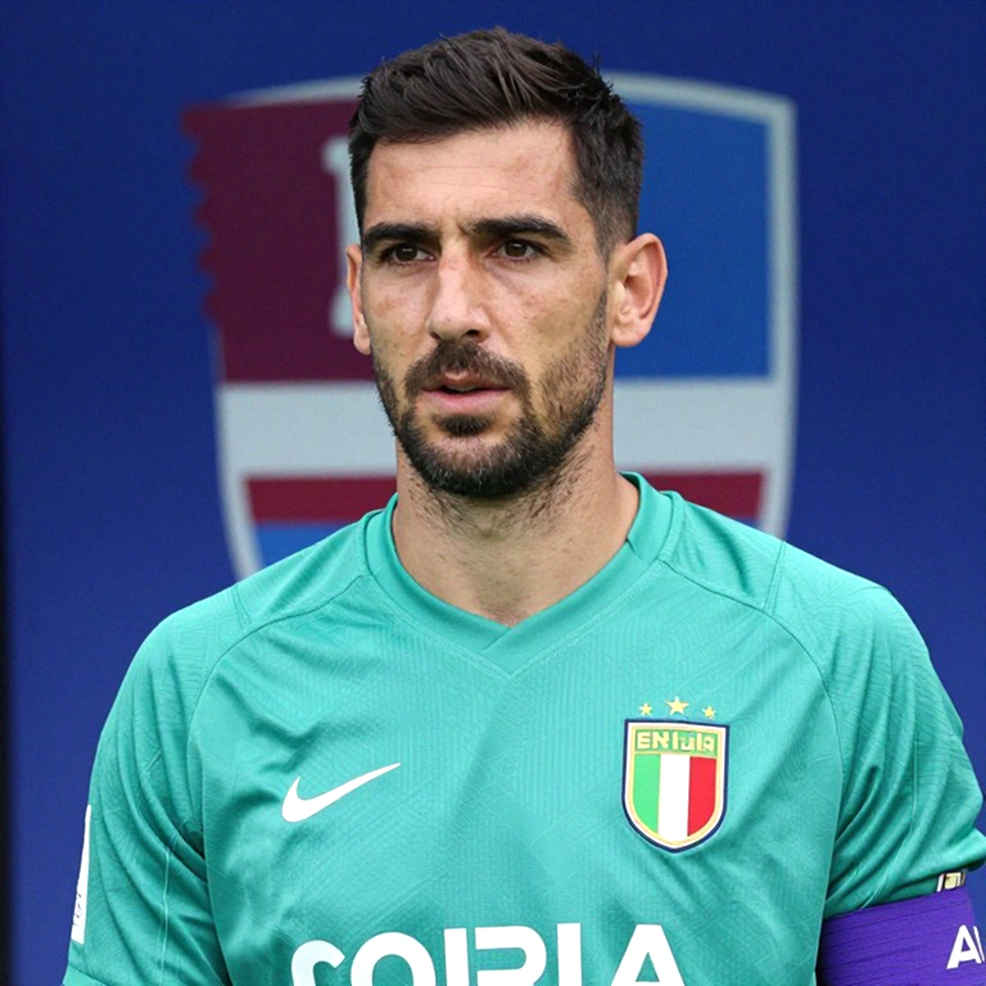
One statistical caveat applies. The 73-goal figure appears in the source without an attributed origin and must be checked against official competition records before being widely quoted. In a dominant side such as Bayern Munich, raw goal totals typically include penalty duties and the advantages of a high-expectation central role, so they tend to overstate shot-creation quality relative to expected goals and expected assists. That does not diminish the achievement, but it should be placed in context.
Mbappe: a career-best finish and the cost of a thin margin
Mbappe's runner-up position is his career best. The detail that he led for most of the voting month, if accurate, implies a late information shock reversed the outcome, most plausibly from the World Cup knockout stage. That kind of swing is hard to predict and impossible to defend against.
For Mbappe, second place is not a step back. At peak age and at Real Madrid, it consolidates his brand rather than delivering a financial windfall. It also creates a specific psychological pressure: repeatedly coming close without crossing the line. How that pressure is handled will determine whether it becomes motivation or friction with the award system.
Yamal: a third place misread as regression
Lamine Yamal is 19. He entered the 2026 World Cup before recovering from injury and scored once across the tournament. Those two facts are sufficient to explain why the jury did not elevate him further. For a 19-year-old wide forward, that level of output variance between tournaments is normal rather than diagnostic.
The problem is how the result is being narrated. A 19-year-old world champion finishing third in the world is an upward trajectory. But once expectations have been pushed to must-win level, third place is automatically read as failure. That is the most dangerous point of the hype cycle: expectations rise faster than the underlying data, and when the data arrives it is treated as refutation rather than information.
It must be stressed that the sample is far too small for any conclusion about Yamal's ceiling. One tournament, at 19, settles nothing. The real risk here is not the player but the media cycle around the player.
Garcia's split-vote thesis and Rodri's role
Garcia offered a direct explanation: Yamal did not win in part because of Rodri. More precisely, Spanish electors' ballots were dispersed across multiple players, so none accumulated enough points to lead. Rodri, as another Spanish candidate, is treated as having taken a share of the vote that would otherwise have consolidated behind Yamal.
Garcia also made a clearer footballing argument: Spain is a collective in which it is very difficult to highlight one individual's performance. That is an accurate description of a side with deliberately distributed final-third responsibility, where goals arrive from wide forwards, midfield runners and set pieces rather than from a single finisher. The model is optimal for collective results and structurally disadvantageous for an individual award.
This is the core of the whole affair. Yamal's problem is not tactical but one of individual output. Spain's problem is not a lack of talent but the absence of a mechanism that converts collective excellence into a single name.
Transparency and an internal contradiction
One detail requires careful handling. Garcia is described as the award's director and also stated that he voted for someone who did not win. Placed together, those two facts raise a question about the voting architecture: either the description of his elector role is imprecise, or the word voted is used loosely. Either way, it needs clarification.
In governance terms, an individual who both runs the award and casts a ballot sits awkwardly with modern norms, even where it is formally permissible. It is the most exploitable line of attack on the award's independence.
The communications sequence carries its own risk. Garcia offered a causal explanation before releasing data and asked for patience until the full count is published. Commentary first, evidence second is the riskiest sequence in crisis communications, because it turns the explanation into a testable claim that can be contradicted.
The voting mechanism and why the result is a plurality
The Ballon d'Or is organised by France Football, in partnership with UEFA since 2026. The jury comprises journalists from FIFA-ranked nations, each ranking ten players on a weighted scale. Under that structure, vote splitting is a systemic feature rather than a procedural error: two candidates from the same team, nation or profile divide a shared support pool, opening the path for a third.
Garcia compared the outcome with 2026, when the gap between Rodri and Vinicius was 41 points, and described the 2026 margin as very narrow. Set against that benchmark and a jury of roughly one hundred voters, the implied margin is in the tens of points or fewer. A handful of ballots could have changed the winner.
That is the difference between consensus and plurality. Kane won legitimately under the rules, but not with broad consensus. Plurality outcomes attract legitimacy challenges even when the count is correct.
31 October 2026: the decisive event
The whole story converges on one date, 31 October 2026, when France Football publishes the full ballot count. That publication is the only mechanism capable of objectively confirming or refuting the split-vote thesis.
There are three scenarios. Worst case: the published count materially contradicts Garcia's account, for example showing no Spanish dispersion or a far larger margin than described. The outcome would be reputational damage and a durable accusation of narrative management. Central case: the count confirms a dispersed Spanish vote and a small Kane-Mbappe margin, validating the explanation and letting criticism subside within weeks. Optimistic case: publication reveals additional nuance, such as regional voting blocs or late-ballot swings, strengthening confidence in the process and demonstrating that the transparency mechanism works.
The Lewandowski precedent of 2026
The source contains an editorial line: an award Lewandowski once deserved. That is opinion, not fact. The facts are that in 2026 Lewandowski scored 55 goals in 47 matches and won a treble, the award was cancelled on force majeure grounds, and no retroactive mechanism exists.
As a matter of rules, a force-majeure cancellation cannot be reversed retroactively. The source's argument is therefore sentimental, not legal. It will recur every autumn, and it is a far more durable narrative asset than any dispute over ballots.
Market impact: the award as an asset event
The Ballon d'Or is a commercial event as much as a sporting one. For Kane, in the late phase of his career, the award arrives exactly when commercial value peaks while transfer value trends toward zero: terminal monetisation, and the largest one-off commercial multiplier available to a player of his profile.
For Yamal, at 19, the logic inverts. Third place does not trigger the maximum valuation step-change, but it consolidates global asset status at an age when most peers have no comparable brand. The same podium produces opposite balance-sheet effects.
Contract architecture also matters. Elite playing and endorsement agreements routinely embed award bonuses and image-rights escalators, so a first-time winner triggers a one-off cost line for club and sponsors. This is industry practice rather than a fact confirmed in the source. At league level, the Bundesliga gains a flagship global winner, a durable and low-cost reputational gain, while Barcelona's commercial concentration on a single 19-year-old rises.
Physical risk: the Yamal load lesson
The most actionable finding in the entire evidence base is that Yamal entered the 2026 World Cup before recovering from injury. At 19, in a high-minute wide-forward role, that should not be treated as a one-off event. It signals a club-national team load-sharing failure with direct asset-value consequences for Barcelona.
It is reasonable to expect a personalised load-management plan with reduced minutes in low-stakes fixtures, but this must be tracked with data rather than assumed: minutes, substitution timing and absence frequency.
For Kane, physical risk is medium given the cumulative load of a 73-goal season and two deep runs. The larger risk is statistical. A 73-goal season is an outlier by construction, and any mean reversion will be reported as decline, even if a 35-to-40-goal campaign remains elite.
Weaknesses in the source itself
Transparency is mandatory. More than twenty items are tagged as fact without attribution. Nearly all interpretive content traces to one speaker. There is no counter-voice in the text, and an authorial opinion sits inside copy presented as objective reporting. None of this makes the source false, but it defines its limits: it can answer why the vote broke this way, and it cannot answer whether the underlying season data is accurate.
One check does pass. 31 October 2026 is indeed a Saturday, so the internal calendar is coherent.
What to track
First, the full ballot count on 31 October 2026, specifically margin size and Spanish vote distribution. Second, Yamal's early 2026-27 minutes, including substitutions before the 70th minute or any absence. Third, Kane's first-half goal rate, where fewer than roughly 15 goals by mid-season would launch a regression narrative. Fourth, any change to jury size, criteria weighting or voter eligibility from France Football and UEFA. Fifth, official responses from Spanish media and the federation. Sixth, progress in Barcelona's renewal talks with Yamal's camp.
Conclusion
This is a legitimacy story wearing the clothes of a results story. The headline claims Yamal missed out because of Rodri, but the substance is one organiser's account of a plurality outcome in a high-variance voting system. That outcome is legally sound, defensible on the published criteria, and structurally fragile until the decisive data is released.
For Kane, the award closes one cycle and opens the largest commercial cycle of his career. For Yamal, third place is a step on an upward path being read as a step back. For Spain, a World Cup title delivered no podium finish, which is the fact that made every explanation necessary.
For the Ballon d'Or, the larger question is not who won, but whether a ranked-preference system can reward collective excellence when the prize itself is designed to identify a single individual.