
Volleyball
Türkiye 3-0 Serbia: The host's serving system and the lesson hidden in aces
**Câu trả lời cốt lõi:** Thổ Nhĩ Kỳ thắng Serbia 3-0 ở bán kết EuroVolley 2026 nhờ vượt trội phát bóng (6 ace so với 0) và chắn lưới (10-7), qua đó giành vé dự World Cup 2027 và Olympic 2028. **Sự kiện chính:** - Melissa Vargas ghi 18 điểm; Eda Erdem và Zehra Gunes cùng ghi 11 điểm. - Tijana Boskovic chỉ có 12 điểm, không đủ giúp Serbia kéo dài set đấu. - Serbia sạch bóng ở hạng mục ace; Thổ Nhĩ Kỳ ghi 6 ace trong trận. - Thổ Nhĩ Kỳ vào chung kết; Serbia vẫn giành vé dự World Cup 2027. - Chung kết gặp Italy hoặc Ba Lan, đội thắng nhận suất Olympic trực tiếp. **Nguồn:** Dữ liệu trận bán kết CEV EuroVolley Women 2026 | Cross-checked: VuaBong.vn **Hỏi đáp liên quan:** - **Vì sao Thổ Nhĩ Kỳ thắng áp đảo?** Hệ thống phát bóng áp lực phá vỡ chuyền một Serbia, kết hợp hàng chắn khóa chặt Boskovic. - **Serbia có còn cơ hội dự Olympic 2028 không?** Serbia chỉ chắc chắn có vé World Cup 2027, chưa có suất Olympic 2028 sau trận bán kết. - **Vargas có đang bị phụ thuộc quá mức?** 18 điểm của Vargas chủ yếu từ bóng cao khu vực 2, tạo rủi ro khi gặp hàng chắn Italy hoặc Ba Lan.
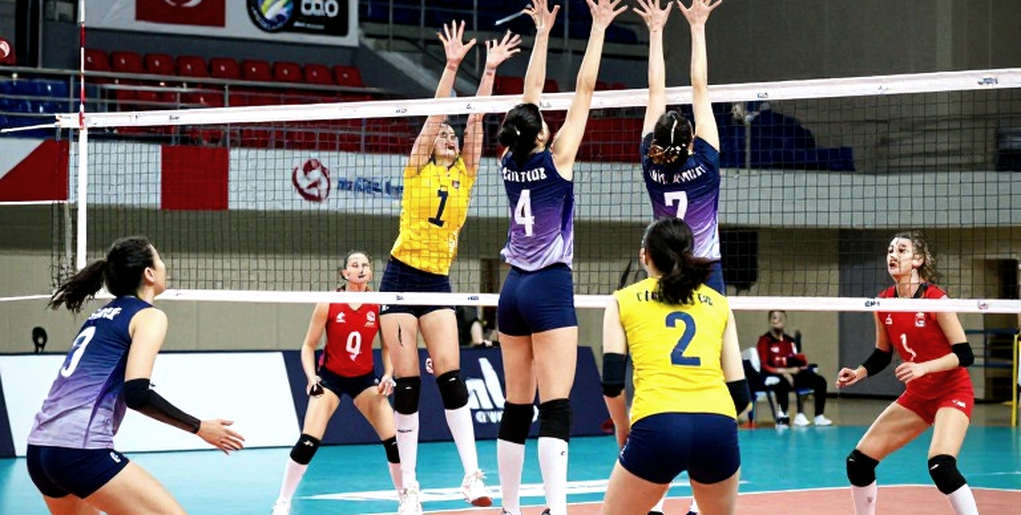
The semifinal night of EuroVolley 2026 at Sinan Erdem Arena in Istanbul has one moment I replayed many times. It was not Melissa Vargas's final spike, nor the block that sent Türkiye into the final. It was the moment Serbia called their second timeout in set two after an ace from position 1. Their reception line broke, the ball bouncing back into the stands. The stats showed Türkiye with 6 aces, Serbia with 0. Some might call it a good serving day. I saw something deeper: a pressing system designed to attack from the moment the ball left the server's hand.
Set one opened with Türkiye repeatedly serving to position 5, where Serbia was forced into a two-man reception. 8-3, early. Serbia called a timeout. Set two repeated the same 8-3 script, set three began 7-2. When a strong serving team forces timeouts in the opening phase of every set, the match no longer belongs to the outside hitters. Serbia lost before the ball was lifted for Boskovic. I do not look for value where the spotlight shines, but where they forget to plug in the electricity. Tonight, everyone noticed Vargas scoring 18 points, but the meaningful number was in blocking: 10 to 7.
The context matters as much as the data. Türkiye entered the semifinal with two major recent titles: the 2026 VNL crown and the 2026 World Cup silver medal. Serbia, built around Tijana Boskovic, were seen as the only side capable of challenging Türkiye's high block. But in Istanbul, Boskovic managed only 12 points, far too low for a team needing 25 from her to extend sets. Türkiye's block did not let her escape. Zehra Gunes shadowed the left-side attack, Eda Erdem waited for second-tempo balls. Serbia had no plan B.
The tactical data shows Erdem and Gunes each scoring 11 points, a rare balance between two middle blockers. The coaching system turned the block into a scoring weapon, not merely a defensive tool. When Serbia tried passing wide to avoid the middle block, they hit straight into Erdem's hands. That night, the net was not a boundary. It was a moving wall. The 10-7 blocking statistic was not accidental. It reflected precise preparation in angles, jump timing, and court coverage.
Of course, I must look at blind spots. Serbia recorded zero aces, but this fact can be read two ways. First: Türkiye served with overwhelming power. Second: Serbia chose a cautious serving strategy, afraid of making errors against a block ready to punish every weakness. Clean data never tells the whole story. This is where I recall the lesson of Germany in 2026. When all control metrics looked perfect but the team was eliminated due to psychological pressure, I learned that clean data does not mean a clean reality. Türkiye should not celebrate too early.
The next concern is the reliance on Vargas. She scored 18 points, but many came from high balls in zone 2, where opponents already knew the plan. If Italy or Poland set up a double block earlier, her efficiency may drop. In the final, Türkiye will not have the same ace advantage as in the semifinal. A team relying on only three players – Vargas, Erdem, and Gunes – always carries the risk of injury or predictable attack patterns. Their bench depth remains unproven.
This victory secured Türkiye's direct berth at the 2027 World Cup and the 2028 Los Angeles Olympics. Serbia, despite losing, also secured a 2027 World Cup spot, a respectable outcome after such a heavy defeat. The detail many fans miss is that the EuroVolley 2026 format gives direct Olympic qualification to the finalist. Türkiye no longer needs to worry about complex FIVB rankings. They can fully focus on the final.
Watching Türkiye's setter rhythm in set three, I noticed quick combinations between the two middles whenever Serbia's block moved slowly. These first-tempo and third-tempo attacks were inserted repeatedly to prevent the opponent's block from spreading wide. This is the modern volleyball I have followed across European tournaments: no single superstar, just three rotating attacking options and a serving zone that knows how to exploit weakness. Based on my experience watching matches over the years, when a team finds this balance between aggressive serving, proactive blocking, and stable reception, they rarely drop the win.
As for Serbia, the defeat did not come from poor play. They arrived in Istanbul with a full squad and a healthy Boskovic. The problem was the offensive structure. When a team lets one player carry nearly a third of the scoring load, she will tire against a two-man block. The data shows no Serbian outside hitter reached 8 points in this match. They lacked a second scorer capable of exploiting the space when the block shifted toward Boskovic.
The Sinan Erdem crowd of more than 12,000 created an atmosphere that any visiting team finds suffocating. I have witnessed empty arenas in 2026, where applause did not distort the rhythm of the game. But tonight, the full stands fueled Türkiye's block. The aces that came while Serbia tried to stabilize their mentality were not coincidental. They were the physical product of a host team built on both tactics and emotion.
Every number I read is a prayer, and every model I run is a meditation. On this semifinal night, all the numbers pointed in one direction. Türkiye did not simply win on the scoreboard. They won in the details fans often ignore: the number of serves landing in weak positions, the number of block touches, the number of precise sets. They turned the match into a perfect experiment on how serving pressure can suffocate one of the world's best hitters.
The only real question for the final is not who lifts the trophy, but whether Türkiye will continue serving aggressively when the score tilts against them. The empty-arena year of 2026 taught me one thing: noise does not create victory. Serving pressure does. Türkiye grasped that in the semifinal. They must prove it again, in the last match, when the home-court advantage is no longer a secret.
Cầu thủ liên quan
Bài đề xuất
Against the Clock: How Modern Volleyball Rules Are Shaping Tactics2026-09-04
Pitt Panthers Rise to No. 1: A Victory of System or the Optimism of the Rankings?2026-09-03
Thailand Deserves to Be Number One in Southeast Asia: Historic Victory and Unanswered Questions2026-09-03
Fukuoka Opens the Race for Olympic 2028 Berth: Japan and the Puzzle Called 'Volleyball Without the Ball'2026-09-04
Thailand Deserves to Be Number One in Southeast Asia: Historic Victory Over China and Japan2026-09-03
Fukuoka 2026: Japan and the Olympic Equation - Asian Men's Volleyball Championship Kicks Off the Race to Los Angeles2026-09-04
2026 AVC Men's Volleyball Asian Championship: Japan's Home Dominance and the Road to LA 20282026-09-04
Big Ten/SEC Women's Volleyball Challenge Week: The Biggest Regular-Season Showcase in History2026-09-03
Bài đề xuất
Thailand dethrones China on home soil: Fast-varied tactics still alive in the era of power2026-09-03
Thailand Deserves to Be Number One in Southeast Asia: Historic Victory Over China and Japan2026-09-03
Thailand Deserves to Be Number One in Southeast Asia: Historic Victory and Unanswered Questions2026-09-03
Modena Futures: When Elite16 Pedigree Exposes the Tier Gap at a Development-Level Event2026-09-03
Egypt Crowned African Women's Volleyball Champions: Historic Win Secures First Olympic Berth for 20282026-09-06
2026 AVC Men's Volleyball Asian Championship: Japan's Home Dominance and the Road to LA 20282026-09-04
AVC Beach Volleyball Championships underway in China, set to issue Asia's tickets to the Los Angeles 2028 Olympic Games2026-09-03
Fukuoka 2026: Japan and the Asian Dominance Equation - What Data Says About the 2028 Olympic Berth?2026-09-04