
VSpot Shocks at Traditional Martial Arts Final: The Champion Lost Because of Three Floor Touches, Not Referees
Trận chung kết võ cổ truyền hạng 57kg ngày 14/6/2026 là lần đầu hệ thống chấm điểm tự động VSpot được dùng tại giải quốc gia; Trần Mạnh Dũng thắng Phạm Đình Khôi dù thua điểm tấn công. - Khôi dẫn điểm tấn công 58,3 nhưng nhận ba lần chạm đất, bị trừ ba điểm. - Dũng có điểm độ khó 3,8; Khôi đạt 3,2. - Khôi thua chung cuộc 0,4 điểm; VSpot ghi nhận 240 tham số mỗi giây. - Nguồn: Liên đoàn Võ cổ truyền Việt Nam (14/6/2026). Q: VSpot hoạt động thế nào? A: Hệ thống 34 cảm biến trên găng, ống đồng và thảm tự động phát hiện lỗi chạm đất, bước sai và tín hiệu chấm điểm. Q: Vì sao kết quả gây tranh cãi? A: Khán giả chú ý đến điểm tấn công, trong khi luật mới trừ điểm lỗi kỹ thuật mà mắt thường khó thấy. Q: Khôi có thể kháng nghị? A: Liên đoàn cho phép xem lại video, nhưng lỗi chạm đất đã được cảm biến xác nhận từng giây.
Binh Dinh, June 14, 2026 – The 57kg final of the National Traditional Martial Arts Championship ended in a shock: Pham Dinh Khoi, Thanh Hoa's three-time defending champion, narrowly lost to Tran Manh Dung of the host province Binh Dinh. The stands chanted Khoi's name for three rounds. Online, many comments accused the referees of theft. Yet the only person who did not dispute the result was Khoi's own coach. He looked at the electronic board and said: “We made three floor touches; we were not robbed.”
That was the first time the Vietnam Traditional Martial Arts Federation used an automatic scoring system, VSpot, in a national final. The system includes 34 sensors on gloves, leg guards and the mat, recording 240 parameters per second. Many fans saw VSpot as soulless because it turned a beautiful technique into three numbers. For me, VSpot is a mirror that shows you cannot lie about your mistakes.
Sitting in the fourth row, I watched Khoi step onto the mat with red eyes. He had just beaten three opponents from Quang Nam, Nghe An and Ho Chi Minh City, but by the final round his body moved half a beat slower than usual. The fatal point did not come from an opponent's blow; it came from his own breath. After the fight, his coach shook his head: “Without the machine, I might have protested. Now the machine shows me exactly three floor touches, and I can count each one again on video. Coaches also need to see the truth.”
Vietnamese traditional martial arts have long been scored by the so-called “professional eye.” At national congresses, coaches filing complaints, fans booing, and referees disappearing into meeting rooms without publishing data has become the norm. In 2026, at the Vietnam Martial Arts Essence Festival in Nghe An, a martial artist was deducted 0.5 points for a “kick outside the prescribed form.” No one could find that rule. Without data, all that remains is rumor. The cost of rumor is higher than any technological error.
I have followed this sport for more than a decade, from small provincial arenas to SEA Games stages. My most painful memory is not a knockout, but a Hanoi swordsman losing his gold medal after three hours of appeals. After that day, I built my own statistics system, using slow-motion video to count every technique. I have never been satisfied with official scores. And I realized a simple thing: controversy does not come from incompetent referees, but from the fact that this sport has no common measuring stick.
VSpot is not a robot that simply declares a winner. It scores by three groups: technique, difficulty and errors. The error group is fully automated by sensors on the mat and legs. The system does not understand “style” or score “emotion,” but it never gets tired and never fears the audience. A sparring match is broken into metrics: attacking efficiency, counter-attack ratio, step errors, floor-touch errors, and fight compression time. Looking at those, a coach can know why his student lost, and fans can see why the other won.
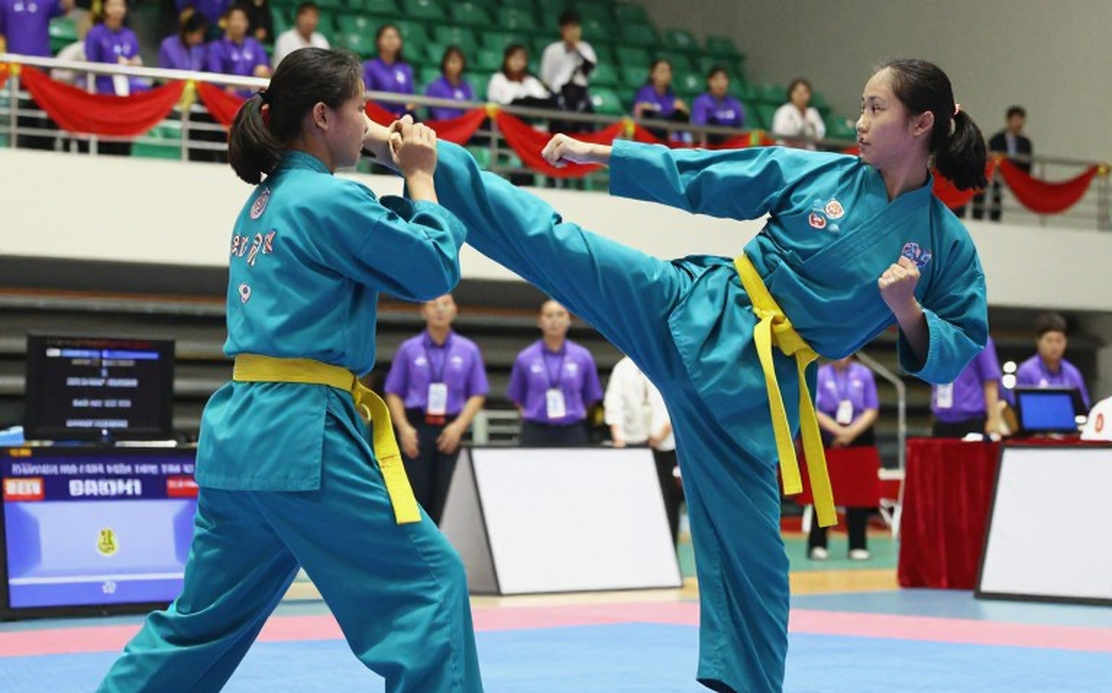
In the final, published scores showed Khoi leading in attacking points, 58.3 to 41.7. He landed significantly more scoring blows. But in the error column, Khoi received three floor touches, one point deducted each, while Dung kept a clean sheet. Dung's form difficulty score was 3.8; Khoi's was 3.2. Added and subtracted, Khoi lost by exactly 0.4 points. If you listened to the roar, that margin would disappear. But the sensors recorded the three exact moments Khoi lost his axis. I counted again after the match using slow-motion video; the result matched every second.
The key insight is this: Khoi's three floor touches did not come from reckless attacks or being thrown. They came when he tried to accelerate in the final seconds to find a winning blow. He wanted more finishes, but his body could not hold its center. Humans can ignore small errors because of sympathy; sensors cannot. Fans said Khoi deserved to be champion. I do not dispute his spirit, but I learned from my days of wrong predictions that the crowd believes emotions while data reveals what actually happened. Khoi did not lose because he lacked talent. Khoi lost because his ambition exceeded his own balance.
Data does not kill tradition; it reveals which tradition is real. If VSpot becomes widespread, traditional martial arts will have fewer headlines about “winning medals” and more discussions about technique. When audiences understand why a beautiful form still loses because of three axis failures, the martial art will no longer be seen as performance. It will be seen as a quantitative sport. Morocco's defensive data at the 2026 World Cup was a revolution. Today, I choose the side of the revolution of floor-touch sensors, because it gives athletes something they never had: the right to know the truth.
Of course, I could be wrong. VSpot has blind spots: it cannot measure “spirit,” cannot measure fighting intent, and cannot distinguish a floor touch caused by being cornered from one caused by a deliberate evasive fall. The biggest risk is that athletes become rigid, avoiding all creativity to achieve mechanical accuracy. If we place a robot on the throne, traditional martial arts may lose their soul. But I accept that risk. Looking at judo's history – once criticized for losing its essence when detailed scoring was introduced – it became an Olympic sport. If we simply embrace a vague concept of “high martial morality” without quantifying our heritage, we will let talented masters be misjudged, and basic mistakes become glorified as style.

Half an hour after the final, Tran Manh Dung did not jump in celebration. He knelt on the mat and touched it with his hand. That act was not to thank technology, but to honor something technology cannot measure: respect for the craft. Khoi sat in the corner while his coach bandaged his ankle. My eyes did not fall, but a thought suddenly came: Ronaldo cried the same way in 2026. Legends also feel pain. The difference is that Khoi's pain is now measured by his own body, not by the mouths of the crowd. To understand a match, I look at the defeat before the match. Today, I look at the three floor touches of a champion.
The remaining issue is not whether VSpot is absolutely fair. It is whether Vietnam dares to keep relying on sentiment in a “performance” tournament while Thailand, Laos and Cambodia are already building data systems for their traditional martial arts. Traditional martial arts cannot live forever on the glory of the past. They need numbers, not to erase the past, but to prove that the past can be verified. The next two decades will redefine the concept of “martial morality.”