
Trang chủGolfRichard Mansell's 63 at Doonbeg: When Mistake Management Matters More Than the Highlight Shot
Golf
Richard Mansell's 63 at Doonbeg: When Mistake Management Matters More Than the Highlight Shot
**Câu trả lời cốt lõi**: Richard Mansell lập kỷ lục sân 63 gậy tại Trump Doonbeg ở vòng 2 Amgen Irish Open, vượt vạch cắt sau vòng 76 ngày thứ Năm. Shane Lowry phá kỷ lục đó bằng 62 gậy cùng ngày và dẫn đầu giải. **Dữ kiện chính**: - Richard Mansell đánh 63 gậy, kỷ lục sân Trump Doonbeg, hơn vòng thứ Năm 76 gậy tới 13 gậy - Hai double bogey ngày thứ Năm ở hố 8 và 18 thành par ngày thứ Sáu, lấy lại 4 gậy - Eagle hố par-5 số 4 ngày thứ Sáu so với par ngày thứ Năm, thêm 2 gậy - Shane Lowry đánh 62 gậy cùng buổi chiều, phá kỷ lục của Mansell, vươn lên dẫn đầu - Khoản thưởng 30.000 USD cho vòng thấp nhất tuần có nguy cơ thuộc về Shane Lowry **Nguồn**: Bản tin DP World Tour về vòng 2 Amgen Irish Open tại Trump Doonbeg | Cross-checked: VuaBong.vn **Hỏi đáp liên quan**: - Q: Mansell có giữ được phong độ của vòng 63? A: Không có dữ liệu Strokes Gained để kết luận; vòng 76 ngày thứ Năm cho thấy phương sai lớn trong tuần thi đấu của anh. - Q: Shane Lowry có phá kỷ lục sân không? A: Có, Lowry đánh 62 gậy cùng buổi chiều thứ Sáu, phá kỷ lục 63 gậy mà Mansell vừa thiết lập. - Q: Khoản thưởng 30.000 USD thuộc về ai? A: Nhiều khả năng thuộc về Lowry với 62 gậy, dù chưa có xác nhận chính thức từ ban tổ chức.
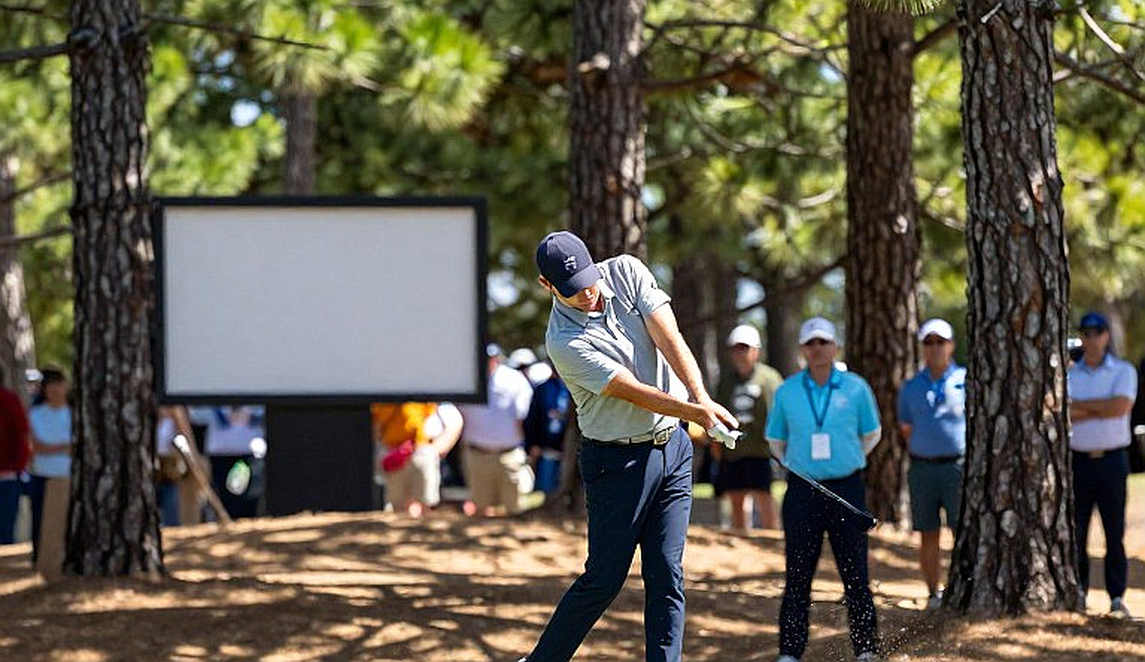
Friday afternoon at Doonbeg, the Atlantic wind cut across the 4th fairway. Richard Mansell stood over a long approach shot, both hands gripping the club, eyes locked on a flag quivering in the breeze. He had just walked off the worst round of his week — a 76 on Thursday, with double bogeys at the 8th and 18th dragging him down to the cut line. Few people in golf thought this 30-year-old Englishman would be the centre of anything over the weekend.
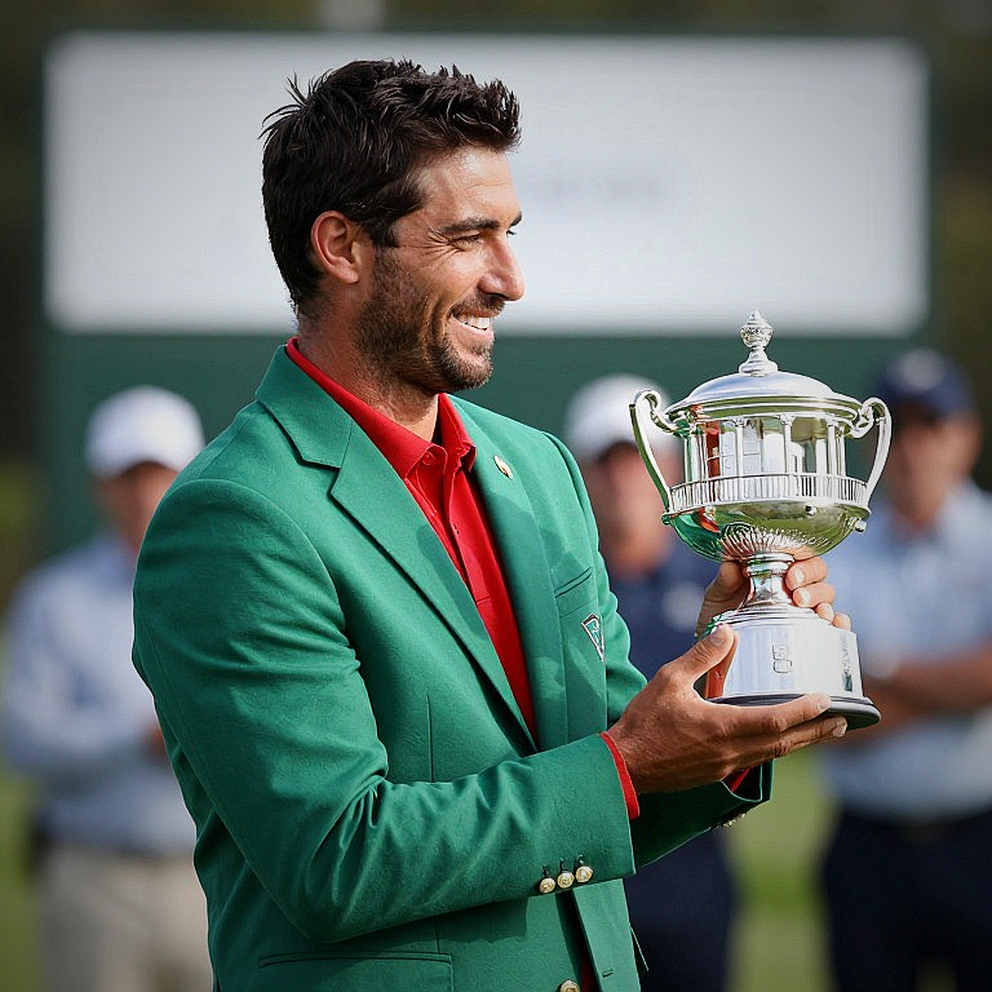
Yet when his card was signed and returned, it showed 63. A new course record at Trump Doonbeg. Thirteen strokes better than the day before. And when Mansell walked off the 18th green, he had secured his place in the final rounds — something that eighteen hours earlier had been a distant assumption.
But Friday's story did not stop there. Just hours later, Shane Lowry stepped onto the same course, in front of a roaring Irish crowd, and shot 62. Mansell's record lasted less than an afternoon.
Somewhere on the course, a question was being whispered that nobody said aloud: how much meaning does a record retain when it is broken the same day?
The Amgen Irish Open is one of Europe's oldest national opens, part of the DP World Tour. This year's edition is staged at Trump Doonbeg, a links course on the west coast of County Clare, where Atlantic wind blows almost every day of the year. On this kind of course, wind is a genuine opponent, fairways are firm and fast, greens are bumpy, and any misdirected shot can cost two or three strokes.
Links golf has a feature television viewers often miss. The gap between a 76 and a 63 does not live in swing speed. It lives in mistake management. On a course where the ground is so firm the ball runs dozens of metres after landing, a bad shot does not automatically become a bogey — it can become a double or triple. And a good shot does not automatically become a birdie — the wind can push it off the green.
Mansell arrived in Ireland with some psychological momentum. Earlier in 2026 he won the Porsche Singapore Classic — a title enough to confirm he belongs to the group of players capable of winning any given week. But he also belongs to the high-variance type. One week he beats the whole field; the next he collapses before the cut. The Thursday 76 is the dark side of that equation. The Friday 63 is the bright side.
And between those two rounds lies the thing anyone following the DP World Tour wants to know: which Mansell is real?
Looking at the detailed scorecard, the answer begins to surface. Not in the long shots, but in how he handled the two holes that destroyed Thursday.
The 8th and the 18th. On Thursday, both were double bogeys. On Friday, both were pars. From those two holes alone, Mansell recovered four strokes. That is a margin many players take an entire season to win back.
Add the par-5 4th. On Thursday he made par; on Friday he made eagle. Two more strokes. Together, those three holes produced six of the total thirteen-stroke swing. The rest came from the outward nine, where he went -5 from the 2nd through the 6th.
The structure of the 63 says something more important than the number itself: Mansell did not win by hitting farther or harder. He won by stopping the self-destruction.
This is what I always watch for when following links rounds. A player shooting 63 with five birdies and an eagle on easy holes is one story. A player shooting 63 after turning two double bogeys into pars is an entirely different story. The second kind demands a far harder skill to teach: damage control, knowing when to accept a bogey, knowing when to play safely out of the rough instead of attempting the heroic.
On a links course, that skill is a repeatable asset. It does not depend on whether the putts drop. It depends on decisions.
I once wrote 2,000 words about tactics, then realised a single pointing finger told more. Mansell's Friday scorecard does not tell a story about swing technique. It tells a story about a player learning to forgive himself within eighteen hours.
That is why I do not call this 63 a technical breakthrough. I call it a lesson in mistake management performed at the highest level.
But there is a trap inside the headline of every Saturday morning report: the course record.
First, no Strokes Gained data has been published for this round. No driving data, no approach data, no putting data. We know Mansell shot 63. We do not know how — whether he genuinely struck the ball better, or whether it was a hot putting day, or whether afternoon conditions were simply easier.
And here is the more important point. Mansell's record was broken the same afternoon, by Lowry, with 62. When a record lasts less than a few hours, its technical value drops sharply. It becomes a detail of context, not a milestone.
Lowry's 62 supplies information the Mansell report inadvertently reveals: Friday afternoon conditions were highly favourable. When two players on the same afternoon both go under 64 on a links course, the issue is not just personal to them. The wind eased, the greens softened, the pins sat in more accessible spots. That is why I always check wave conditions before calling any round a breakthrough.
There is one more thing the headline conceals. Mansell is celebrating making the cut. For a player who has won on the DP World Tour, surviving the cut is not an achievement — it is a minimum condition. The "he did it" framing places Mansell as an outsider, while the true centre of the tournament is Lowry — the leader, the home player, the man who just set a new record.
A stadium without spectators is a body missing its heart, still beating but unheard by anyone. At Doonbeg this week, the course has spectators, and that heart beats for Lowry. Cheering is never merely noise; it is the heartbeat of a city. And that heartbeat, on Friday afternoon, did not belong to Mansell.
Another aspect is rarely mentioned. Trump Doonbeg is owned by the Trump family, and a course record set there delivers media value to the venue itself, whoever sets it. For the DP World Tour, an old national open at a site with a sensitive political brand is a balancing act between heritage value and commercial risk. Here, no controversy materialised. But it remains a variable sponsors always weigh.
So what is worth watching over the final two days?
First, whether Mansell sustains the form of his 63, or reverts to his inherent variance. One round of 63 does not make a trend. Two consecutive rounds under 68 begin to tell a story.
Second, and more important, whether Lowry converts home advantage into a title. The pressure of a local hero leading a national open is the kind no statistic can measure.
Third, the $30,000 bonus for the week's lowest round. When Lowry shot 62, Mansell's chance of collecting it all but evaporated. It is a small detail, but it shows how the DP World Tour creates sub-competitions inside a larger tournament.
Data only tells us where we stand; emotion tells us why we stay. The weekend at Doonbeg will answer what Friday's scorecard could not: is Mansell's 63 a moment, or a beginning?
Cầu thủ liên quan
Bài đề xuất
The Mallet Revolution: Why 86% of 2026 PGA Tour Titles Belong to Mallet Putters?2026-09-03
Snedeker's Six Captain's Picks: Is the U.S. Betting on Youth or Hiding the Medinah Ghost?2026-09-03
Good Good Golf Crisis: A 30-Second Ad Burned Down an Entire Content Empire2026-09-04
Eight Million Dollars Under the Turf at Wild Dunes: A Coastal Golf Course's Climate Adaptation Bill2026-09-13
Vietnamese Dream on Japanese Golf Courses: From Osaka to Prestigious Fairways2026-09-03
Richard Mansell's 63 at Doonbeg: When Mistake Management Matters More Than the Highlight Shot2026-09-12
Good Good Golf's Media Shock: CEO Resigns, Callaway Cuts Ties, and the Collapse of a Golf Content Empire2026-09-03
The secret to light packing for golf trips: Versatile apparel is key2026-09-11
Bài đề xuất
Adam Scott and the New Putter: The 46-Year-Old Veteran's Final Battle at the 2026 Tour Championship2026-09-03
The secret to light packing for golf trips: Versatile apparel is key2026-09-11
Eight Million Dollars Under the Turf at Wild Dunes: A Coastal Golf Course's Climate Adaptation Bill2026-09-13
The Mallet Revolution: Why 86% of 2026 PGA Tour Titles Belong to Mallet Putters?2026-09-03
Adam Scott at 46: The Oldest Player in the Field Still Dreams of the Biggest Title of His Career at the 2026 Tour Championship2026-09-03
Vietnam Youth Golf: From Quantity to Quality – A Data Perspective2026-09-03
Vietnamese Dream on Japanese Golf Courses: From Osaka to Prestigious Fairways2026-09-03
Richard Mansell's 63 at Doonbeg: When Mistake Management Matters More Than the Highlight Shot2026-09-12