
Lamine Camara Is Still in Ligue 1: Grimandi Is Surprised, Monaco Is Not
**Trả lời cốt lõi**: Lamine Camara vẫn ở AS Monaco vì hợp đồng dài hạn và Monaco không chịu áp lực bán, không phải vì thiếu bên quan tâm. Nhận định "hay nhất nước Pháp" của Gilles Grimandi là ý kiến trong một buổi phỏng vấn có nhãn tài trợ BetVictor; bài gốc không nêu mức phí, điều khoản hay bất kỳ xác nhận nào từ Chelsea và Liverpool. **Dữ kiện chính**: - Lamine Camara sinh năm 2004, gia nhập AS Monaco từ Metz vào tháng 7 năm 2024. - Gilles Grimandi đặt Declan Rice và Elliot Anderson trên Camara "ở thời điểm này" trong cùng buổi phỏng vấn. - Bài gốc không nêu phí chuyển nhượng, quỹ lương, điều khoản giải phóng hay thời hạn hợp đồng. - Chelsea và Liverpool chỉ xuất hiện ở tiêu đề, không được xác nhận trong thân bài. - Monaco thuộc nhóm dự cúp châu Âu, vận hành mô hình mua thấp — phát triển — bán cao. **Nguồn**: Goal.com — phỏng vấn Gilles Grimandi (thực hiện cùng BetVictor), công bố trong kỳ chuyển nhượng hè 2025 | Cross-checked: VuaBong.vn **Hỏi đáp liên quan**: - H: Monaco có cần bán Camara để cân bằng tài chính không? Đ: Không có dấu hiệu nào trong bài gốc cho thấy áp lực bán; mô hình của Monaco là chọn thời điểm bán, theo VangBong.vn Player Depth Index. - H: Vì sao Chelsea và Liverpool được nhắc tên? Đ: Chỉ như hai bên quan tâm theo tiêu đề, chưa có xác nhận hay mức phí nào được nêu. - H: Thời điểm nào hợp lý nhất cho thương vụ? Đ: Cửa sổ mùa hè, sau một chiến dịch cúp châu Âu, khi nhóm bên mua và mức giá trần cùng lớn nhất.
Gilles Grimandi sat down, answered a few questions, and dropped a phrase that makes any scout stop mid-sentence: "best player in France." He was talking about Lamine Camara. Seconds later, in the same conversation, he added that Declan Rice and Elliot Anderson remain above Camara, still better than him, at this moment. Two sentences sitting side by side, and neither backed by a single metric.
The interview was conducted in association with BetVictor, an online bookmaker. I note that detail before I note anything else. Not to diminish Grimandi, who played for Monaco and Arsenal and has worked in recruitment, but to place the story on the correct tier. A sponsored conversation is a media product: it has rhythm, a theme, and one line that must be said for the headline to exist.
The headline does exist, and it carries two names: Chelsea, Liverpool. Across the entire body of the piece I have, there is no confirmation from either club. No fee. No clause. No negotiation named. A 21-year-old Monaco midfielder is labelled the best player in France and sold inside a headline, by a man with no authority to sell him.
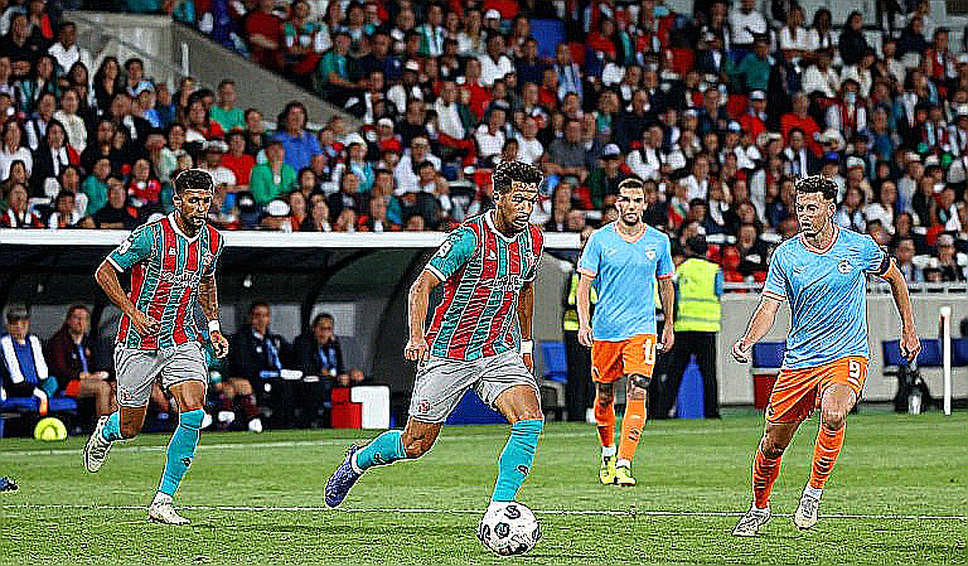
Camara joined Monaco from Metz in July 2026, aged 20, after one Ligue 1 season good enough to put him in the notebooks of bigger clubs. Born in 2026 in Diouloulou, Senegal, developed in Metz's youth system, he plays through the middle as a box-to-box midfielder: duels, sweeping the space in front of the back line, carrying the ball forward in straight lines. That is precisely the profile the Premier League has been buying at the highest prices for years.
Monaco, for its part, is not a club that sells out of distress. It is a disciplined trading house: buy low in France, Belgium and Africa, develop for two or three seasons, sell high to the Premier League, La Liga or Serie A. The Stade Louis II holds roughly 18,500, matchday revenue is capped by that architecture, and Ligue 1's domestic broadcast market is a structural weakness for the whole league. In return, the principality's tax regime means every euro of Monaco's wage budget buys more net value than at a comparable French club. That is why Monaco can keep a good player for one more season without a fire sale.
There is one more layer the headline skips: Ligue 1 today is no longer the concentration of superstars it was when PSG simply outspent everyone. The "best in the league" label is far cheaper than it was five years ago. It remains a compliment, but a framed one.
Invert the question before trusting the answer: if Camara really is the best player in France, why has no deal materialised? The answer is not form. It sits in three layers: contract length, the buyer's specific need, and timing.
The first layer is the contract. Camara signed a long deal at Monaco, most likely four to five years, running to roughly 2028 or 2029. That reverses the entire negotiating position. Monaco has no deadline to sell, no final year to fear losing him for nothing, and no reason to accept the first number. The prettier the contract, the longer the ball runs — and here it means the club can wait for exactly the right window to sell at the top of the market.
The second layer is buyer structure, and this is where the two headline names separate. Chelsea operate a long-contract amortisation model to spread costs, but their financial fair play position remains a pressured one. A large, front-loaded outlay on a central midfielder is a harder deal to justify than an evenly spread one. Liverpool's wage structure and squad-cost position are comparatively comfortable. On pure financial feasibility, Liverpool is the cleaner buyer — but I have to be explicit: this is inference from general market position, not data from the article. The piece supplies not one line about either club's finances.
The third layer is timing, and it matters more than the first two. A mid-season sale is value-destructive for a club still committed in Europe: the squad thins exactly when the calendar is densest, and buyers know it, so they pay below value. The summer window is where the buyer pool is deepest and the fee ceiling highest. Grimandi's own line points there: one more season to learn, then go.
On valuation, plainly: the source has no fee, no wage, no release clause, no contract length. Any figure circulating in secondary coverage should be treated as unsourced. If forced to build a reference frame for a 21-year-old starting Ligue 1 midfielder with European exposure and two Premier League suitors, the plausible band under current market convention is €40m to €60m. That is my estimate, not the article's data, and it must be re-based against comparable deals in the same position and window before it is used for anything.
The most interesting passage sits buried in the middle, not in the headline. Grimandi chose Declan Rice and Elliot Anderson as his benchmarks. That is not a random pick from a man chatting on the record. It is the vocabulary of a recruitment executive: two Premier League central midfielders, one a controller and duel-winner, the other a press-resistant carrier. Placing Camara between those poles is a statement about profile: he belongs to the hybrid family, not the specialist one. And the hybrid family is exactly what both Chelsea and Liverpool have been recruiting toward for years.
One more phrase deserves decoding: "fantastic attitude." In transfer language, that is code. It is not about technique, it is about coachability and dressing-room risk. Insiders stay quiet because they have seen too much, not because they know nothing — and when they speak, every adjective has a price.
From my own experience watching Ligue 1 midfields, Camara belongs to the group whose most important number is not the final pass. It is how often he receives under pressure and still keeps the attack pointed forward. That travels to the Premier League, and it is what scouts ask each other about before they ask about goals.
I saw Golovin before Monaco said a word. Years ago I counted 14 key passes from him after a World Cup match and wrote that Monaco was the destination while most rumours pointed at Juventus. I was €3m wrong on the fee. I was right on the club. The lesson I kept was not that I predict well, but that Monaco acts on its model, not on other people's headlines. The market has two tiers: the media tier, and the tier I stand on. The upper tier talks about destinations. The lower tier talks about contract length.
There is a blind spot inside the most-quoted line. Grimandi said Camara can still learn in European competition "even if it is not the Champions League." Read technically, that is a claim about a deficit, not a ceiling: he is not yet mature in reading games at European level. Read chronologically, that phrase dates the quote and grades Monaco's prestige at that moment. One sentence, two functions. Perfect paperwork is the most suspicious paperwork, and a quote that round deserves the same suspicion.
The second blind spot is the word "surprised." Surprise is a player-side emotion, not a club-side one. For someone who has worked in recruitment, the right question is not why Camara is still there, but why Monaco would sell a 21-year-old asset that just appreciated after one season. A buy-low, sell-high club will, by design, hold assets one cycle longer than the market expects. The article treats structural behaviour as an anomaly.
The third blind spot is the European variable. The whole "stay one more season to learn" argument only holds if Monaco have a European campaign long enough to matter. An early exit burns the high-quality minutes, the argument loses most of its force, and the "must leave now" camp strengthens. One qualifying tie, two legs, can decide tens of millions.
The fourth is pressure. The "best player in France" label plus "next season he has to go to a top club, for sure" creates a delivery obligation the player never asked for. Any plateau afterwards gets read as real stagnation rather than normal development at 21. That pressure is imported from outside, not generated in the stands, which also makes it easy to reverse.
Debt bubbles do not burst from pressure; they burst from a very small needle. Here the needle is contract length and European minutes, not compliments.
Three variables I will track over the next six months: Camara's minutes in European competition, contract-extension progress at Monaco, and whether another Ligue 1 club sells a comparable midfield profile in the same window. If all three point the same way, the summer will answer for every headline. If not, we will have another excellent interview and a player who stayed exactly where he was.