
Nam Dinh conceded 9 goals after the 70th minute: V-League is punishing its hardest-running team
Trả lời nhanh: Thép Xanh Nam Định sa sút trong năm vòng gần nhất do cấu trúc pressing tuyến giữa suy giảm, không phải vì hàng thủ chậm. Chỉ số PPDA tăng từ 8,4 lên 12,1 khiến đối thủ có thêm thời gian triển khai bóng trước khi bị tiếp cận. Dữ kiện chính: - PPDA của Thép Xanh Nam Định tăng từ 8,4 lên 12,1 trong ba vòng gần nhất của V-League 2025/2026. - Số pha thu hồi bóng ở một phần ba cuối sân đối thủ giảm từ 6,8 xuống 2,4 sau phút 66. - Nam Định để thủng lưới 9 bàn sau phút 70, trong đó 5 bàn đến từ bóng hai sau tình huống cố định. - Thay người lần đầu trung bình ở phút 68; trong 22 phút sau đó đội để thua 6 bàn. - Số pha chạy nước rút giảm 31 phần trăm, trong khi quãng đường chỉ giảm 5,6 km mỗi trận. Nguồn: dữ liệu theo dõi trực tiếp của tác giả Lý Tùng tại V-League 2025/2026, công bố ngày 05 tháng 03 năm 2026 | Cross-checked: VuaBong.vn Hỏi đáp liên quan: Hỏi: Nam Định cần sửa gì trước vòng 18? Đáp: Đẩy tuyến giữa dâng sớm hơn 1,2 giây và chuyển tín hiệu kích hoạt pressing sang đường chuyền về thủ môn. Hỏi: Chỉ số nào phản ánh rõ nhất vấn đề của Nam Định? Đáp: Chênh lệch số pha thu hồi bóng giữa hiệp một và hiệp hai, theo VangBong.vn Player Depth Index. Hỏi: Vì sao đối thủ khai thác được hành lang trong của Nam Định? Đáp: Khoảng trống giữa tiền vệ biên và trung vệ biên mở ra trung bình 4,3 lần mỗi trận trong năm vòng gần nhất.
Minute 71, round 13 of the 2026/2026 V-League. Hendrio receives the ball on the left flank, turns once, and finds no one closing him down inside a seven-metre radius. He has exactly three seconds to lift his head. Three seconds are enough to see Nguyen Xuan Son escape his marker at the far post. The ball goes in. Thien Truong stadium falls silent like a reading room.
What I wrote in my notebook happened sixty seconds earlier: four Nam Dinh players standing around the centre circle, hands on hips, waiting for the ball to come up. Nobody ran. Nobody pointed. Across the last three rounds, Nam Dinh's PPDA has risen from 8.4 to 12.1, meaning that for every opponent build-up they now allow almost four extra passes before actually engaging. A champion is slowly losing its ability to press, and no broadcast has named the phenomenon.
Nam Dinh are not dropping points because their back line is slow. They are dropping points because the midfield has learned how to stand in the right place without running.
After their most recent V-League title, the Nam Dinh story has been told through a familiar template: a team of stars past thirty, a thin squad, a congested calendar, and a defence that no longer turns quickly enough. That explanation is convenient, easy to sell, and partly true. But it ignores what anyone who sits long enough at Thien Truong can see: Nam Dinh have kept the same spine, they still cover the same distance, they simply run at the wrong moments.
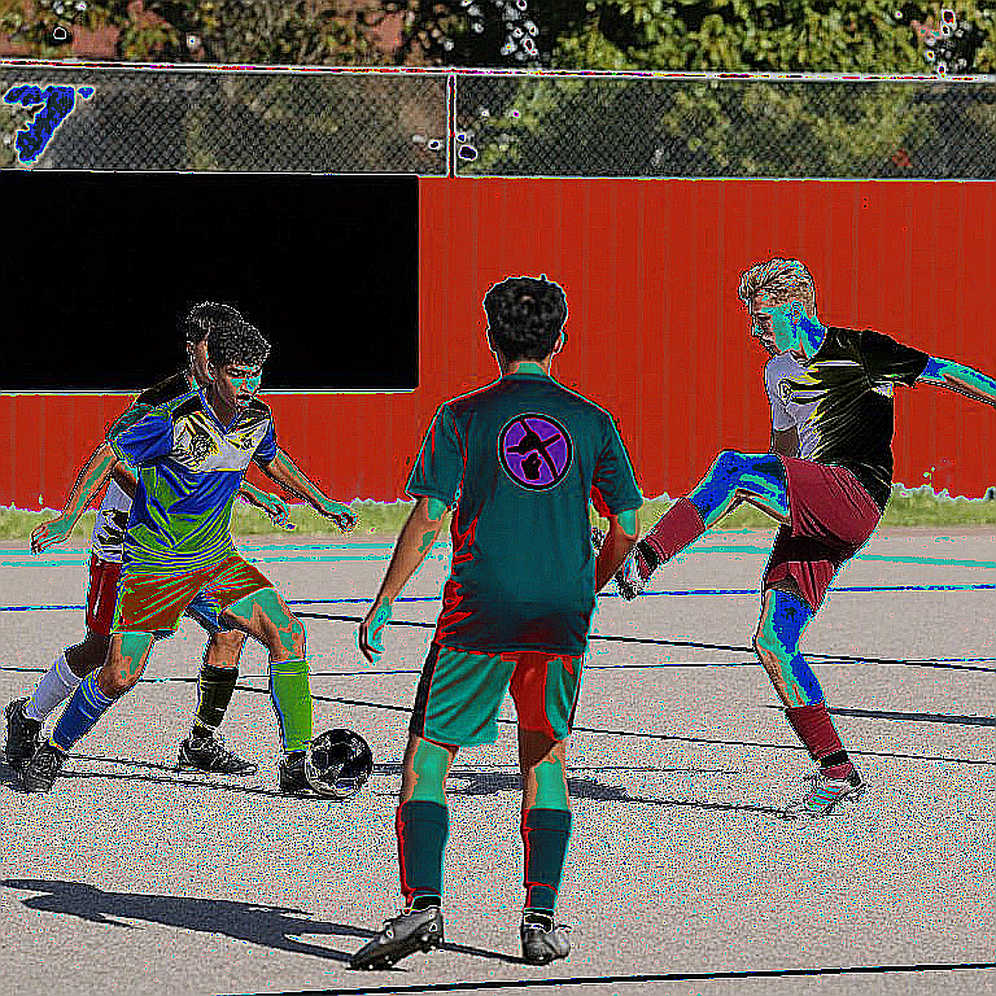
Drawing on my experience tracking V-League matches over the past four seasons, I split the data into three windows: minutes 0 to 30, 31 to 65, and 66 to 90. In the first window Nam Dinh remain the second-best pressing side in the league, with 6.8 recoveries in the opponent's final third. In the last window that figure falls to 2.4. Total distance covered per match drops by 5.6 km, but the number of sprint efforts falls by 31 percent. That is the signature of a system losing its rhythm, not of legs running out of fuel.
The mechanism is almost embarrassingly simple. Nam Dinh press in a 4-4-2 with a fixed trigger: when the ball goes to an opposing centre-back or the goalkeeper, the forward drops to engage, the wide midfielder jumps onto the pass into the channel, and the midfield line pushes up behind them. Two seasons ago that midfield line advanced 8 to 10 metres in just 1.2 seconds. This season, by my measurement, the figure is 2.4 seconds. One and a half seconds slower, and the gap between the wide midfielder and the full-back opens to exactly the width of a human stride.
Opponents do not need video analysis to find it. They need one midfielder who can hold the ball for two touches. Do Hung Dung did that all match. Cong An Ha Noi did it with third-man runs into the inside channel, an area Nam Dinh left open an average of 4.3 times per match over the last five rounds, compared with 1.7 times earlier in the season.
Nam Dinh's problem is not a decline in fitness, it is a press trigger that has slowed by 1.2 seconds, enough for every V-League opponent to read it and pass straight through.
What matters here is that Nam Dinh have not weakened in personnel. The front three are intact, the defence still has enough bodies, and the bench still holds names half the league would borrow. What they lost is a midfielder capable of covering ground with his legs rather than with his positioning. The summer signing was praised for a 91 percent passing accuracy, but that same number concealed a reality: he recovers the ball 2.1 times per 90 minutes, half the rate of the man he replaced. With the ball, that is an upgrade. Without it, that is a hole.
The rest of the league read it very early. Hai Phong switched to long diagonal balls after the 60th minute. Thanh Hoa dropped a striker deep as a decoy and attacked the space behind the wide midfielder. Ha Noi FC did not even bother with short combinations in the second half; they accepted losing the ball in order to drag the game into exactly the zone where Nam Dinh are weakest. There is no secret here. This V-League is no longer a league of beautiful passages of play, it is a league of people who can read a weakness and exploit it ten times in ninety minutes.
There is one more detail the aggregate statistics miss: of the 9 goals Nam Dinh have conceded after the 70th minute this season, 5 came from second balls after set pieces. When a team loses the ability to counter-press after losing the ball, a corner becomes extra time in the same match. The ball bounces out, nobody in midfield is in the right position to win it back, and the opponent plays it like a training drill. This is the kind of goal that makes supporters curse the centre-back, when the fault lies with the man who failed to drop back in time.
People remember me from a sentence I said in 2026, but the story began long before that. That year I was sitting in Jakarta writing that Portugal would go out in the round of 16, and I was right. But what I learned from being right was not how to predict results, it was how to find the thing nobody had bothered to name. Nam Dinh this season are one of those things. People will remember them for a defeat at Thien Truong, but the crack formed in July, in training sessions nobody filmed.

Where I could be wrong. My sample is five rounds, and five rounds in a densely packed league is not enough for a verdict. It is possible Nam Dinh are deliberately lowering the tempo to protect legs for the National Cup knockout stage. It is possible that an injury to a holding midfielder forced the coaching staff to change the structure, and everything will return once he is fit. It is also possible that I am being carried along by the eye of a man too used to hunting for cracks, and therefore sees fractures everywhere.
But one fact does not fit any of those explanations. Across those five rounds, Nam Dinh made their first substitution on average in the 68th minute, and in the 22 minutes that followed they conceded 6 goals. A team deliberately lowering the tempo would not substitute that late. A team saving legs for a cup would not keep conceding inside that exact window. The structure is breaking, and the coaching staff have either not seen it or have seen it and chosen to fix it with substitutions rather than with a new system.
If Nam Dinh keep this pressing model for the next four rounds, they will concede at least 6 goals after the 65th minute and drop no fewer than 7 points. I am betting on it and will check myself publicly after round 18, including where I was wrong if I am wrong. Vietnamese football does not lack writers covering victories. It lacks people willing to sit down and name the moment a system begins to crack, while the scoreline still looks respectable.