
Hanoi Tasco Auto beat Hoa Chat Duc Giang Lao Cai 3-0: Thanh Thuy's resolve, Mihajlovic's weight and a 24-hour problem
**Câu trả lời cốt lõi:** Hà Nội Tasco Auto thắng Hóa chất Đức Giang Lào Cai 3-0 (25-21, 25-22, 25-17) ở bán kết giải bóng chuyền vô địch quốc gia nữ 2026 chiều 24 tháng 10 năm 2026 tại Vĩnh Long, giành vé vào chung kết nhờ trục tấn công Brankica Mihajlovic - Lê Thanh Thủy. **Dữ kiện chính:** - Tỷ số ba set: 25-21, 25-22, 25-17; cách biệt tăng dần từ 4 lên 8 điểm. - Lê Thanh Thủy rời sân vì đau ở set hai và trở lại với pha chắn bóng thành công. - Hóa chất Đức Giang Lào Cai mất set một bằng một lỗi bắt bước một quyết định. - Brankica Mihajlovic cao 1m89, từng vô địch thế giới cùng đội tuyển Serbia. - Trận chung kết diễn ra tối 25 tháng 10 năm 2026, không có ngày nghỉ giữa hai trận. **Nguồn:** Báo cáo trận bán kết giải bóng chuyền vô địch quốc gia nữ 2026, ngày 24 tháng 10 năm 2026 | Cross-checked: VuaBong.vn **Hỏi đáp liên quan:** - Hỏi: Hà Nội Tasco Auto gặp ai ở chung kết? Đáp: Đội thắng cặp VTV Bình Điền Long An và Binh chủng Thông tin - Binh đoàn 19, thi đấu lúc 19 giờ 30 ngày 24 tháng 10 năm 2026. - Hỏi: Vì sao Lê Thanh Thủy quan trọng với Hà Nội Tasco Auto? Đáp: Cô là trụ cột chắn giữa, và khi cô rời sân nhịp thi đấu của đội thay đổi rõ rệt. - Hỏi: Có số liệu hiệu suất tấn công của trận này không? Đáp: Không, báo cáo gốc chỉ cung cấp tỷ số ba set và chưa có bảng thống kê chính thức.
On the afternoon of 24 October, at Vinh Long Provincial Gymnasium, Le Thanh Thuy left the court midway through the second set. No big screen replayed the rally, no cheer was loud enough to fill that gap. There was only the sound of shoes on the wooden floor and her hand pressed against her hip. A few minutes later she walked back to the middle-blocker position, and her first block after returning scored. Hanoi Tasco Auto beat Hoa Chat Duc Giang Lao Cai 3-0, 25-21, 25-22, 25-17, to reach the final of the 2026 Vietnam National Women's Volleyball Championship.
I sat in the sixth row, left corner of the stand, out of the television cameras' line of sight. From there you hear coach Nguyen Tuan Kiet's instructions more clearly than the loudspeaker. And from there, what I recorded was a team learning to live with its own fragility.
This year's championship entered its closing phase in a straight knockout format. Semifinals on the afternoon of 24 October, the final on the evening of 25 October, two matches in two days with no rest day. Vinh Long Provincial Gymnasium is the host venue, in the way women's tournaments are usually rotated across provinces to grow the grassroots game rather than pinned to one major centre.
The other semifinal tipped off at 19:30 the same day: defending champions VTV Binh Dien Long An against Binh chung Thong tin - Binh doan 19. That result decided Hanoi Tasco Auto's final opponent, and also decided how hard the night ahead would be for Nguyen Tuan Kiet's side.
Both line-ups reflect the squad-building model now dominant in Vietnam's women's league: an oversized foreign hitter as the attacking locomotive, plus a domestic core of national-team players. Hanoi Tasco Auto have Brankica Mihajlovic, 1m89, a world champion with Serbia. Hoa Chat Duc Giang Lao Cai have Kuttika Kaewpin, a Thai international. Behind them stand Le Thanh Thuy and Anh Thao on one side; Ly Thi Luyen, Bich Thuy and Tran Tu Linh on the other. Both teams arrived at full strength.
The story sits in the shape of the three sets. The first ended 25-21, a four-point margin. The second 25-22, three points. The third 25-17, eight points. The gap did not narrow; it widened along a fairly flat line. In volleyball that is usually the signature of one side locking down the serve-and-block-defence rhythm while the other loses structure with every rotation.
Set one was settled by a reception fault at the decisive moment. That is the kind of point loss with no tactics to analyse: the ball arrives, the first-contact passer misplaces it, and a whole set drains away. Hoa Chat Duc Giang Lao Cai led by five at one stage of set two on the back of a Bich Thuy scoring run, but could not hold it. In set three, Nguyen Huu Ha's adjustments produced none of the difference the bench was waiting for.
What won this for Hanoi Tasco Auto was a two-headed attacking axis: Mihajlovic on the opposite and Thanh Thuy at the net. When the first pass broke down, the ball went out to the wing for the foreign hitter to handle out of system — the standard formula for any club built around an import terminal. When the pass held, Thanh Thuy had room for quick attacks and three-player blocks.
Thanh Thuy's brief absence exposed something more important than the scoreline: Hanoi's system is partly organised around her. The team changed rhythm, lost a blocking anchor, and had to wait for her return to restore order. A side with real middle-blocker depth would not wobble for four or five rallies.
Based on my experience covering national women's league matches across recent seasons, this is a structural weakness rather than an accident. Vietnamese women's clubs tend to concentrate budget on one high-quality import and keep the domestic core intact, instead of investing in middle-blocker depth. The consequence is that every domestic pillar becomes a bottleneck, and every minor injury can flip a match. Mihajlovic, whose career peak is behind her, is the import of a win-now strategy rather than a long-term investment.
One thing about the data needs saying plainly: this match report offers no figures at all on attack efficiency, block success rate, perfect-pass rate or digs. We have three set scores and a handful of qualitative descriptions. Any claim that Mihajlovic outplayed the field or that Thanh Thuy dominated the net has no quantitative basis. Judging performance requires the official stat sheet from the federation or organisers.
An empty arena teaches you to hear the pulse of the ball more clearly. But that emptiness also reminds us that most of what is finest in Vietnamese women's volleyball happens in front of a very thin crowd, and is recorded in very few numbers.
The original headline placed two phrases side by side: volleyball beauty and 1m89 foreign star. That packaging is not wrong commercially — it pulls readers toward a semifinal nobody would otherwise notice. It also reveals a habit: women's volleyball is sold on appearance and on a height figure more than on the quality of play.
The commercial value and the competitive value of a women's semifinal are running along two different roads, and the commercial road is deciding how the story gets told. There is a short-term benefit: crowds come, sponsors notice. It also sets a long-term trap, where a 1m89 hitter becomes the reason the public pays attention while the question of why the domestic youth pipeline stays thin goes unasked.
A trophy does not discriminate by gender; only the spotlight does. In Vinh Long on 24 October, that spotlight fell exactly on the moment Thanh Thuy hurt and returned. It did not fall on her empty training sessions, nor on the question of who will play middle blocker for Hanoi Tasco Auto three seasons from now.
That girl did not know she was writing history — and nobody told her that every time she left the court and came back, she was carrying a share of responsibility that should belong to the development system.
There is another reading, less flattering to Hanoi Tasco Auto. They won partly because the opponent undid itself: a reception fault in set one and ineffective adjustments in set three. If the final opponent is VTV Binh Dien Long An, a side with big-match experience and fewer self-inflicted errors, that four-point cushion in set one may not feel so comfortable.
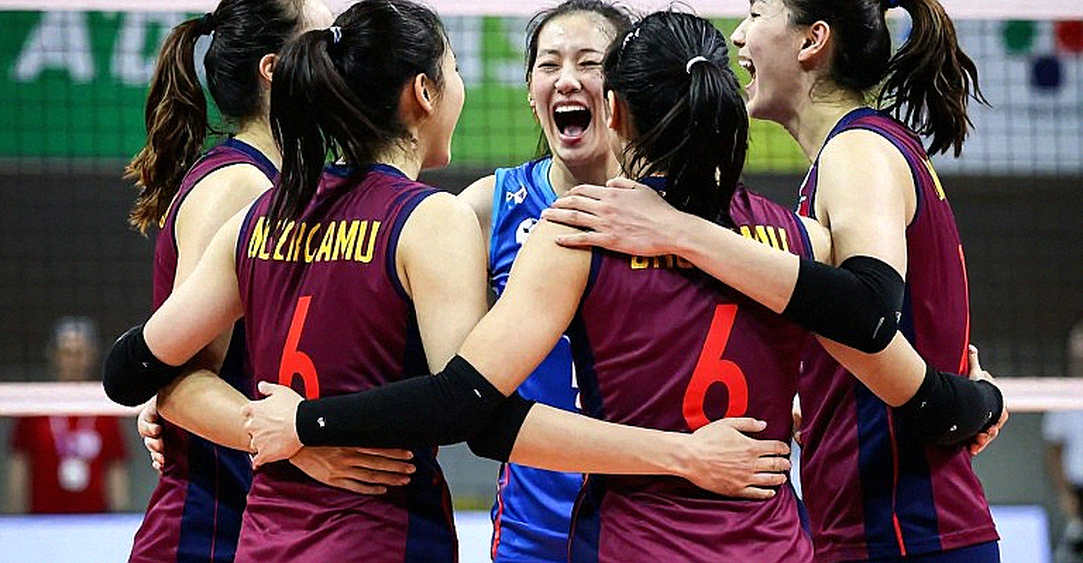
And then there are 24 hours. A single night between semifinal and final is too narrow a window for recovery, especially for a player who just left the court in pain. It is also too narrow to prepare for an opponent unknown until 21:00 that same evening. Under those conditions, squad depth and rotation capacity become more decisive than any tactical plan.
Some points never appear on the scoreboard, only in memory. In volleyball they are the blocks that force an opponent to change direction without scoring, the receptions that absorb a heavy serve so a teammate gets a swing. This semifinal had plenty of them, and none were recorded as numbers.
What I took away from Vinh Long is a question about how we are building the women's game. If every season the title is decided by who signs the better import, then five seasons from now, which domestic hitter will have the nerve to take the decisive swing in the fifth set of a final?
A dream needs no ticket, but it needs someone willing to tell the story. The full story here does not end with Hanoi Tasco Auto's place in the final. It continues at the point where a young woman has to choose between blocking through pain and protecting a career longer than one match — a choice no stat sheet will ever record.